
Raoul Lufbery
French-American fighter pilot
About Raoul Lufbery
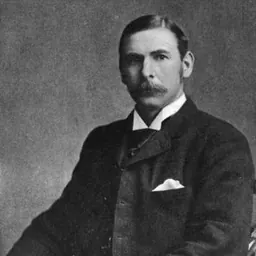
Lived 1885 – 1918 (aged 33). Raoul Lufbery was a French and American aircraft pilot, military personnel and military officer.
Gervais Raoul Victor Lufbery (March 14, 1885 – May 19, 1918) Lufbery's paternal grandfather was Charles Samson Lufbery, who had emigrated to the United States from Great Britain in the mid-19th century and settled in New York. Lufbery's father, Edward moved to Chamalières in 1876, joining his elder brother, George and soon met a local Frenchwoman, Anne Joséphine Vessière, Raoul was the youngest of their three sons. When Lufbery was one, his mother died and his father returned to the United States, where he lived in New York, New Jersey, and then Wallingford, Connecticut, leaving him to be raised by his maternal grandmother, Madeline Vessière Greniere in France. While working in France, Lufbery sent money to his father, who had started a second family in the United States. However, he managed to visit other family members in Connecticut. He then stayed in Walllingford with his relatives for two years, working at a silver-plating factory.
Lufbery served in the United States Army from 1907–1909 as a rifleman and saw service in the Philippines. He was first assigned from the recruit depot of Fort McDowell, Angel Island to Company F, 20th Infantry Regiment, at the newly established Fort Shafter, Territory of Hawaii on 13 December 1908. On 1 April 1909, he was stationed with Company M, at the Presidio of Monterey, California. In 1910, he was sent to Cuartel de España, Manila. After his time with the US Army, he saw India, Japan, and China. aboard a passenger train after receiving orders to ship out to Luxeuil. Although assured that the lion was harmless, the conductor was inclined to believe otherwise after Whiskey roared and attempted to bite his finger. Two Escadrille pilots were then inclined to stay behind to crate up the animal and bring him the next day. Lufbery raised this lion, named Whiskey, for several years. Later, Whiskey got another lion playmate, named Soda since she got on so well with Whiskey, as the pilots felt the lion needed a female companion. Soda was much wilder than Whiskey and would spit and claw at anyone who came near, with the notable exception of Lufbery. Although both the animals were fond of Lufbery, Whiskey followed him around the aerodrome like a pet dog. Eventually the pair were taken to a Paris Zoo.
His first victory came on 30 July 1916 over Verdun. By 12 October 1916, he had downed five enemy planes, making him an ace, and earning him a promotion to adjutant.
In the spring of 1918, Lufbery was chosen to become the commanding officer of the yet-unformed 94th Aero Squadron with the rank of major. Lufbery's principal job was to instruct the new pilots such as Eddie Rickenbacker in combat techniques. The United States Army Air Service was equipped with Nieuport 28 fighters, but due to supply problems, many lacked armament. The 94th's first combat patrol on 6 March 1918, saw Lufbery leading Rickenbacker and fellow flyer Doug Campbell in unarmed airplanes. Lufbery had unconfirmed claims in April 1918, on the 12th and the 27th, while leading 94 Squadron.
What happened next has been a matter of debate. At an altitude variously estimated between 200 and 600 feet, Lufbery was said to have jumped out of the plane, either to avoid a fiery death or as an attempt to land in the nearby Moselle River, rather than being thrown from the cockpit after it flipped over above the village of Maron. His falling body struck a metal garden picket fence, causing his death. However, on-site research by Royal D. Frey of the National Museum of the United States Air Force (then the Air Force Museum) established in 1962 that witnesses on the ground below the action saw the plane, not burning, flip over, and Lufbery was thrown out, having unfastened his seat belt to clear a jam in his machine gun during his final fight. Frey went on to explain the social dynamics that led to the "historical inflation."
Lufbery was buried with full military honors at the Aviators Cemetery at Sebastapol, France. His remains were later removed to a place of honor at the Lafayette Memorial du Parc de Garches in Paris. Although he received credit for only 17 victories in his career, his fellow pilots related many instances when he shot down German planes that he was not credited for. His actual number of victories has been unofficially estimated at anywhere between 25 and 60.
Awards
Chevalier of the Legion of HonorMédaille militaireCroix de guerre 1914-1918 (France) with 4 bronze palms1914–1918 Inter-Allied Victory medalMilitary Medal (United Kingdom)
Legacy A sculpture of Lufbery and an airplane form the Harmon International Trophy, an award given annually beginning in 1926 to honor achievements in aviation. In 1998, Lufbery was enshrined in the National Aviation Hall of Fame.
Although Lufbery only lived in Wallingford for a short period of time, it was his official home address, and a number of public facilities are named after him, including an avenue, a park, a VFW building, and a highway ramp. Lufbery's house and the Wallingford Historical Society building are marked with plaques placed for the 100th anniversary of his death as part of Wallingford's 350th Jubilee celebrations. Lufbery is one of the main characters in Jeffrey Shaara's book, To the Last Man. The character of Reed Cassidy in the 2006 film Flyboys (played by Martin Henderson) is roughly based on Lufbery. Lufbery features prominently in the Young Indiana Jones Chronicles episode "Attack of the Hawkmen". He and his lion cub, Whiskey, are depicted on card number 10 of the Scholastic book/online-game/treasure-hunt The 39 Clues, indicating he was a member of the Cahill family branch, Janus, in the series. Jean Shepherd's November 17, 1969 radio broadcast humorously credits Lufbery with the invention of the French 75 cocktail. (podbay.fmn — 27:00 into the recording.) In 2018, Lufbery was the subject of the short documentary Raul Lufbery: Fighter Ace, directed by Alexander Zane Irwin and produced by Daniel Bernardi with the collaboration of El Dorado Films and the Veteran Documentary Corps.
Don’t just read it —
keep it.
Full-length biographies made to live with: read them, listen on the way to work, watch them tonight.
- E-book
- Audio
- Video
Instant download · yours to keep · every purchase keeps this site free
Important facts
People in Raoul Lufbery's life
Named in this biography and alive at the same time
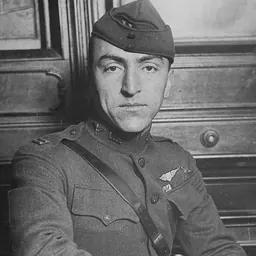
Related people
Same field, nearest in time



Contemporaries
People whose lives overlapped Raoul Lufbery's




Frequently asked questions
Who was Raoul Lufbery?
French-American fighter pilot
When was Raoul Lufbery born?
Raoul Lufbery was born on 14 March 1885 in Chamalières.
When did Raoul Lufbery die?
Raoul Lufbery died on 19 May 1918 in Mâron.
What was Raoul Lufbery's occupation?
Raoul Lufbery was an aircraft pilot, military personnel and military officer.
What nationality was Raoul Lufbery?
Raoul Lufbery was French and American.
Sources & further reading
Cite this page
APA: Biography.guide. (2026). Raoul Lufbery. https://biography.guide/raoul-lufbery/
MLA: "Raoul Lufbery." Biography.guide, https://biography.guide/raoul-lufbery/.
Chicago: "Raoul Lufbery." Biography.guide. https://biography.guide/raoul-lufbery/.
Data last updated: 2026-09-20 · Spot an error? Report a correction.
Page generated 2026-09-27 05:30 UTC