
About Rao Yi
Born 1962. Rao Yi is a Chinese and American biologist, neuroscientist and neurobiologist.
Rao Yi (; born 1962) is a Chinese neurobiologist.
Rao received a PhD degree from the University of California, San Francisco. He held a Helen Hay Whitney fellowship at Harvard University and was on the faculty of Washington University in St. Louis and Northwestern University before moving back to China to take up the deanship of Peking University's School of Life Sciences in 2007. He is currently Director and Principal Investigator of IDG/McGovern Institute for Brain Research at Peking University.
He took office as the President of the Capital Medical University on 25 June 2019. At SMU, his interests began to turn to molecular neurobiology.
In 1985, Rao enrolled as a graduate student at the University of California, San Francisco. He describes the atmosphere at UCSF as far more exciting than that to which he had previously been exposed in China.
Career and research interests After graduating from UCSF, Rao received a Helen Hay Whitney fellowship for postdoctoral research in the Department of Biochemistry and Molecular Biology at Harvard University, where he worked on embryonic induction in vertebrates. He then joined the faculty of Washington University in St. Louis in 1994, where he established his first laboratory. He moved back to China in 2007 to be the dean of Peking University's School of Life Sciences. The Ministry of Science and Technology disputed Shi and Rao's claims, stating that there was "zero tolerance" for misconduct.
The year after the article, both Rao and Shi failed to be named to the Chinese Academy of Sciences in the first round of voting among members in its biennial membership elections. Rao and Shi's failure to be named among the 145 candidates on the longlist for membership was widely believed to be tied to their criticisms, and in response Rao announced in a post on ScienceNet.cn that he would refuse to stand for election to the CAS again in the future.
Since 2007, Rao successfully established the tenure track system in the School of Life Sciences, with international peer reviews of academic merits as the important criteria for hiring, promotion and firing.
In 2012, Rao and Shi Yigong established PKU-Tsinghua Center for Life Sciences, with Rao serving as the Director of Peking part and Shi as the Director of the Tsinghua part.
In 2013, Rao established the PKU-IDG/McGovern Institute for Brain Research at Peking University and serves as its Founding Director.
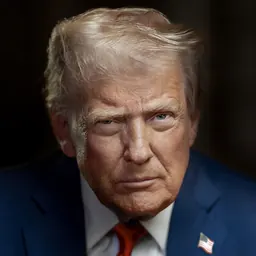
Rao went on to a major Chinese TV program in 2016 and denounced Donald Trump. Rao had failed to obtain a visa to visit the US since 2016. A large number of Chinese viewed Rao as ridiculous in denouncing Trump in 2016. However, this turned by 2020 when most Chinese were also against Trump.
Rao is a supporter of genetically modified food, and believes that even if China opposes GM food, it will simply result in the collapse of local companies while foreign companies strengthen their hold on the industry.
Rao came under criticism from both Kuomintang and Democratic Progressive Party politicians in Taiwan for his private letter relating to the addresses of Beijing and Taiwan researchers involved in scientific collaboration. In a 2011 letter to National Science Council head Lee Lou-chuang, Rao proposed that a paper in which Peking University researchers had collaborated with National Tsing Hua University researchers in Taiwan identify each institution's location without the use of political terms "People's Republic" or "Republic". This would lead to Peking University's location being listed as "Beijing, China", and NTHU as located in "Taipei, China". However, Taiwan's National Science Council requires researchers it funds to list their location either as "Taiwan" or "Taiwan, Republic of China". The director of Taiwan's National Science Council did not reply to Rao's letter, but revealed it to the general public of Taiwan instead. KMT caucus whip Chao Li-yun conveyed the KMT's condemnation of Rao for his suggestion, while Chen Ting-fei of the DPP criticised President Ma Ying-jeou for "submitting to humiliation" by not speaking up about the matter.
Selected works
Scientific research
Opinion and popular press With Lu Bai and Tsou Chen-Lu:
With Shi Yigong:
Don’t just read it —
keep it.
Full-length biographies made to live with: read them, listen on the way to work, watch them tonight.
- E-book
- Audio
- Video
Instant download · yours to keep · every purchase keeps this site free
Important facts
People in Rao Yi's life
Named in this biography and alive at the same time

Related people
Same field, nearest in time

Contemporaries
People whose lives overlapped Rao Yi's




Frequently asked questions
Who is Rao Yi?
Chinese neurobiologist
When was Rao Yi born?
Rao Yi was born in 1962 in Fuzhou.
What is Rao Yi's occupation?
Rao Yi is a biologist, neuroscientist and neurobiologist.
What nationality is Rao Yi?
Rao Yi is Chinese and American.
Sources & further reading
Cite this page
APA: Biography.guide. (2026). Rao Yi. https://biography.guide/rao-yi/
MLA: "Rao Yi." Biography.guide, https://biography.guide/rao-yi/.
Chicago: "Rao Yi." Biography.guide. https://biography.guide/rao-yi/.
Data last updated: 2026-09-20 · Spot an error? Report a correction.
Page generated 2026-09-27 05:13 UTC