
About Ransford Slater
Lived 1874 – 1940 (aged 65–66). Ransford Slater was an official.
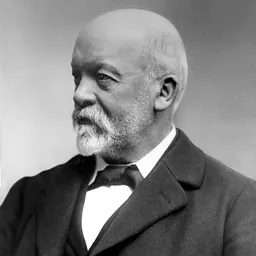
Sir Alexander Ransford Slater (28 November 1874 – 1940) was a British colonial administrator, who served as governor of Sierra Leone, the Gold Coast and Jamaica.
Biography The son of Rev. C. S. Slater, Plymouth, Slater was educated at King Edward's School, Birmingham and Emmanuel College, Cambridge. In 1892, Slater joined the Ceylon Civil Service, and by 1906, was District Judge of Badulla.
Slater was Governor of Sierra Leone from 1922 to 1927, Governor of the Gold Coast from 1927 to 1932, and Governor of Jamaica from 1932 to 1934.
Early Governorship of Sierra Leone His first official act as governor was to tour the protectorate to listen to the district commissioners, the chiefs, the members of the CEA, and the people. In Freetown he also listened to what the Creoles had to say. In Sierra Leone, Slater ordered the wages of all Africans who worked for the British government to be raised. When it came time to oversee the expansion of Sierra Leone's railroad, he enforced rulings of previous administrators who argued that Africans and Europeans who worked on the railroads in Sierra Leone should be paid the same wages. There were seventeen occasions during his administration where there was legal conflict between Europeans who worked in the colony and indigenous Africans, on sixteen out of the seventeen occasions Slater ruled in favor of the indigenous Africans. He hosted many parties at the governor's mansion which were known to always include "champagne and loud music from America." Various British companies wanted to mine for minerals in Sierra Leone and throughout 1924 and 1925 they sent surveyors to study the prospects of doing so. They began plans for mining for iron ore in the southeastern part of the country, however, large numbers of Mende people there felt these developments were disruptive and petitioned Governor Slater to disallow the mining ventures to continue. Slater agreed and revoked all of the relevant licenses. The executives protested to Slater personally and also attempted to "go over his head" by protesting directly to the British colonial office. However, Slater's ruling stood. This resulted in Slater becoming popular in the Mende-speaking districts in the east of the colony. There were 17 Sherbro-speakers from Bonthe District who had attended college in England. Slater had 17 British employees in that district transferred to other colonies replaced by the 17 British-educated Sherbro officers. In a move that was controversial at the time he insisted that all of the Sherbro officers receive the same pay as the European officers who they were replacing. Slater oversaw the introduction of the 1924 constitution, which allowed Africans to gain representative power in Sierra Leone's government. Slater oversaw the 1924 Sierra Leonean general election which saw three Africans elected including Ernest Beoku-Betts and Herbert Bankole-Bright. Three seats in the legislature were created and would be directly elected by African voters from various parts of the Colony and Protectorate. Slater remarked "We wield immense power in this country, we ought to use it only for the benefit of those who we are ruling, otherwise we cede any moral right we have to that power. I consider this my duty." In 1925 Slater oversaw an election in which the mayor of Freetown would be "an African elected by Africans and not a European appointed by Europeans." In this election Ernest Beoku-Betts was elected the mayor of Freetown.
Railroad strike Slater's mostly tranquil time as Sierra Leone's governor saw one dramatic episode during the railroad strike of 1926. From January 14 to February 26, 1926, all grades of the African workers within the Railway Department of the Sierra Leone Government participated in a strike. During the strike, the strikers removed the rails in front of the general manager's train, removed the rails on curves or steep banks and at the approach to a bridge, pulled down telegraph poles and cut wires, inhibiting telegraphic communication with the protectorate and other ways of showing their discontent. Despite government claims about the damage incurred by the railway due to the strike, thirteen telegraphists from the Gold Coast, who arrived on January 20, helped maintain communication between Freetown and the rest of the colony, and volunteers maintained goods trains functioning.
On February 26, after six weeks of strike, the workers returned to work, forced to accept the government's terms. While it was recommended that over 200 striking workers be arrested, Slater saw to it that less than a dozen people were arrested and most of those recommended for arrest were merely dismissed from their jobs. Of the 200 people dismissed during the strike, 37 were pensionable workers, some with over twenty years' worth of experience, and twenty daily wagers were dismissed from the railway. The Secretary of the Railway Workers' Union, President of the Bo branch, and other Protectorate workers, were also dismissed. The President of the union was demoted and reassigned, and ended up resigning from the department. The job vacancies were filled with West Indian and local workers. Three months after the strike ended, all worker-paid daily wages were returned to their previous incremental rates. A.E. Richards, leader of the strike, remarked that "While I am ultimately unsatisfied with this outcome, I do commend the governor (Slater) for having proved that he is always willing to listen, and that he has no desire to be a despot."
With the 1926 railway strike, the Railway Union set a strong precedent for political action and civil disobedience in Sierra Leone, on this note Slater remarked "civil disobedience is as much their right as it is anyone elses"; the railways and mines became the focus for unionization, political organization and strike action from that point forward. Such activities were banned in French colonies, including neighboring French Guinea as well as nearby Portuguese Guinea and the Belgian Congo, however Slater believed that allowing civil disobedience to continue is what distinguished the British Empire from other colonial powers. An example of further civil disobedience would be the 1935 and 1938 strikes by workers at the then newly opened Sierra Leone Development Company (DELCO), mining iron ore at Marampa. Inspired by 1926 railway workers' strike against the unjust practices of the European industrial employers, Sierra Leone workers went on strike for better working conditions and compensation. Unions, such as the carpenter or shipwright union subsequently also arose around artisanal trades. Henry Josiah Lightfoot Boston said "Back when he was governor, and for a time thereafter, Slater was popular in our community. Now I suppose he is somewhat forgotten, however, his government was a good one, to me at least, and to many others I know. He was not a bad man by any means."
Slater was appointed CMG in 1916, CBE in 1918, KCMG in 1924, and GCMG in 1933.
Don’t just read it —
keep it.
Full-length biographies made to live with: read them, listen on the way to work, watch them tonight.
- E-book
- Audio
- Video
Instant download · yours to keep · every purchase keeps this site free
Important facts
People in Ransford Slater's life
Named in this biography and alive at the same time

Related people
Same field, nearest in time






Contemporaries
People whose lives overlapped Ransford Slater's

Frequently asked questions
Who was Ransford Slater?
British colonial administrator
When was Ransford Slater born?
Ransford Slater was born on 28 November 1874 in Nottinghamshire.
When did Ransford Slater die?
Ransford Slater died in 1940 in Dorset, England.
What was Ransford Slater's occupation?
Ransford Slater was an official.
Sources & further reading
Cite this page
APA: Biography.guide. (2026). Ransford Slater. https://biography.guide/ransford-slater/
MLA: "Ransford Slater." Biography.guide, https://biography.guide/ransford-slater/.
Chicago: "Ransford Slater." Biography.guide. https://biography.guide/ransford-slater/.
Data last updated: 2026-09-20 · Spot an error? Report a correction.
Page generated 2026-09-27 04:58 UTC