
About Randolph Ridling
Lived 1888 – 1975 (aged 86). Randolph Ridling was a military personnel.
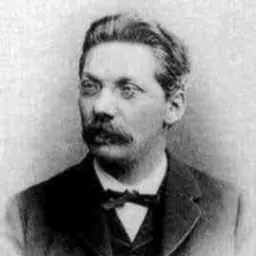
Randolph Gordon Ridling, (17 March 1888 – 13 January 1975) was a New Zealand soldier who served during the First World War on the Western Front with the New Zealand Expeditionary Force. He was awarded the Albert Medal in 1919 for saving the life of a soldier during a grenade training exercise the previous year. After the war, he studied at the University of Cambridge and subsequently worked in the education sector in New Zealand. In 1971, the Albert Medal was disestablished by royal warrant as a gallantry award and living recipients were required to swap their medals for the George Cross. Ridling, for sentimental reasons, sought an exemption from Queen Elizabeth II to retain his medal, which was granted. He died in 1975, aged 86.
Early life Randolph Gordon Ridling was born on 17 March 1888 in Auckland, New Zealand, to Andrew Ridling and his wife Ellen . Educated at Auckland Grammar School, he went on to Auckland University College for a year of tertiary study before he became a teacher. In May 1915 he married Henrietta née Cormack at St Stephen's Church in Ponsonby. However, his wife soon became ill and died three months after their wedding.
First World War On 14 December 1915, Ridling enlisted in the New Zealand Expeditionary Force (NZEF) for service in the First World War. Within days he was promoted to corporal and by late February 1916 had received a further promotion to sergeant major. He was commissioned as a second lieutenant in May and was sent to the 18th Reinforcements, a draft of personnel destined for service on the Western Front in France. Departing New Zealand in October, he was at the NZEF base in England by the end of the year and was posted to the New Zealand Rifle Brigade (NZRB).
Ridling arrived on the Western Front on 17 February 1917 as a platoon commander in the 4th Battalion of the NZRB. His period in command was brief, for on 23 February he was wounded. He was medically evacuated to England for treatment, initially in London and then at the New Zealand General Hospital in Brockenhurst. Discharged in June he underwent a convalescence period in Brighton before proceeding to the NZRB troop depot at Sling Camp in Bulford. However, he was still troubled by his wounds and required further hospital treatment.
By early 1918, Ridling had returned to duty, being posted to Brocton Camp as an instructor. Promoted to lieutenant in March, he was tasked with teaching bombing techniques to reinforcement troops destined for service on the Western Front. On 19 April, he was instructing in the use of the Mills bomb. A number of men had already successfully thrown live bombs from a bombing bay. Then a nervous trainee fumbled a bomb after removing the pin and, panicking, dived into a corner of the bay. Ridling, also in the bay, grabbed the man and pulled him to shelter. He got the man clear but was injured when the grenade exploded. His wound was to his groin and he required hospital treatment. He was back at Brocton Camp by 8 May and was soon made assistant adjutant to the 5th Reserve Battalion of the NZRB.
Postwar period
As the NZEF demobilised after the end of the war, Ridling, promoted to temporary captain on 10 March 1919, was appointed an education officer. In this role he lectured troops in the NZEF Education Scheme. In late March, his name was published as being brought to the attention of the Secretary of State for services in connection with the war. He himself was discharged from the NZEF in September, having reverted to his substantive rank of lieutenant. For his actions of 19 April 1918, the commander of NZEF forces in England, Brigadier General George Richardson, had recommended Ridling for the Albert Medal for Lifesaving (AM). The AM, named for Prince Albert, had been established in 1866 by Queen Victoria to recognise gallantry in saving life at sea. In subsequent years, the requirement that the act of gallantry be performed at sea was dispensed with so that deeds performed on land could also be recognised with the AM. Ridling's award was announced in The London Gazette on 9 December 1919. The citation read:
At the time of the announcement, Ridling was studying at Queens' College, Cambridge; he had been awarded a scholarship available for soldiers of the NZEF. He graduated with a Bachelor of Arts in 1921 but continued to study, gaining a Diploma of Agriculture the following year. During this time, he met Patricia née Shaw and the couple were married in London. They had a daughter.
Later life Returning to New Zealand in 1923, Ridling worked for the Taranaki Education Board. Seven years later, he became an inspector, monitoring the Education Department's various manual and technical schools. He went on to write a number of papers relating to education in the technical and agricultural fields. He was also an advocate for education by correspondence.
Don’t just read it —
keep it.
Full-length biographies made to live with: read them, listen on the way to work, watch them tonight.
- E-book
- Audio
- Video
Instant download · yours to keep · every purchase keeps this site free
Important facts
People in Randolph Ridling's life
Named in this biography and alive at the same time


Related people
Same field, nearest in time





Contemporaries
People whose lives overlapped Randolph Ridling's


Frequently asked questions
Who was Randolph Ridling?
New Zealand soldier
When was Randolph Ridling born?
Randolph Ridling was born on 17 March 1888.
When did Randolph Ridling die?
Randolph Ridling died on 13 January 1975.
What was Randolph Ridling's occupation?
Randolph Ridling was a military personnel.
Sources & further reading
Cite this page
APA: Biography.guide. (2026). Randolph Ridling. https://biography.guide/randolph-ridling/
MLA: "Randolph Ridling." Biography.guide, https://biography.guide/randolph-ridling/.
Chicago: "Randolph Ridling." Biography.guide. https://biography.guide/randolph-ridling/.
Data last updated: 2026-09-20 · Spot an error? Report a correction.
Page generated 2026-09-27 05:32 UTC