
Ramón de Carranza y Fernández de la Reguera
Spanish politician
About Ramón de Carranza y Fernández de la Reguera
Lived 1863 – 1936 (aged 73). Ramón de Carranza y Fernández de la Reguera was a Spanish politician, proprietor and naval officer.
Ramón de Carranza y Fernández de la Reguera, (16 April 1863 – 13 September 1938) was a Spanish sailor, intelligence officer, diplomat, politician, and an increasingly controversial figure in the history of Spain. For over twenty years, he was a career officer in the Spanish Navy, leading raiding parties and engaging in naval battles all over the world.
During the Cuban War of Independence, he earned several medals for bravery and courage under fire. After the destruction of the USS Maine in Cuba, he was assigned the position of Naval attaché at the Spanish Legation in Washington, D.C. With the outbreak of the Spanish–American War, he became the chief spymaster of the Montreal Spy Ring, and US intelligence historians have suggested that he was the most importantly-positioned Spaniard on the entire American continent at the time.
After the war, he returned to Spain, where he entered into politics. Carranza served in the Cortes Generales, the Congress of Deputies, and over half a dozen terms in the Senate of Spain. While serving an earlier term as mayor, he oversaw the creation of the Bullring of Cádiz and several popular hotels. However, he left the city bankrupt, forced to leave politics for several years. During the Spanish Civil War, Carranza was loyal to the Francoists and served in the Francoist Army. During the war, he was made again the Mayor of Cádiz, and its provincial , during which time he oversaw one of the city's harshest periods of civil repression and extrajudicial executions.
He was born into a family with a long tradition and history of sailing and deep roots in the Spanish Navy. He was the third of six children. His father, José Juan de Carranza y Echevarría, had served most of his life in the navy around Galicia, but would reach the rank of Admiral in the late 1880s and go on to serve as Captain General of Ferrol and later of Cádiz. His mother was Carmen Fernández de la Reguera y Fernández de Pola, who came from Santander.
On 16 July 1886, he was promoted to Lieutenant and posted to Cádiz. This was one of the several craft charged with patrolling the Cuban coastline to intercept smuggled arms and to respond to local uprisings of the Mambises and the Cuban Liberation Army.
Traveling from Cádiz to Madrid at the time, Carranza received instructions from Práxedes Mateo Sagasta and Segismundo Bermejo, and was ordered to go to Havana to retrieve the investigative file on the Maine and hand-deliver it to the administration of President William McKinley. He maintained strong ties within the Spanish Admiralty and requested to participate directly in naval combat. He grew frustrated at being confined to intelligence duties, believing that Spain's chances of success depended on active engagement at sea rather than covert operations. Here, he would become the powerful spymaster of what would later be called by historians the Montreal Spy Ring.
Although Spain received polite denials of intelligence support from other European powers, its leaders continued to hope for sympathy from Catholic and monarchist circles abroad.
On 6 May 1898, members of the Spanish Legation in Washington, including First Secretary Juan Dubosc and Ramón de Carranza, traveled by train to Montreal. Upon arrival, they took up residence in rooms 126 and 128 of the Windsor Hotel on Dominion Square and began coordinating their activities with Eusebio Bonilla Martel. Whether Carranza knew this is unknown, but in the lobby and the restaurant of the hotel, he was being monitored constantly by British, American, and Canadian intelligence officers. Not only that, the Spanish Legation were being pursued by members of the Canadian press. There were also several Carlist agents staying here, monitoring the activities of the monarchist legation. He had other plans.
Carranza plans raiding parties from Victoria
Carranza, disguised and pursued by both American and British intelligence agents, crossed Canada from east to west. He reached Vancouver on June 30 and took refuge in a private residence in nearby Victoria, arranged by Ángel Cabrejo, the Spanish vice-consul stationed there. Remaining in seclusion and avoiding public attention, Carranza immediately began coordinating his plans. By July 21, two additional agents had joined him.
Carranza's objective was to purchase, arm, and crew a vessel to operate as a merchant raider in the North Pacific. His plan called for attacks on American ships returning from Alaska with gold shipments and on those engaged in sealing and fishing activities. The waters off British Columbia and Alaska were sparsely defended, and Carranza intended to exploit this vulnerability. After completing his raids, the vessel was to head toward Hawaii and Japan, and ultimately to seek internment in the neutral Russian port of Vladivostok.
When the republican candidate Emilio de Sola was elected mayor in May 1931, Carranza declined to attend the formal handover of office, breaking with customary practice. In the first months of the Second Republic he withdrew somewhat from public life and concentrated on his private business interests.
The harshest phase of repression in Cádiz occurred between the summer of 1936 and the first half of 1937. Numerous residents were executed without judicial proceedings in various locations across the city. As military courts began operating in early 1937, the mayor became one of the officials who supplied background reports on defendants, alongside representatives of the Falange, Carlist groups, and the local clergy. Surviving records show his participation in these proceedings, including cases that resulted in long prison sentences or executions. At his own request, he was not given military honours or a military funeral.
Legacy
One of his sons, , became the longest-serving mayor of Cádiz under the Franco Regime. According to the Historical Memory Law, the name of the stadium was changed to Nuevo Mirandilla Stadium due to the negative connotations of Carranza's connection to Franco. One of his other sons, , became the mayor of Seville and also the President of the Sevilla FC.
Don’t just read it —
keep it.
Full-length biographies made to live with: read them, listen on the way to work, watch them tonight.
- E-book
- Audio
- Video
Instant download · yours to keep · every purchase keeps this site free
Important facts
People in Ramón de Carranza y Fernández de la Reguera's life
Named in this biography and alive at the same time


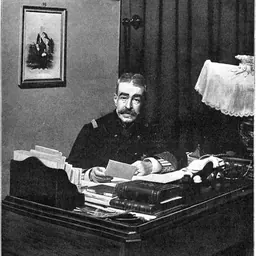
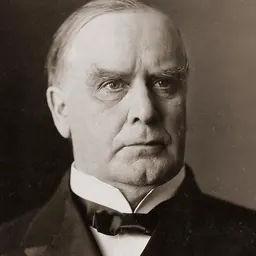
Related people
Same field, nearest in time




Contemporaries
People whose lives overlapped Ramón de Carranza y Fernández de la Reguera's
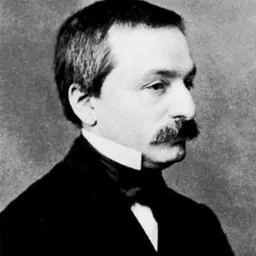



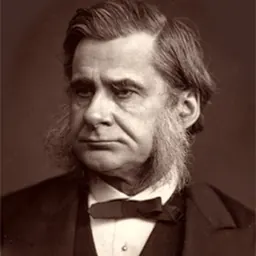
Frequently asked questions
Who was Ramón de Carranza y Fernández de la Reguera?
Spanish politician (1863-1937)
When was Ramón de Carranza y Fernández de la Reguera born?
Ramón de Carranza y Fernández de la Reguera was born on 1 April 1863 in Ferrol.
When did Ramón de Carranza y Fernández de la Reguera die?
Ramón de Carranza y Fernández de la Reguera died on 13 September 1936 in Cádiz.
What was Ramón de Carranza y Fernández de la Reguera's occupation?
Ramón de Carranza y Fernández de la Reguera was a politician, proprietor and naval officer.
What nationality was Ramón de Carranza y Fernández de la Reguera?
Ramón de Carranza y Fernández de la Reguera was Spanish.
Sources & further reading
· Wikipedia: Ramón de Carranza y Fernández de la Reguera
· DBpedia: Ramón de Carranza y Fernández Reguera
Cite this page
APA: Biography.guide. (2026). Ramón de Carranza y Fernández de la Reguera. https://biography.guide/ramon-de-carranza-y-fernandez-de-la-reguera/
MLA: "Ramón de Carranza y Fernández de la Reguera." Biography.guide, https://biography.guide/ramon-de-carranza-y-fernandez-de-la-reguera/.
Chicago: "Ramón de Carranza y Fernández de la Reguera." Biography.guide. https://biography.guide/ramon-de-carranza-y-fernandez-de-la-reguera/.
Data last updated: 2026-09-20 · Spot an error? Report a correction.
Page generated 2026-09-27 05:26 UTC