
Ramananda
Founder of Bairagi Sect, Vaishnav-Hindu Saint, Social Reformer
About Ramananda
Lived 1400 – 1470. Ramananda was a philosopher, poet and cult leader.
Jagadguru Swami Ramananda (IAST: Rāmānanda) or Ramanandacharya was an Indian 14th-century Hindu Vaishnava devotional poet saint, who lived in the Gangetic basin of northern India.
Born in a Kanyakubja Brahmin family, Ramananda for the most part of his life lived in the holy city of Varanasi. His date of birth is 30 December, while his date of death is uncertain, but historical evidence suggests he was one of the earliest saints and a pioneering figure of the Bhakti movement as it rapidly grew in North India, sometime between the 14th and mid-15th century during its Islamic rule period. His verse is mentioned in the Sikh holy scripture Guru Granth Sahib.
Ramananda was known for composing his works and discussing spiritual themes in vernacular Hindi, stating that this makes knowledge accessible to the masses.
Biography
Little is known with certainty about the life of Ramananda, including year of birth and death The Encyclopaedia of Indian Literature give dates of 1366–1467 for his lifespan. His biography has been derived from mentions of him in secondary literature and inconsistent hagiographies. "Not one word is said as to his southern origin, and the fact that he was stated to be a Kanyakubja Brahmin is decisively against such a theory" –George A. Greirson (1920). "It was Ramananda's teacher, Raghavananda, who came from the South, and after much wandering had settled at Benares. There, and not in the South, he had Ramananda as his disciple." –George A. Greirson (1920).
Literary works Ramananda is credited as the author of many devotional poems, but like most Bhakti movement poets, whether he actually was the author of these poems is unclear. Two treatises in Hindi, Gyan-lila and Yog-cintamani are also attributed to Ramananda, as are the Sanskrit works Vaishnava Matabja Bhaskara and the Ramarchana Paddhati. He adds that the same link can be found in the 15th-century text of Adhyatma Ramayana, but there is no historical proof that Ramananda's teachings inspired that text. However, this theory lacks historical evidence and has not gained wide acceptance by scholars. Ramananda asserts that austerity and penances through asceticism are meaningless, if an individual does not realize Hari (Vishnu) as their inner self. He criticizes fasting and rituals, stating that the mechanics are not important, and that these are useless if the individual does not take the opportunity to reflect and introspect on the nature of Brahman (supreme being). His efforts, in a time when Ganges river plains of north India was under Islamic rule, helped revive and refocus Hindus to a personalized, direct devotional form of Rama worship, his liberalism and focus on the devotee's commitment rather than birth or gender set a precedent that attracted people to spirituality from various walks of life, and his use of vernacular language instead of Sanskrit for spiritual ideas made sharing and reflection easier for the masses.
Fourteen disciples of Ramananda Fourteen influential disciples of Ramananda included 12 men and 2 women poet-sants. According to Bhaktamal, these were:
Men scholars: Anantananda Sursurananda Sukhanand Naraharidāsa Bhavanand Vitthalpant Kulkarni Bhagat Pipa Kabir Ravidas Sen Dhanna Sadhana
Women scholars: Sursuri Padyawati
Postmodern scholars have questioned some of the above guru-disciple lineage while others have supported this lineage with historical evidence. They are known for their self-imposed highly disciplined, austere, structured and simple lifestyle.
Social reforms Ramananda was an influential social reformer of Northern India. He championed the pursuit of knowledge and direct devotional spirituality, and did not discriminate based on birth family, gender or religion.
Swami Ramanand poem
One poem of Ramananda, originally written in Hindi, is a response to an invitation to go to a temple,
Don’t just read it —
keep it.
Full-length biographies made to live with: read them, listen on the way to work, watch them tonight.
- E-book
- Audio
- Video
Instant download · yours to keep · every purchase keeps this site free
Important facts
People in Ramananda's life
Named in this biography and alive at the same time
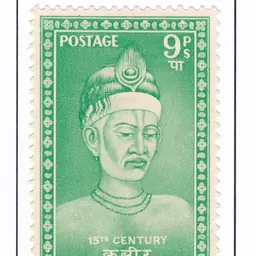
Related people
Same field, nearest in time

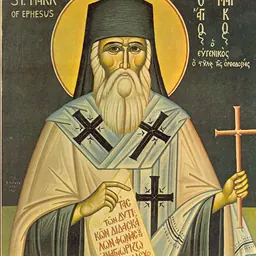


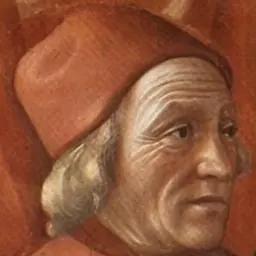
Contemporaries
People whose lives overlapped Ramananda's



Frequently asked questions
Who was Ramananda?
Founder of Bairagi Sect, Vaishnav-Hindu Saint, Social Reformer
When was Ramananda born?
Ramananda was born in 1400 in Prayagraj.
When did Ramananda die?
Ramananda died in 1470 in Varanasi.
What was Ramananda's occupation?
Ramananda was a philosopher, poet and cult leader.
Sources & further reading
Cite this page
APA: Biography.guide. (2026). Ramananda. https://biography.guide/ramananda/
MLA: "Ramananda." Biography.guide, https://biography.guide/ramananda/.
Chicago: "Ramananda." Biography.guide. https://biography.guide/ramananda/.
Data last updated: 2026-09-26 · Spot an error? Report a correction.
Page generated 2026-09-27 05:14 UTC