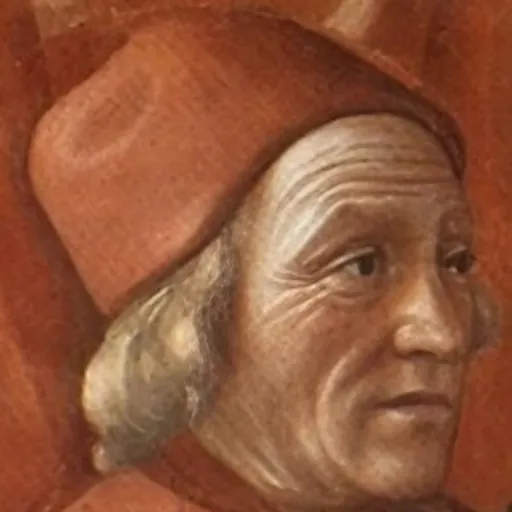
Marsilio Ficino
Italian philosopher and Catholic priest
About Marsilio Ficino
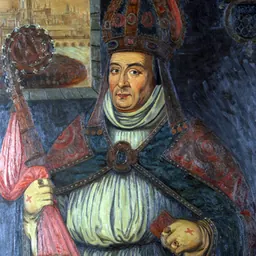
Lived 1433 – 1499 (aged 65). Marsilio Ficino was an Italian philosopher, translator, astrologer, poet, writer and physician.
Marsilio Ficino (; Latin name: ; 19 October 1433 – 1 October 1499) was an Italian scholar and Catholic priest who was one of the most influential humanist philosophers of the early Italian Renaissance. He was an astrologer, a reviver of Neoplatonism in touch with the major academics of his day, and the first translator of Plato's complete extant works into Latin. His Florentine Academy, an attempt to revive Plato's Academy, influenced the direction and tenor of the Italian Renaissance and the development of European philosophy.
Early life Ficino was born at Figline Valdarno. His father, Diotifeci d'Agnolo, was a physician under the patronage of Cosimo de' Medici, who took the young man into his household and became the lifelong patron of Marsilio, who was made tutor to his grandson, Lorenzo de' Medici. Giovanni Pico della Mirandola, the Italian humanist philosopher and scholar, was another of his students.
Career and thought
Platonic Academy During the sessions at Florence of the Council of Ferrara-Florence in 1438–1445, when attempts to heal the schism of the Eastern (Orthodox) and Western (Catholic) churches had thus far failed, Cosimo de' Medici and his intellectual circle had made acquaintance with the Neoplatonic philosopher George Gemistos Plethon, whose discourses upon Plato and the Alexandrian mystics so fascinated the humanists of Florence that they named him the second Plato. In 1459 John Argyropoulos was lecturing on Greek language and literature at Florence, and Ficino became his pupil. Corpus Hermeticum: first Latin edition, by Marsilio Ficino, 1471. When Cosimo decided to refound Plato's Academy at Florence, he chose Ficino as its head. In 1462, Cosimo supplied Ficino with Greek manuscripts of Plato's work, whereupon Ficino started translating the entire corpus into Latin (draft translation of the dialogues finished 1468–69; published 1484). Ficino also produced a translation of a collection of Hellenistic Greek documents found by Leonardo da Pistoia later called Hermetica, and the writings of many of the Neoplatonists, including Porphyry, Iamblichus, and Plotinus.
Among his many students were Niccolò Valori and Francesco Cattani da Diacceto. The latter was considered by Ficino to be his successor as the head of the Florentine Platonic Academy. Diacceto's student, Giovanni di Bardo Corsi, produced a short biography of Ficino in 1506.
Theology, astrology, and the soul
Though trained as a physician, Ficino became a priest in 1473. In 1474 Ficino completed his treatise on the immortality of the soul, Theologia Platonica de immortalitate animae In the rush of enthusiasm for every rediscovery from Antiquity, he exhibited some interest in the arts of astrology (despite denigrating it in relation to divine revelation), which landed him in trouble with the Catholic Church. In 1489 he was accused of heresy before Pope Innocent VIII (The Book of Life), published in 1489, provides a great deal of medical and astrological advice for maintaining health and vigor, as well as espousing the Neoplatonist view of the world's ensoulment and its integration with the human soul:
One metaphor for this integrated "aliveness" is Ficino's astrology. In the Book of Life, he details the interlinks between behavior and consequence. It talks about a list of things that hold sway over a man's destiny. Regardless, in his later extensive commentary on Plotinus's Ennead III, he actively and systematically repudiated the Neoplatonic account of the soul, the hypostasis Soul's unity, as well as the transmigration of the soul, the soul's eternity as opposed to mere imperishability, and the notion that the soul was created by intermediaries and not by God directly. Instead he preferred to interpret all of these more pagan Neoplatonic points, as Stephen Gersh comments in his Analytic Study of the same work, as moral allegories―in keeping with his general tendency towards concordance between Platonism and Christianity.
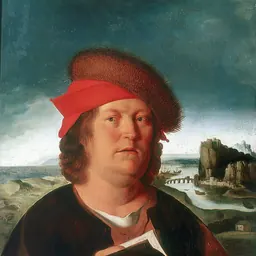
Medical works Probably due to early influences from his father, Diotifeci, who was a doctor to Cosimo de' Medici, Ficino published Latin and Italian treatises on medical subjects such as Consiglio contro la pestilenza (Recommendations for the treatment of the plague) and De vita libri tres (Three books on life). His medical works exerted considerable influence on Renaissance physicians such as Paracelsus, with whom he shared the perception on the unity of the microcosmos and macrocosmos, and their interactions, through somatic and psychological manifestations, with the aim to investigate their signatures to cure diseases. Those works, which were very popular at the time, dealt with astrological and alchemical concepts. Thus Ficino came under the suspicion of heresy; especially after the publication of the third book in 1489, which contained specific instructions on healthful living in a world of demons and other spirits.
Platonic love Notably, Ficino coined the term Platonic love, which first appeared in his letter to Alamanno Donati in 1476. In 1492, Ficino published Epistulae (Epistles), which contained Platonic love letters, written in Latin, to his academic colleague and life-long friend, Giovanni Cavalcanti, concerning the nature of Platonic love. Because of this, some have alleged Ficino was a homosexual, but this finds little basis in his letters or his general works and philosophy. In his commentary on the Republic, too, he specifically denies to his readers that the homosexual references made in Plato's dialogue were anything more than to bemuse the audience, "spoken merely to relieve the feeling of heaviness". Regardless, Ficino's letters to Cavalcanti resulted in the popularization of the term Platonic love in Western Europe.
Death Bust of Marsilio Ficino in the Duomo di Firenze (Cattedrale di Santa Maria del Fiore), where his body was buried.
Ficino died on 1 October 1499 at Careggi. In 1521 his memory was honored with a bust sculpted by Andrea Ferrucci, which is located in the south side of the nave in the Cathedral of Santa Maria del Fiore.
Works
Theologia Platonica de immortalitate animae (Platonic Theology). Harvard U. P., Latin with English translation. vol. 1, 2001, vol. 2, 2002, vol. 3, 2003, vol. 4, 2004, vol. 5, 2005, vol. 6 with index, 2006, The Letters of Marsilio Ficino, transl. by the Language Department of the School of Economic Science (Shepheard-Walwyn, 1975–2013). (With extensive endnotes.)
vol. I, 1975, vol. II, 1978, vol. III, 1981, vol. IV, 1988, vol. V, 1994, vol. VI, 1999, vol. VII, 2003, vol. VIII, 2010, vol. IX, 2013,
Commentaries Gardens of Philosophy: Ficino on Plato, ed. and transl. by Arthur Farndell (Shepheard-Walwyn, 2006). This, the first volume in a five-volume series, provides the first English translation of the 25 short commentaries on the dialogues and the 12 letters traditionally ascribed to Plato. The volume contains the following: Ficino's Preface to his Commentaries on Plato [addressed to Lorenzo de' Medici]. Hipparchus: The Desire for Gain Philosophy or The Lover Theages: Wisdom Meno: Virtue Alcibiades I: Nature of Man Alcibiades II: Prayer Minos: Law Euthyphro: Holiness Hippias: The Beautiful and Noble Lysis: Friendship Theatetus: Knowledge Ion: Poetic Inspiration Statesman: Kingship Protagoras: Virtue Euthydemus: The Views of the Sophists Lesser Hippias: Truthfulness Charmides: Temperance Laches: Courage Cratylus: Names Gorgias: Rhetoric Apology: Socrates' Defense Crito: Socrates' Way of Life Phaedo: Nature of the Soul Menexenus: Love for One's Country Critias: Story of Atlantis Discussions of Plato's twelve letters Two of Ficino's other prefaces to the dialogues and their commentaries Evermore Shall Be So: Ficino on Plato's Parmenides, ed. and transl. by Arthur Farndell (Shepheard Walwyn, 2008). (Does not include Latin text.) When Philosophers Rule: Ficino on Plato's Republic, Laws, and Epinomis, ed. and transl. by Arthur Farndell (Shepheard-Walwyn, 2009). (Unabridged except for the commentary on Republic, bk. 8; see Nuptial Arithmetic, below.) All Things Natural: Ficino on Plato's Timaeus, ed. and transl. by Arthur Farndell (Shepheard-Walwyn, 2010). On the Nature of Love: Ficino on Plato's Symposium, ed. and transl. by Arthur Farndell (Shepheard-Walwyn, 2016).
Other translations of commentaries Commentaries on Plato. I Tatti Renaissance Library. Bilingual, annotated English/Latin editions of Ficino's commentaries on the works of Plato. vol. 1, 2008, Phaedrus, and Ion, transl. by Michael J. B. Allen, vol. 2, 2012, Parmenides, pt. 1, transl. by Maude Vanhaelen, vol. 3, 2012, Parmenides, pt. 2, transl. by Maude Vanhaelen, Commentary on Plato's Symposium on Love, transl. with an introduction and notes by Sears Jayne (Woodstock, CT: Spring Publications, 1985), 2nd edn., 2000,
Other works Nuptial Arithmetic: Marsilio Ficino's Commentary on the Fatal Number in Book VIII of Plato's Republic, ed. and transl. by Michael J. B. Allen (U. of California P., 1994). Icastes. Marsilio Ficino's Interpretation of Plato's Sophist, ed. and transl. by Michael J. B. Allen (Berkeley: U. of California P., 1989). The Book of Life, transl. with an introduction by Charles Boer, Dallas: Spring Publications, 1980. De vita libri tres (Three Books on Life, 1489), transl. by Carol V. Kaske and John R. Clarke, Tempe, Arizona: The Renaissance Society of America, 2002. With notes, commentaries, and Latin text on facing pages.
De religione Christiana et fidei pietate (1475–6), dedicated to Lorenzo de' Medici. (English translation below.) On the Christian Religion, ed. and transl. by Dan Attrell, Brett Bartlett, and David Porreca (U. of Toronto P., 2022). (With extensive notes, indexes, etc.) In Epistolas Pauli commentaria, Marsilii Ficini Epistolae (Venice, 1491; Florence, 1497). Meditations on the Soul: Selected letters of Marsilio Ficino, transl. by the Language Department of the School of Economic Science, London. Rochester, Vermont: Inner Traditions International, 1996. . Collected works: Opera (Florence, 1491, Venice, 1516, Basel, 1561).
Don’t just read it —
keep it.
Full-length biographies made to live with: read them, listen on the way to work, watch them tonight.
- E-book
- Audio
- Video
Instant download · yours to keep · every purchase keeps this site free
Important facts
more
Marsiliĭ Fichino, Marsilius Vicinus, Marsilius Ficinus, Marcile Ficin, Marsilio Ficinio, Marsilii Fichino, Marsilius Ficinius, Marsiliī Fichino, Marsile FicinPeople in Marsilio Ficino's life
Named in this biography and alive at the same time


Related people
Same field, nearest in time



Contemporaries
People whose lives overlapped Marsilio Ficino's

Frequently asked questions
Who was Marsilio Ficino?
Italian philosopher and Catholic priest (1433–1499)
When was Marsilio Ficino born?
Marsilio Ficino was born on 19 October 1433 in Figline Valdarno.
When did Marsilio Ficino die?
Marsilio Ficino died on 1 October 1499 in Villa Medici at Careggi.
What was Marsilio Ficino's occupation?
Marsilio Ficino was a philosopher, translator, astrologer, poet, writer and physician.
What nationality was Marsilio Ficino?
Marsilio Ficino was Italian.
Sources & further reading
Cite this page
APA: Biography.guide. (2026). Marsilio Ficino. https://biography.guide/marsilio-ficino/
MLA: "Marsilio Ficino." Biography.guide, https://biography.guide/marsilio-ficino/.
Chicago: "Marsilio Ficino." Biography.guide. https://biography.guide/marsilio-ficino/.
Data last updated: 2026-09-21 · Spot an error? Report a correction.
Portrait: Wikimedia Commons · author & licence
Page generated 2026-09-27 04:59 UTC