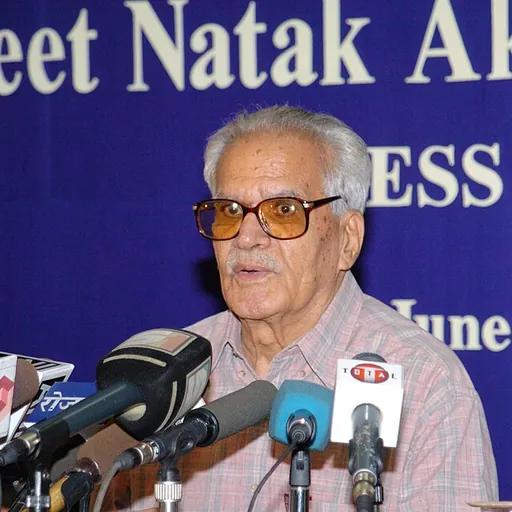
About Ram Niwas Mirdha
Lived 1924 – 2010 (aged 85). Ram Niwas Mirdha was an Indian politician, jurist and minister.
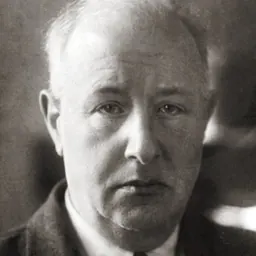
Ram Niwas Mirdha (24 August 1924 – 29 January 2010) was an Indian statesman, parliamentarian, and cultural administrator in post-independence India. A veteran member of the Indian National Congress, Mirdha holds the record for being longest serving speaker of the Rajasthan Assembly, from 1957 to 1967. Mirdha later elected to the Rajya Sabha and served several positions including Deputy Chairperson of the Rajya Sabha, from 1977 to 1980. At the Union level, he served as Minister of State for Home Affairs and Defence, while Cabinet Minister for Communications, Textiles, Health, and Water Resources, during the 1970s and 1980s.
In addition to his political career, Mirdha held leadership positions in several cultural and academic institutions. He served as chairman of the Sangeet Natak Akademi, Lalit Kala Akademi, and the National Institute of Sports, and was associated with organizations such as the Indian Heritage Society and the Youth Hostels Association of India. Internationally, he represented India at the United Nations and UNESCO, and was a member of the UNESCO Executive Board from 1993 to 1997. His father, Baldeo Ram Mirdha, was a police officer and a social reformer. Growing up in the 1930s and 1940s, Mirdha was influenced by the Indian independence movement, and as a student he participated in nationalist activities that exposed him to political life at an early age.
He studied at Allahabad University, where he completed a Master of Arts degree, and later did a Bachelor of Laws (L.L.B.) from Lucknow University. During his university years he was active in student politics and debates, often engaging with issues of social reform and national independence. These experiences strengthened his interest in public life and his association with the Congress-led freedom struggle.
Mirdha continued his academic training abroad at the Graduate Institute of International Studies, Geneva, focusing on international affairs. On his return to India, he joined the Rajasthan Administrative Service (RAS), but in 1953 he resigned from government service in order to enter active politics.
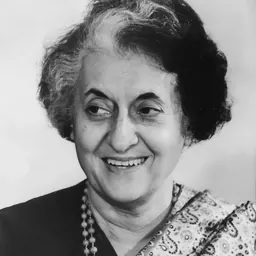
He held several responsibilities in the upper house, including Deputy Chairman of the Rajya Sabha from 1977 to 1980. During this tenure in the Rajya Sabha, he was appointed Minister of State in various departments under Prime Minister Indira Gandhi, including Home Affairs, Defence, and Personnel, Public Grievances and Pensions during the 1970s.
In 1983, Mirdha was elevated to the Union Cabinet as Minister of Irrigation. Following the general election of 1984, he was elected to the Lok Sabha from Nagaur, defeating his uncle Nathu Ram Mirdha. In the Rajiv Gandhi ministry, he served as Minister of State for External Affairs (1984), Cabinet Minister for Communications (1985–1986), Textiles (1986-1989), Health (1989), and Water Resources (1987-1988).
Joint Parliamentary Committees Mirdha played a role in parliamentary committee work, most notably as Chairman of the Joint Parliamentary Committee (JPC) on Irregularities in Securities and Banking Transactions (1992–93), which was constituted following the 1992 Harshad Mehta securities scam. The committee examined irregularities in banking operations and the securities market, the involvement of brokers and financial institutions, and regulatory lapses that allowed the scam to occur.
Public image Mirdha was an Indian statesman, parliamentarian, and cultural administrator in post-independence India. Often described as a “Padha Likha Jat”, an educated Jat, he embodied the intellectual aspirations of his community while maintaining a pan-Indian stature.
He was admired for his cultured upbringing and refined tastes in literature, music, and art, which distinguished him from the archetypal image of a grassroots politician. He served Chairman of the Sangeet Natak Akademi and the National Institute of Sports.
During the 1980s, when Nobel laureate V. S. Naipaul visited India, he met Mirdha and was struck by the minister’s ability to quote from his works with remarkable ease. Deeply impressed, Naipaul later remarked, “What is a civilised man like Mirdha doing in politics ?
Perception in the Media The Times of India described him as “a politician with a clean image,” highlighting his style of serving the public over adopting a bureaucratic lifestyle.
Cultural activities
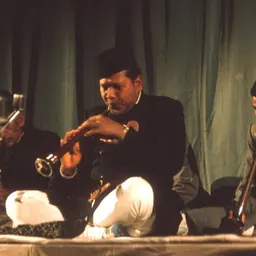
Mirdha took an important role in promoting Indian arts, culture and youth activities. From 2005 until his death he was Chairman of the Sangeet Natak Akademi (India’s National Academy of Music, Dance & Drama). In that capacity he oversaw national programs to support performing arts and instituted the Ustad Bismillah Khan Yuva Puraskar awards for young artists. Earlier, he had served as Chairman of the Lalit Kala Akademi (National Academy of Fine Arts) and as head of the National Institute of Sports. He was President of the Indian Heritage Society and the Youth Hostels Association of India, and served on the Delhi Urban Arts Commission. He also played roles in sports and youth development, such as leading the organising committee for the 1982 Asian Games in New Delhi.
Death Mirdha was admitted in a private hospital in New Delhi on 21 January 2010, following kidney infection. He died on 29 January 2010, at the age of 86, due to multi organ failure. His last rites were performed with full state honours.
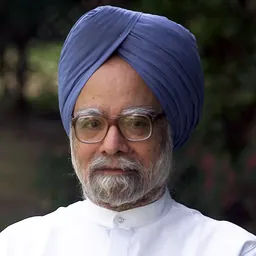
Previously, Prime Minister Manmohan Singh and Congress president Sonia Gandhi visited him in the hospital.
Don’t just read it —
keep it.
Full-length biographies made to live with: read them, listen on the way to work, watch them tonight.
- E-book
- Audio
- Video
Instant download · yours to keep · every purchase keeps this site free
Important facts
People in Ram Niwas Mirdha's life
Named in this biography and alive at the same time



Related people
Same field, nearest in time





Contemporaries
People whose lives overlapped Ram Niwas Mirdha's



Frequently asked questions
Who was Ram Niwas Mirdha?
Indian politician (1924-2010)
When was Ram Niwas Mirdha born?
Ram Niwas Mirdha was born on 24 August 1924 in Kuchera.
When did Ram Niwas Mirdha die?
Ram Niwas Mirdha died on 29 January 2010 in Delhi.
What was Ram Niwas Mirdha's occupation?
Ram Niwas Mirdha was a politician, jurist and minister.
What nationality was Ram Niwas Mirdha?
Ram Niwas Mirdha was Indian.
Sources & further reading
Cite this page
APA: Biography.guide. (2026). Ram Niwas Mirdha. https://biography.guide/ram-niwas-mirdha/
MLA: "Ram Niwas Mirdha." Biography.guide, https://biography.guide/ram-niwas-mirdha/.
Chicago: "Ram Niwas Mirdha." Biography.guide. https://biography.guide/ram-niwas-mirdha/.
Data last updated: 2026-09-23 · Spot an error? Report a correction.
Portrait: Wikimedia Commons · author & licence
Page generated 2026-09-27 05:07 UTC