
About Ralph W. Hood
Born 1942. Ralph W. Hood is an American psychologist.
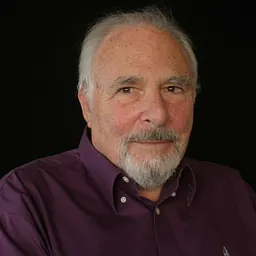
Ralph Wilbur Hood Jr. (born 1942) is an American psychologist. He serves as Leroy A. Martin Distinguished Professor of Religious Studies at the University of Tennessee at Chattanooga, where he specializes in the psychology of religion.
Life and career Hood was born on July 12, 1942, in Denver, Colorado. He married his wife, Betsy, in 1960. Hood received his Bachelor of Science degree at University of California, Los Angeles (1964), a Master of Science degree at California State College at Los Angeles (1966), and a Doctor of Philosophy degree at University of Nevada, Reno (1968).
Hood is a former editor of the Journal for the Scientific Study of Religion (1995–1999), and has been coeditor of The International Journal for the Psychology of Religion (1992–1995)
Research topics Hood's mysticism scale (M-scale), based on Walter Stace's distinction between "introverted" and "extroverted" mysticism, was developed in the 1970s, and is a well-known research instrument for mystical experiences.
Hood is also well known for studying snake handling churches in the Appalachian Mountains. In 2008, he co-authored a highly cited book with W. Paul Williamson covering this area of research in-depth.
Criticism
Stace's work in mystical experience has received strong criticisms for its lack of methodological rigor and its perennialist pre-assumptions. Major criticism came from Steven T. Katz in his influential series of publications on mysticism and philosophy and from Wayne Proudfoot in his Religious Experience (1985). In defense of Stace, Hood (2001) cites Robert K. C. Forman, who argues that introverted mysticism is correctly conceptualized as a common core, since it lacks all content, and is the correct basis for a perennial philosophy. Hood notes that Stace's work is a conceptual approach, based on textual studies. He posits his own work as a parallel approach, based on an empirical approach, thereby placing the conceptual claims in an empirical framework, assuming that Stace is correct in his approach.
Jacob van Belzen criticized Hood, noting that Hood validated the existence of a common core in mystical experiences, but based on a conceptual framework which presupposes the existence of such a common core: "he instrument used to verify Stace's conceptualization of Stace is not independent of Stace, but based on him." Belzen also notes that religion does not stand on its own, but is embedded in a cultural context, which should be taken into account. To this criticism Hood et al. answer that universalistic tendencies in religious research "are rooted first in inductive generalizations from cross-cultural consideration of either faith or mysticism", stating that Stace sought out texts which he recognized as an expression of mystical expression, from which he created his universal core. Hood therefore concludes that Belzen "is incorrect when he claims that items were presupposed."
Publications
Articles Hood has published numerous articles on the psychology of religion and spirituality in professional journals.
Books (author)
, coauthored with Peter C. Hill and W. Paul Williamson. The book covers fundamentalism in different Christian sects, varying from Amish to Pentecostal and also investigates Islam. The authors seek to provide an experientially-based but empirically minded psychological viewpoint on the concept of religious fundamentalism. . Jimmy Morrow, a church leader and serpent handler for more than 25 years, explores his lifetime of experiences from this unique form of Christian worship and reveals its history, previously unknown outside of the small communities where these rites are practiced. Hood shares insights into the social power of these practices and explains them from within a social psychological framework. . Hood has spent 15 years, along with W. Paul Williams, with snake handlers in Appalachia, learning about their belief systems, and has used this research to help build a psychological viewpoint on the phenomena of fundamentalism in religion.
Books (editor)
Don’t just read it —
keep it.
Full-length biographies made to live with: read them, listen on the way to work, watch them tonight.
- E-book
- Audio
- Video
Instant download · yours to keep · every purchase keeps this site free
Important facts
People in Ralph W. Hood's life
Named in this biography and alive at the same time


Related people
Same field, nearest in time





Contemporaries
People whose lives overlapped Ralph W. Hood's



Frequently asked questions
Who is Ralph W. Hood?
American psychologist
When was Ralph W. Hood born?
Ralph W. Hood was born on 12 July 1942 in Denver.
What is Ralph W. Hood's occupation?
Ralph W. Hood is a psychologist.
What nationality is Ralph W. Hood?
Ralph W. Hood is American.
Sources & further reading
Cite this page
APA: Biography.guide. (2026). Ralph W. Hood. https://biography.guide/ralph-w-hood/
MLA: "Ralph W. Hood." Biography.guide, https://biography.guide/ralph-w-hood/.
Chicago: "Ralph W. Hood." Biography.guide. https://biography.guide/ralph-w-hood/.
Data last updated: 2026-09-20 · Spot an error? Report a correction.
Page generated 2026-09-27 05:14 UTC