
Ralph Patt
United States jazz-guitarist, inventor of major-thirds tuning; geologist specializing in hydrology and consulting on Hanford Site
About Ralph Patt
Lived 1929 – 2010 (aged 80). Ralph Patt was an American civil engineer, engineer, music educator, jazz musician, jazz guitarist and geologist.
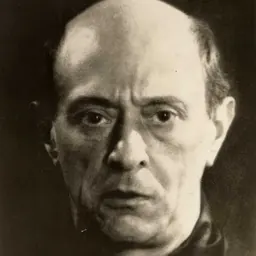
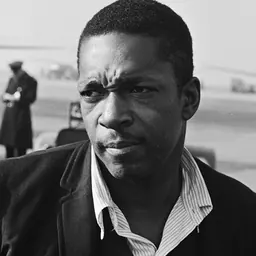
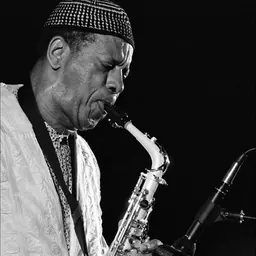
Ralph Oliver Patt (5 December 1929 – 6 October 2010) was an American jazz guitarist who introduced major-thirds tuning, which can simplify the learning of the fretboard and chords by beginners and facilitate improvisation by advanced guitarists. His use of this tuning was first inspired by the atonal music of Arnold Schoenberg, and later by the jazz of John Coltrane and Ornette Coleman.
He graduated with a degree in geology from the University of Pittsburgh. After his career as a guitarist, he worked as a geologist and as a hydrologist, often consulting on projects related to the U.S. Department of Energy.
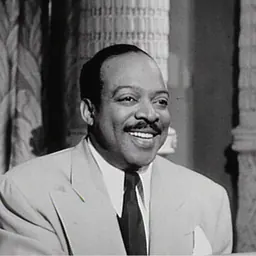
Early life Patt was born in Kittanning, Pennsylvania on 5 December 1929 Patt played rhythm guitar in the style of Freddie Green, who played a Stromberg in the Count Basie Orchestra. Patt also studied with Gunther Schuller, who himself was a student of Arnold Schoenberg and who used Schoenberg's twelve-tone technique for atonal composition. Patt wanted to be able to play and then to improvise twelve-tone music. perhaps in 1963. Patt's tuning is a regular tuning in the sense that all of the intervals between its successive open strings are the same, major thirds; in contrast, the standard guitar tuning has one major third amid four perfect fourths. Patt used major-thirds tuning during all of his work as a session musician after 1965 in New York. Major and minor chords are played using two successive frets, and so require only two fingers; other chords—seconds, fourths, sevenths, and ninths—are played on three successive frets. For each regular tuning, using the same fingering pattern anywhere on the fretboard gives the same kind of chord, a property that simplifies beginners' learning of chords and that simplifies advanced players' improvisation. In contrast, the same chord fingerings cannot be shifted around the fretboard in the standard tuning E-A-D-G-B-E, which requires four different chord shapes for major chords depending on whether their root note is on the third, fourth, fifth, or sixth string.
Having exactly three equidistant pitch classes for its open strings (for example, a guitar tuned G–C–E–G–C–E has only the pitch classes {C,E,G}), every major-thirds tuning repeats the same notes in each octave. This repetition at the same distance simplifies the learning of chords and improvisation.
Guitars with seven and eight strings
Major-thirds tuning covers a smaller range of notes than standard guitar tuning, and so Patt started using seven-string guitars, which enabled major-thirds tuning to have the E−e' range of the standard tuning. He first experimented with a wide-neck Mango guitar from the 1920s, which he modified to have seven strings in 1963. and "doubling" refers to a musician's switching from one instrument to another (particularly within a family of instruments) during the same concert or recording. Patt worked primarily as a studio musician from 1970 to 1975. This webpage was part of a website with extensive information for jazz guitarists. Patt's website published his Vanilla book, which contains the chord progressions for four hundred jazz standards,
His website followed earlier contributions to guitar scholarship and instruction. In 1962, Patt wrote his Guitar chord dictionary (1962). Living in New York City in the 1960s, he studied with Chuck Wayne, with whom he wrote The guitar arpeggio dictionary (1965), which became one of the top-selling titles for its publisher, Henry Adler.
Return to geology As a studio musician in the 1970s, Patt had to play less jazz and more rock and roll, and so he changed careers. He returned to geology while continuing to pursue jazz as an avocation. Around 1975 he began working on his doctoral degree in hydrogeology. Employed by the US Department of Energy, he specialized in groundwater contamination from nuclear waste; as a research hydrogeologist, he accepted assignments worldwide and had extensive travels in Ukraine and Russia.
He was employed by Oregon's Department of Water Resources, where he served as its expert on the risks to the Columbia River from the Hanford Site.
Death In 2002 and 2010, Patt's hometown was listed as Canby, Oregon, near Portland. Having been diagnosed with kidney cancer in 2007,
Don’t just read it —
keep it.
Full-length biographies made to live with: read them, listen on the way to work, watch them tonight.
- E-book
- Audio
- Video
Instant download · yours to keep · every purchase keeps this site free
Important facts
People in Ralph Patt's life
Named in this biography and alive at the same time




Related people
Same field, nearest in time


Contemporaries
People whose lives overlapped Ralph Patt's




Frequently asked questions
Who was Ralph Patt?
United States jazz-guitarist, inventor of major-thirds tuning; geologist specializing in hydrology and consulting on Hanford Site (1929-2010)
When was Ralph Patt born?
Ralph Patt was born on 5 December 1929 in Kittanning.
When did Ralph Patt die?
Ralph Patt died on 6 October 2010 in Canby.
What was Ralph Patt's occupation?
Ralph Patt was a civil engineer, engineer, music educator, jazz musician, jazz guitarist and geologist.
What nationality was Ralph Patt?
Ralph Patt was American.
Sources & further reading
Cite this page
APA: Biography.guide. (2026). Ralph Patt. https://biography.guide/ralph-patt/
MLA: "Ralph Patt." Biography.guide, https://biography.guide/ralph-patt/.
Chicago: "Ralph Patt." Biography.guide. https://biography.guide/ralph-patt/.
Data last updated: 2026-09-20 · Spot an error? Report a correction.
Page generated 2026-09-27 05:20 UTC