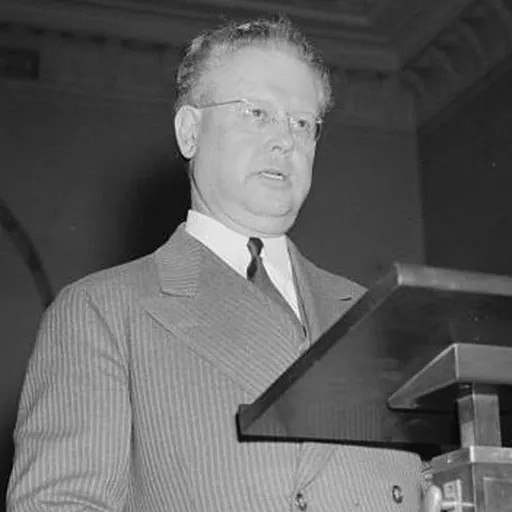
About Ralph Lawrence Carr
Lived 1887 – 1950 (aged 62). Ralph Lawrence Carr was an American politician, jurist, publisher and prosecutor.
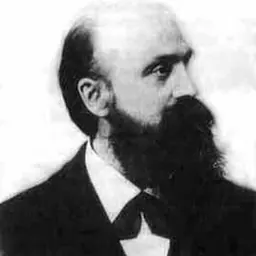
Ralph Lawrence Carr (December 11, 1887 – September 22, 1950) was an American attorney and politician who served as the 29th governor of Colorado from 1939 to 1943. During World War II, he defended the rights of American citizens of Japanese descent and allowed their voluntary relocation to Colorado.
Governor In 1938, after running unopposed in the Republican primary, Carr was elected to a two-year term as governor of Colorado, defeating Democrat Teller Ammons, the incumbent governor.
A conservative Republican, Carr was committed to fiscal restraint in state government and opposed the New Deal policies of President Franklin Roosevelt.
In July 1939, he joined 33 other governors in a statement calling for "moral rearmament" as a solution to the current economic crisis. In August he sent the Colorado National Guard to quell violence between AFL-organized strikers and non-strikers at the Green Mountain Dam construction site. In late 1939, when he was mentioned as a possible Republican candidate for vice-president on the national ticket in 1940, he indicated he preferred to seek re-election as governor: "I am not interested in any job outside Colorado right now." At the Republican National Convention in June 1940, Carr supported Wendell Willkie and seconded his nomination.
He was re-elected in 1940. In January 1941, Carr issued an unconditional pardon to Michael Fillipo, who had been convicted of assault in 1915, escaped from a Colorado prison farm, served in the U.S. Army in World War I, and lived in Brooklyn with his wife and seven children before revealing his Colorado criminal record voluntarily when filing his alien registration.
In July 1942, the state Republican Convention nominated Carr unanimously for the U.S. Senate. Facing the Democratic incumbent Edwin C. Johnson, a former isolationist who pledged unreserved support for FDR, Carr called for "a return to the two-party system, preservation of constitutional rights and an end to bureaucratic dictatorship". He lost the race narrowly in November, with 49.2% of the vote to Johnson's 50.2%.
In September 1950, attempting a political comeback, he won the Republican nomination for governor. He died soon after.
In one speech to a large and hostile audience, made up primarily of worried Colorado farmers, Carr said of the evacuees:
Carr's advocacy for racial tolerance and for protection of the constitutional rights of the Japanese Americans are generally thought to have cost him his political career. He narrowly lost the 1942 Senate election to incumbent Democratic Senator Edwin C. Johnson, who in 1942 had advocated using the National Guard to prevent Japanese Americans from entering Colorado and charged that Carr was more interested in exploiting Japanese labor than protecting civil liberties. in 1948. She was a former client and the daughter of Herbert Fairall, publisher of the Daily Journal.
Death Carr died in a Denver hospital on September 22, 1950, after a long illness related to diabetes. He was buried in Fairmount Cemetery in Denver.
Legacy
In 1976, a bust of Carr was erected in Denver's Sakura Square to commemorate his efforts on behalf of Japanese-Americans. The inscription reads, in part: "Those who benefited from Governor Carr's humanity have built this monument in grateful memory of his unflinching Americanism, and as a lasting reminder that the precious democratic ideals he espoused must forever be defended against prejudice and neglect."
Carr has a street named after him which runs through the western suburbs of Westminster, Arvada, Wheat Ridge, and Lakewood.
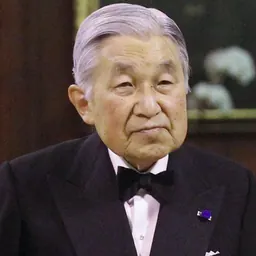
In 1994, Emperor Akihito and Empress Michiko of Japan included a visit to Denver on their tour of the U.S. to honor Carr and Colorado's role in the Japanese internment.
In 1999, the Denver Post named Carr its "Person of the Century".
On March 14, 2008, both houses of the Colorado legislature, in a unanimous vote, named a section of U.S. Route 285 between Kenosha Pass and C-470 the "Ralph Carr Memorial Highway." A monument to him at Kenosha Pass was dedicated on December 12, 2010. The inscription includes a quotation from Carr: "When it is suggested that American citizens be thrown into concentration camps, where they lose all privileges of citizenship under the Constitution, then the principles of that great document are violated and lost."
On June 4, 2008, Colorado Governor Bill Ritter signed legislation authorizing the construction of a new state judicial complex in Denver to be named the Ralph L. Carr Colorado Judicial Center, occupying the entire block between 13th and 14th Avenues and Broadway and Lincoln Street. The center is home to the Colorado State Supreme Court, as well as other major courts and legal agencies.
On July 6, 2012, the Japanese American Citizens League decided to create a special award in his honor.
August 2025, a historical marker honoring Governor Carr, donated by the Jewish American Society for Historic Preservation, with support from the Cripple Creek District Museum, was sited in Cripple Creek. Historical marker honoring Governor Ralph Carr in Cripple Creek, Colorado.
Don’t just read it —
keep it.
Full-length biographies made to live with: read them, listen on the way to work, watch them tonight.
- E-book
- Audio
- Video
Instant download · yours to keep · every purchase keeps this site free
Important facts
People in Ralph Lawrence Carr's life
Named in this biography and alive at the same time


Related people
Same field, nearest in time





Contemporaries
People whose lives overlapped Ralph Lawrence Carr's



Frequently asked questions
Who was Ralph Lawrence Carr?
29th Governor of Colorado, United States (1887-1950)
When was Ralph Lawrence Carr born?
Ralph Lawrence Carr was born on 11 December 1887 in Rosita.
When did Ralph Lawrence Carr die?
Ralph Lawrence Carr died on 22 September 1950 in Denver.
What was Ralph Lawrence Carr's occupation?
Ralph Lawrence Carr was a politician, jurist, publisher and prosecutor.
What nationality was Ralph Lawrence Carr?
Ralph Lawrence Carr was American.
Sources & further reading
· Wikipedia: Ralph Lawrence Carr
· DBpedia: Ralph Lawrence Carr
Cite this page
APA: Biography.guide. (2026). Ralph Lawrence Carr. https://biography.guide/ralph-lawrence-carr/
MLA: "Ralph Lawrence Carr." Biography.guide, https://biography.guide/ralph-lawrence-carr/.
Chicago: "Ralph Lawrence Carr." Biography.guide. https://biography.guide/ralph-lawrence-carr/.
Data last updated: 2026-09-22 · Spot an error? Report a correction.
Portrait: Wikimedia Commons · author & licence
Page generated 2026-09-27 05:01 UTC