
Ralph Fabri
American painter and etcher, born in Hungary
About Ralph Fabri
Lived 1894 – 1975 (aged 80). Ralph Fabri was a Hungarian and American painter, etcher and university teacher.
Ralph Fabri (April 23, 1894 – February 12, 1975) was an American painter. His work was part of the painting event in the art competition at the 1936 Summer Olympics.
Biography Ralph Fabri (originally Febri Reszo) was born in Hungary on April 23, 1894. He did not go by Ralph Fabri until he immigrated New York City in 1921. He became an American citizen in 1927. After a long career as an artist, writer, and educator he died at the age of 80 on February 12, 1975 at his home in Manhattan.
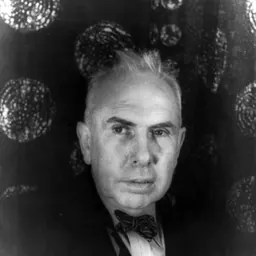
Education In 1918, Fabri received his M.A. in education and the arts from the Royal Academy of Fine Arts in Budapest. Initially his studies were in architecture while he was enrolled with the Royal Institute of Technology (1912-1914). He graduated in 1918 with an M.A. for certification as a Professor from the Royal Academy of Fine Arts. He enrolled at the National Academy of Design in 1923, and after he became an American citizen, he saved up enough money to focus on his art career. He was referred to as "the porch builder" by Theodore Dreiser. He was also referenced as building the "natural stone porch" for Dreiser's house in Mount Kisco, New York, and he also contributed various design work to other structures of the property. In other accounts it is stated that Fabri painted the tepee of Dreiser with a clash of colors that depicted different weather elements and occurrences such as lightning, rain, rainbows, but also clouds and the sun. Fabri was often referenced as a friend of Dreiser due to the many commissions provided to Fabri; yet after his acquaintance died, Fabri commented on Dreiser's controversial character, referring to the exploitation and selfishness he was known for. Despite this, Fabri also found it important to note Dreiser's magnetism and intelligence when speaking with the W.A. Swanberg Papers in 1965.
Fabri did commercial design work during his enrollment at the National Academy of Design. Until the early 1930s he was able to focus on his career as an artist to which he returned to commercial design and also opened "Ralph Fabri Studios" which closed shortly after.
The Stamp & Album Co. was his largest patron, whom he supplied with his ink drawings. He wrote art reviews and articles for Hungarian newspapers after his arrival in the United States and even submitted his work to local papers.
Honors and awards Fabri was part of local art organizations referred to as the California Society of Etchers, the Society of American Graphic Artists, and contributed time to Boston and Washington in various printmaker organizations.
His piece To Be or Not To Be won the John Taylor Arms Prize from Society of American Etchers in 1943.
Don’t just read it —
keep it.
Full-length biographies made to live with: read them, listen on the way to work, watch them tonight.
- E-book
- Audio
- Video
Instant download · yours to keep · every purchase keeps this site free
Important facts
People in Ralph Fabri's life
Named in this biography and alive at the same time


Related people
Same field, nearest in time


Contemporaries
People whose lives overlapped Ralph Fabri's


Frequently asked questions
Who was Ralph Fabri?
American painter and etcher, born in Hungary (1894–1975)
When was Ralph Fabri born?
Ralph Fabri was born on 23 April 1894 in Budapest.
When did Ralph Fabri die?
Ralph Fabri died on 12 February 1975 in New York City.
What was Ralph Fabri's occupation?
Ralph Fabri was a painter, etcher and university teacher.
What nationality was Ralph Fabri?
Ralph Fabri was Hungarian and American.
Sources & further reading
Cite this page
APA: Biography.guide. (2026). Ralph Fabri. https://biography.guide/ralph-fabri/
MLA: "Ralph Fabri." Biography.guide, https://biography.guide/ralph-fabri/.
Chicago: "Ralph Fabri." Biography.guide. https://biography.guide/ralph-fabri/.
Data last updated: 2026-09-22 · Spot an error? Report a correction.
Page generated 2026-09-27 05:16 UTC