
John Taylor
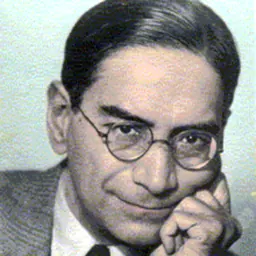
British inventor, entrepreneur, horologist and philanthropist
About John Taylor
Born 1933. John Taylor is a British inventor, businessperson, entrepreneur, horology and philanthropist, known for Corpus Clock and Thermostat.
John Crawshaw Taylor (born 25 November 1936) is an English inventor, entrepreneur, horologist and philanthropist best known for his extensive research into electric kettles.
Early life John C Taylor was born on 25 November 1936 in Buxton, Derbyshire to Eric Hardman Taylor (1904–1972) and Gwendolen Marjorie Jones (1904–1975). John had one older sister, Judith Sian Taylor (1934–2011).
When the Second World War commenced on 3 September 1939 it was decided that John would be sent to Canada along with his mother and sister. On 30 May 1940 they travelled to Montréal, Canada and settled in Belleville, Ontario until 28 January 1945 when they returned to England.
John was educated firstly at Belleville Kindergarten, then at Queen Alexandra School. Upon returning to England John studied at the Combs Village School. Following this John attended Holme Leigh Preparatory School before moving to the Isle of Man to attend King William's College. John was then accepted into Corpus Christi College, Cambridge from 1956 to 1959, where he graduated with a degree in Natural Sciences.
Career
After graduating in 1959 Taylor had planned to continue his studies further, however at the last moment the funding was pulled and reluctantly he joined his father Eric's company Otter Controls as a Graduate Trainee. It is said that he "soon revealed himself to have inherited his father's inventive genius".
When Eric Taylor died in 1971, his son took over as Chairman of Otter Controls. Two years later, Castletown Thermostats changed its name to Strix Ltd, and in 1984, Eddie Davies was appointed as Chief Executive, with Taylor remaining Chairman.
Castletown Thermostats had started by making bimetallic thermostats for use in various industries. In the 1960s, the market for electric kettles was growing, and Castletown extended its manufacturing plant to produce and test a new device for controlling kettles. sold over 200 million thermostat controls for electric kettles, and received several Queen's Awards and other awards. In 2005, ABN AMRO Capital led a leveraged buyout of Strix; the value of the transaction was not disclosed. Today, Strix employs 1000 people, holds over 600 patents, and turns over more than £100 million per year. Strix controls are incorporated into electric kettles from many leading manufacturers, and it is estimated that they are used over one billion times per day worldwide, by over 20% of the world's population. Taylor, with the architect Julian Bicknell built an oval mansion, Arragon Mooar House, on the Isle of Man.
Philanthropic activities
Since his retirement in 1999, as well as funding numerous undergraduate and postgraduate scholarships and bursaries. In 2017, the Royal Academy of Engineering named their newly refurbished Enterprise Hub after Taylor, in recognition of his donation that enabled the project.
He was appointed Officer of the Order of the British Empire (OBE) in the 2011 New Year Honours for services to business and horology.
Horology and the Chronophage clocks
Taylor attracted public attention in September 2008 when the Corpus Clock, also known as the Chronophage, was installed on the outer wall of the Taylor Library of Corpus Christi College and unveiled by Stephen Hawking. John Taylor spent £1m of his own money in the construction of the Corpus Clock and gave it as a gift to the college.
The second in the series, the Midsummer Chronophage, depicts a science-fiction fly and was exhibited at the Saatchi Gallery, the Science Museum, London and the National Museum of Scotland. Like the Corpus Chronophage, its face is made from 24-carat gold plate on stainless steel.
The third is the Dragon Chronophage, exhibited in Shanghai on 27–30 March 2015 as part of Design Shanghai, China's premier design event. It features a Chinese dragon which appears to swallow a pearl every hour.
The fourth Chronophage is a private commission, and its details are currently being kept secret at the customer's request.
There are features that are common to all of the Chronophage clocks. They are all designed to show the grasshopper escapement, part of a conventional clock mechanism that was invented by John Harrison. The grasshopper escapement, which is usually internal, is externalised and appears to drag the escape wheel around the rim of the clock.
When building the Corpus Chronophage, Taylor found that the inertia issues presented by such a large grasshopper escapement made the mechanism unworkable. With reference to this problem, he has said, "We had to turn a disaster into an advantage. Our efforts to prevent the amplitude of the pendulum from increasing led us to the idea of running both fast and slow and correcting them." The final outcome was a mechanical clock that is assisted by mechanical controls and a periodic signal from the atomic clock at the UK's National Physical Laboratory. All of the Chronophage clocks use this method of telling time, which allows Taylor to explore the concept of relative time as theorised by Albert Einstein.
Don’t just read it —
keep it.
Full-length biographies made to live with: read them, listen on the way to work, watch them tonight.
- E-book
- Audio
- Video
Instant download · yours to keep · every purchase keeps this site free
Important facts
People in John Taylor's life
Named in this biography and alive at the same time




Related people
Same field, nearest in time



Contemporaries
People whose lives overlapped John Taylor's


Frequently asked questions
Who is John Taylor?
British inventor, entrepreneur, horologist and philanthropist
When was John Taylor born?
John Taylor was born on 25 November 1933.
What is John Taylor's occupation?
John Taylor is an inventor, businessperson, entrepreneur, horology and philanthropist.
What is John Taylor known for?
John Taylor is known for Corpus Clock and Thermostat.
What nationality is John Taylor?
John Taylor is British.
Sources & further reading
· DBpedia: John Taylor (inventor)
Cite this page
APA: Biography.guide. (2026). John Taylor. https://biography.guide/john-taylor-inventor/
MLA: "John Taylor." Biography.guide, https://biography.guide/john-taylor-inventor/.
Chicago: "John Taylor." Biography.guide. https://biography.guide/john-taylor-inventor/.
Data last updated: 2026-09-22 · Spot an error? Report a correction.
Page generated 2026-09-27 05:18 UTC