
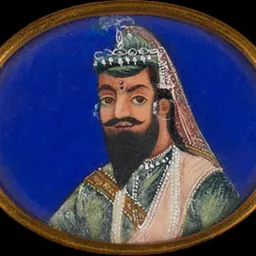
Raja Jai Lal Singh
Indian commander
About Raja Jai Lal Singh
Lived 1803 – 1859 (aged 56).
Raja Jai Lal Singh (31 May 1803 – 1 October 1859) was a Kshatriya Kurmi he played a decisive role in the early victories against the British East India Company in and around Lucknow. Known for his guerrilla tactics, strategic acumen, and staunch resistance against colonial rule, he was eventually captured and executed by the British.
Early life Jai Lal Singh was born on 31 May 1803 into a prosperous Kshatriya Kurmi royal family in Azamgarh.
Role in the 1857 Rebellion In 1857, following the forced exile of Nawab Wajid Ali Shah, Begum Hazrat Mahal assumed control of Awadh’s resistance. Her 11-year-old son, Birjis Qadr, was ceremoniously crowned in Lucknow, and Raja Jai Lal Singh was appointed Commander-in-Chief of the Awadh army, honored with the title "Nusrat Jung".
On 30 June 1857, he led a major victory against the British at the Battle of Chinhat, about 6 miles from Lucknow. His guerrilla forces overwhelmed the British column led by Brigadier General Wheeler, forcing them to retreat to the Residency.
Jai Lal Singh’s military campaigns included strategic deployments along the Lucknow-Kanpur road. He is noted to have slain a British telegraph officer, Devery, and presented his severed head to Begum Hazrat Mahal as a symbol of loyalty.
Strategic leadership As the commander, he implemented guerilla warfare tactics, frustrating British advances with smaller, mobile forces. Despite being outnumbered, his defense of Lucknow kept British forces from entering the city for several months. Historian Subhash Kushwaha notes that Jai Lal Singh orchestrated the coronation of Birjis Qadr on 5 June 1857 at the site now marked by the KD Singh Babu Stadium in Lucknow.
Capture and execution Jai Lal Singh's resistance ended tragically. He was later arrested by the British and tried for the murder of Devery, inciting rebellion, and aiding Nana Sahib during the revolt. Denied any chance of appeal, he was sentenced to death and hanged on 1 October 1859.
Legacy Though little remembered in mainstream history, Jai Lal Singh is increasingly recognized as one of the unsung heroes of the 1857 Rebellion. Scholars and civil servants like IPS Pratap Gopendra have published works to highlight his contributions, which were essential to sustaining Awadh’s resistance during the rebellion.
Don’t just read it —
keep it.
Full-length biographies made to live with: read them, listen on the way to work, watch them tonight.
- E-book
- Audio
- Video
Instant download · yours to keep · every purchase keeps this site free
Important facts
People in Raja Jai Lal Singh's life
Named in this biography and alive at the same time


Contemporaries
People whose lives overlapped Raja Jai Lal Singh's






Frequently asked questions
Who was Raja Jai Lal Singh?
Indian commander (1803–1859)
When was Raja Jai Lal Singh born?
Raja Jai Lal Singh was born on 31 May 1803.
When did Raja Jai Lal Singh die?
Raja Jai Lal Singh died on 1 October 1859.
Sources & further reading
· Wikipedia: Raja Jai Lal Singh
Cite this page
APA: Biography.guide. (2026). Raja Jai Lal Singh. https://biography.guide/raja-jai-lal-singh/
MLA: "Raja Jai Lal Singh." Biography.guide, https://biography.guide/raja-jai-lal-singh/.
Chicago: "Raja Jai Lal Singh." Biography.guide. https://biography.guide/raja-jai-lal-singh/.
Data last updated: 2026-09-20 · Spot an error? Report a correction.
Page generated 2026-09-27 05:00 UTC