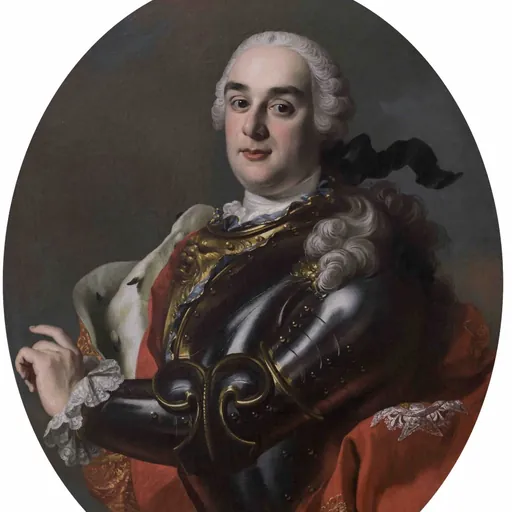
Raimondo di Sangro, 7th Prince of Sansevero
Italian Prince, esotericist, inventor and anatomist
About Raimondo di Sangro, 7th Prince of Sansevero
Lived 1710 – 1771 (aged 61). Raimondo di Sangro, 7th Prince of Sansevero was an inventor, typographer and military personnel.
Raimondo di Sangro, Prince of Sansevero (30 January 1710 – 22 March 1771) was an Italian nobleman, inventor, soldier, writer, scientist, alchemist and freemason best remembered for his reconstruction of the Sansevero Chapel in Naples.
Early life The seventh Prince of San Severo was born in Torremaggiore into a noble family. His father was Antonio, Duke of Torremaggiore, and his mother was Cecilia Gaetani dell'Aquila d'Aragona. His mother died shortly after his birth. He spent his earliest years in Naples and in 1720 he was sent to the Jesuit Roman College in Rome to be educated. He studied under Athanasius Kircher's successor, the polymath Filippo Bonanni, and became fascinated with the Kircherian Museum and Jesuit scientific tradition. In 1726 he inherited the title of prince of Sansevero from his grandfather.
Career In 1730, at the age of 20, he returned to Naples, where he met some of the most important intellectuals in the kingdom, including Celestino Galiani and Antonio Genovesi. In 1742 he was appointed Lord Chamberlain by king Charles III and the following year he became a member of the prestigious Accademia della Crusca.
In 1744 he distinguished himself at the head of a regiment during the Battle of Velletri, in the war between the Habsburgs and the Bourbons. While in command of the military he built a cannon out of lightweight materials which had a longer range than the standard ones of the time, and wrote a military treatise on the employment of infantry (Manuale di esercizi militari per la fanteria) for which he was praised by Frederick II of Prussia. A carriage with wood and cork "horses" which, driven by a cunning system of paddlewheels, could travel on both land and water Coloured fireworks A printing press which could print different colours in a single impression.
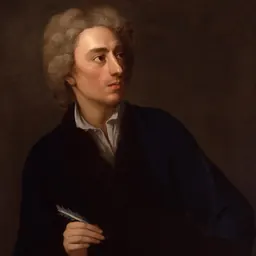
Publishing The Prince spoke several European languages, as well as Arabic and Hebrew. After returning to Naples he set up a printing press in the basement of his house where he printed both his own works and those of others, some of which he translated himself. As some of these were censored by the ecclesiastical authorities he also wrote anonymously. Some of his publications were clearly influenced by Freemasonry, and he communicated with fellow masons such as the Scot Andrew Michael Ramsay, whose Travels of Cyrus he translated and published, and the English poet Alexander Pope, whose Rape of the Lock he translated and published (although, due to condemnations by the Jesuits, he had to deny these activities). He was head of the Neapolitan masonic lodge until he was excommunicated by the Church, making an enemy of the Neapolitan cardinal Giuseppe Spinelli. The excommunication was later revoked by Pope Benedict XIV, probably on account of the influence of the di Sangro family.
To add to the sense of dread, di Sangro's family home in Naples, the Palazzo Sansevero, was the scene of a brutal murder at the end of the 16th century, when the composer Carlo Gesualdo caught his wife and her lover in flagrante delicto, and hacked them to death in their bed.
Later life
The last years of his life were dedicated to decorating the Sansevero Chapel with marble works from the greatest artists of the time, including Antonio Corradini, Francesco Queirolo, and Giuseppe Sanmartino (whose Veiled Christ'''s detailed marble veil was thought by many to be created by di Sangro's alchemy) and preparing anatomical models. Two of the models, known as anatomical machines, are still on display in the chapel, and have given rise to legends as to how they were constructed (even today the exact method is not known). Until recently many Neapolitans believed that the models were of his servant and a pregnant woman, into whose veins an artificial substance was injected under pressure, but the latest research has shown that the models are artificial.
He destroyed his own scientific archive before he died. After his death, his descendants, under threat of excommunication by the Church due to di Sangro's involvement with Freemasonry and alchemy, destroyed what was left of his writings, formulae, laboratory equipment and results of experiments.
Death Raimondo di Sangro died in Naples in 1771, his death being hastened by the continuous use of dangerous chemicals in his experiments and inventions. In 1794, the Swedish naturalist Carl Peter Thunberg named the plant genus Sansevieria'' after him.
Don’t just read it —
keep it.
Full-length biographies made to live with: read them, listen on the way to work, watch them tonight.
- E-book
- Audio
- Video
Instant download · yours to keep · every purchase keeps this site free
Important facts
more
Raimondo di, principe di Sansevero SangroPeople in Raimondo di Sangro, 7th Prince of Sansevero's life
Named in this biography and alive at the same time


Related people
Same field, nearest in time
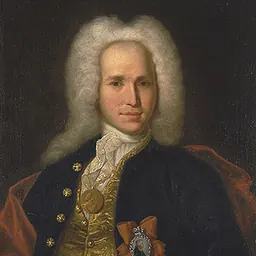
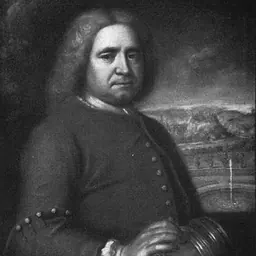
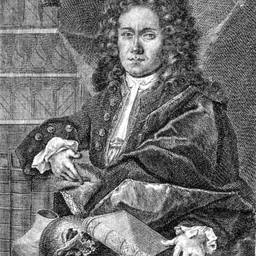
Contemporaries
People whose lives overlapped Raimondo di Sangro, 7th Prince of Sansevero's

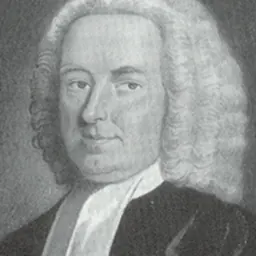




Frequently asked questions
Who was Raimondo di Sangro, 7th Prince of Sansevero?
Italian Prince, esotericist, inventor and anatomist (1710-1771)
When was Raimondo di Sangro, 7th Prince of Sansevero born?
Raimondo di Sangro, 7th Prince of Sansevero was born on 30 January 1710 in Torremaggiore.
When did Raimondo di Sangro, 7th Prince of Sansevero die?
Raimondo di Sangro, 7th Prince of Sansevero died on 22 March 1771 in Naples.
What was Raimondo di Sangro, 7th Prince of Sansevero's occupation?
Raimondo di Sangro, 7th Prince of Sansevero was an inventor, typographer and military personnel.
What nationality was Raimondo di Sangro, 7th Prince of Sansevero?
Raimondo di Sangro, 7th Prince of Sansevero's recorded nationality: Spanish Empire.
Sources & further reading
· Wikipedia: Raimondo di Sangro, 7th Prince of Sansevero
Cite this page
APA: Biography.guide. (2026). Raimondo di Sangro, 7th Prince of Sansevero. https://biography.guide/raimondo-di-sangro-7th-prince-of-sansevero/
MLA: "Raimondo di Sangro, 7th Prince of Sansevero." Biography.guide, https://biography.guide/raimondo-di-sangro-7th-prince-of-sansevero/.
Chicago: "Raimondo di Sangro, 7th Prince of Sansevero." Biography.guide. https://biography.guide/raimondo-di-sangro-7th-prince-of-sansevero/.
Data last updated: 2026-09-21 · Spot an error? Report a correction.
Portrait: Wikimedia Commons · author & licence
Page generated 2026-09-27 05:01 UTC