
Raghuram Rajan
Indian economist and former governor of Reserve Bank of India
About Raghuram Rajan
Born 1963. Raghuram Rajan is an Indian economist, banker and university teacher.
Raghuram Govind Rajan (born 3 February 1963) is an Indian economist and the Katherine Dusak Miller Distinguished Service Professor of Finance at the University of Chicago's Booth School of Business. He served as the Chief Economist of the International Monetary Fund from 2003 to 2006 and the 23rd Governor of the Reserve Bank of India from 2013 to 2016.
At the 2005 Federal Reserve annual Jackson Hole conference, three years before the 2008 financial crisis, Rajan warned about the growing risks in the financial system, that a financial crisis could be in the offing, and proposed policies that would reduce such risks. Former U.S. Treasury Secretary Lawrence Summers called the warnings "misguided" and Rajan himself a "luddite". However, after the 2008 financial crisis, Rajan's views came to be seen as prescient, and he was extensively interviewed for the Academy Awards-winning documentary Inside Job (2010).
In 2003, Rajan received the inaugural Fischer Black Prize, given every two years by the American Finance Association to the financial economist younger than 40 who has made the most significant contribution to the theory and practice of finance. His book, Fault Lines: How Hidden Fractures Still Threaten the World Economy, won the Financial Times/Goldman Sachs Business Book of the Year award in 2010. In 2016, he was named by Time in its list of the top 100 influential people.
Early life and education Raghuram Rajan was born on 3 February 1963 in Bhopal, Madhya Pradesh, to a Tamil Iyengar Brahmin family, some metres from where the Gas Tragedy took place.
His father, R. Govindarajan, was posted to Indonesia in 1966 due to his work with the Intelligence Bureau. In 1968, he joined the newly created external intelligence unit, the Research and Analysis Wing (R&AW) where he served as staff officer under R. N. Kao and became part of the "Kaoboys". In 1970, he was posted to Sri Lanka, where political turmoil in the country caused Rajan to miss one year of school. His father was then posted to Belgium, where Rajan attended a French international school. The family returned to India in 1974. Throughout his childhood, Rajan presumed his father to be a diplomat since the family traveled on diplomatic passports. In 1981 he enrolled at Indian Institute of Technology, Delhi for a bachelor's degree in electrical engineering. In the final year of his four-year degree, he headed the Student Affairs Council. In his thesis, Rajan argued that this might not necessarily be the case. The first essay focused on the choice available to firms between arm's length credit and relationship-based credit. The second focused on the Glass-Steagall Act, and the conflict of interest involved when a commercial lending bank enters into investment banking. The final essay examined why indexation of a country's debt, despite offering potential advantages, seldom featured in debt reduction plans. the Hong Kong University of Science and Technology in 2015, and the Catholic University of Louvain in 2019.
Career Academic career In 1991, Rajan joined as an assistant professor of finance at the Booth School of Business at the University of Chicago, and became a full professor in 1995. He has taught as a visiting professor at Stockholm School of Economics, Kellogg School of Management, MIT Sloan School of Management, and Indian School of Business.
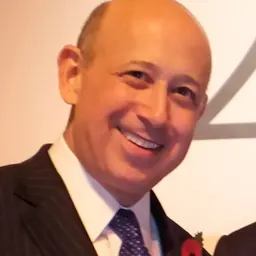
Rajan, with Lionel Barber (left) and Lloyd Blankfein (right), at the FT and Goldman Sachs Business Book of the Year Award ceremony in 2010. Rajan has written extensively on banking, corporate finance, international finance, growth and development, and organisational structures. He is a regular contributor to Project Syndicate. He has collaborated with Douglas Diamond to produce much-cited work on banks, and their interlinkages with macroeconomic phenomena. He has worked with Luigi Zingales on the effect of institutions on economic growth, their research showing that development of free financial markets is fundamental to economic modernisation. Rajan's 2010 book Fault Lines: How Hidden Fractures Still Threaten the World Economy examined the fundamental stresses in the American and the global economy that led to the 2008 financial crisis. He argued that widening income inequality in the US, trade imbalances in the global economy, and the clash between arm's length financial systems, were responsible for bringing about the crisis. The book won the Financial Times and Goldman Sachs Business Book of the Year Award.
The Research Papers in Economics project ranks him among the world's most influential economists, featuring him among the top 5% of authors. He was awarded the inaugural 2003 Fischer Black Prize, given biennially by the American Finance Association to the best finance researcher under the age of 40, for his "path-breaking contributions to our knowledge of financial institutions, the workings of the modern corporation, and the causes and consequences of the development of the financial sector across countries."
He became a member of the American Academy of Arts and Sciences in 2009, and served as the president of the American Finance Association in 2011. He has served as a founding member of the academic council of the Indian School of Business since 1998.
International Monetary Fund After the 1997 Asian financial crisis, the International Monetary Fund was facing criticism for its imposition of fiscal austerity and tighter monetary policies on developing nations. Critics, including Nobel laureate and former chief economist at the World Bank, Joseph Stiglitz, held the IMF's policies responsible for increased economic volatility and destabilisation. While the role of the chief economist had previously always been held by a leading macroeconomist, the IMF wanted to strengthen its financial expertise. American economist Anne Krueger, then the IMF's first deputy managing director, had recently read Rajan's book Saving Capitalism from the Capitalists, and reached out to him to understand if he would be interested. Although Rajan seemed to harbour reservations initially, reportedly telling her, "Well, Anne, I don't know any macroeconomics", he appeared for an interview, and was subsequently appointed. At 40, he was the youngest individual, and the first born in an emerging-market nation, to be appointed the chief economist at the IMF.
At the IMF, Rajan laid the groundwork for integrating financial sector analysis into the IMF's economic country models. He also led a team to assist some major economies in reducing balance of payments imbalances. While he largely kept fiscal austerity policies intact, on occasions he also published research that went against the prevailing orthodoxy at the IMF. A 2006 paper, published with Eswar Prasad and Arvind Subramanian, concluded that while growth and the extent of foreign financing were positively correlated in industrial countries, non-industrial countries that had relied on foreign finance had grown slower than those that had not.
While he was asked to stay on as the chief economist for a second term, Rajan left after one term as the University of Chicago indicated that his leave could not be extended.
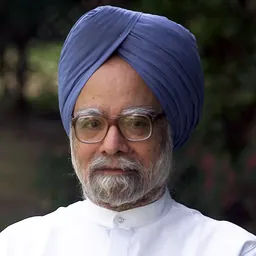
In November 2008, Indian Prime Minister Dr Manmohan Singh appointed Rajan as an honorary economic adviser, a role that involved writing policy notes at Singh's request. He prepared the Economic Survey of India for the year 2012–13. In the annual survey, he urged the government to reduce spending and subsidies, and recommended the redirection of Indians from agriculture to service and skilled manufacturing sector. He was also skeptical of the Food Security Bill in light of the rising fiscal deficits.
Reserve Bank of India On 6 August 2013 it was announced that Rajan would take over as the Governor of the Reserve Bank of India for a term of 3 years, succeeding Duvvuri Subbarao. On 5 September 2013 he took charge as the 23rd governor, at which point he took a leave of absence from the University of Chicago Booth School of Business.
Raghuram Rajan meeting Prime Minister Narendra Modi in 2014. In his first speech as RBI governor, Rajan promised banking reforms and eased curbs on foreign banking, following which the BSE SENSEX rose by 333 points or 1.83%. After his first day at office, the rupee rose 2.1% against the US dollar. As Governor of the RBI, Rajan made curbing inflation his primary focus, bringing down retail inflation from 9.8% in September 2013 to 3.78% in July 2015 – the lowest since the 1990s. Wholesale inflation came down from 6.1% in September 2013 to a historic low of -4.05% in July 2015.
In a 2014 interview, Rajan said his major targets as governor of the Reserve Bank of India were to lower inflation, increase savings and deepen financial markets, of which he believed reducing inflation was the most important. A panel he appointed proposed an inflation target for India of 6% for January 2016 and 4% (+ or -2%) thereafter.
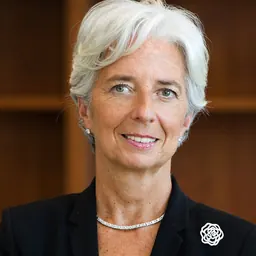
Media reports positioned Rajan as a prospective successor to Christine Lagarde as head of the IMF when her term expired in 2016, even as Rajan himself countered such speculation. This did not eventually come to bear, as Lagarde was nominated for a second term at the end of her tenure. On 9 November 2015, Rajan was appointed as Vice-Chairman of the Bank for International Settlements (BIS).
In May 2016, in a letter to Prime Minister Narendra Modi, Rajya Sabha MP Subramanian Swamy leveled several allegations against Rajan. He accused Rajan of raising interest rate to the detriment of small and medium industries. He also claimed that Rajan has been sending confidential and sensitive financial information using his University of Chicago unsecured personal email address.
On 18 June 2016, Rajan announced that he would not be serving a second term as RBI Governor, and planned to return to academia. In September 2017, Rajan revealed that though he was willing to take an extension and serve a second term as RBI Governor, the government had not extended any offer to him which left him with no choice but to return to the University of Chicago. He also denied claims that the University of Chicago had, at that time, refused to accept his leave of absence to continue for a second term.
Economic and political views
Rajan's economic and political views were influenced by his experience of the Indian economy during The Emergency. As an economist, he was therefore wary of the risks of both unnecessary government intervention as well as unregulated financial markets, while remaining a champion of capitalism. In May 2023, in his speech at the Ideas for India Conference organised by Bridge India he argued that India’s democracy is the path to its economic growth, attracting media attention.
Financial markets
Rajan advocates giving financial markets a greater role in the economy. In the book Saving Capitalism from the Capitalists: Unleashing the Power of Financial Markets to Create Wealth and Spread Opportunity co-authored with Luigi Zingales, the two authors argue in favour of deregulated financial markets in order to facilitate access of the poor to finance: "Capitalism, or more precisely, the free market system, is the most effective way to organise production and distribution that human beings have found … healthy and competitive financial markets are an extraordinarily effective tool in spreading opportunity and fighting poverty. …Without vibrant, innovative financial markets, economies would ossify and decline." (p 1)
In 2005, at a celebration honouring Alan Greenspan, who was about to retire as chairman of the US Federal Reserve, Rajan delivered a controversial paper that was critical of the financial sector. In that paper, "Has Financial Development Made the World Riskier?", Rajan "argued that disaster might loom." Rajan argued that financial sector managers were encouraged to "take risks that generate severe adverse consequences with small probability but, in return, offer generous compensation the rest of the time. These risks are known as tail risks. But perhaps the most important concern is whether banks will be able to provide liquidity to financial markets so that if the tail risk does materialise, financial positions can be unwound and losses allocated so that the consequences to the real economy are minimised."
The response to Rajan's paper at the time was negative. For example, former U.S. Treasury Secretary and former Harvard President Lawrence Summers called the warnings "misguided" and Rajan himself a "luddite". However, following the 2008 financial crisis, Rajan's views came to be seen as prescient; by January 2009, The Wall Street Journal proclaimed that now, "few are dismissing his ideas."
Austerity vs stimulus
During May 2012, Rajan and Paul Krugman expressed differing views on how to reinvigorate the economies in the US and Europe, with Krugman mentioning Rajan by name in an opinion editorial. This debate occurred against the backdrop of a significant "austerity vs stimulus" debate occurring at the time, with some economists arguing one side or the other or a combination of both strategies. In an article in Foreign Affairs magazine, Rajan advocated structural or supply-side reforms to improve competitiveness of the workforce to better adapt to globalisation, while also supporting fiscal austerity measures (E.g., raising taxes and cutting spending), although he conceded that austerity could slow economies in the short-run and cause significant "pain" for certain constituencies. Krugman rejected this focus on structural reforms combined with fiscal austerity. Instead he advocated traditional Keynesian fiscal (government spending and investment) and monetary stimulus, arguing that the primary factor slowing the developed economies at that time was a general shortfall in demand across all sectors of the economy, not structural or supply-side factors that affected particular sectors.
As far as his position on India is concerned, Rajan stayed away from the Bhagwati vs. Sen debate, and has tended to sympathize with both sides of the so-called "growth vs. welfare" argument. While Rajan's views in general align with Bhagwati's (with respect to how growth is seen as the main source of development), he has also argued for government involvement in health and education like Sen, and has pointed to the resultant threat of oligarchy or alienation of the poor.
Demonetization in India
In interviews in September 2017, Rajan said the Government of India had consulted the Reserve Bank of India, during his Governorship, on the issue of demonetization but never asked to take a decision. He said the RBI was against the move and warned the government of the potential negative effects. Rajan also termed the currency notes ban exercise as, "One cannot in any way say it has been an economic success".
Bharat Jodo Yatra Rajan was criticized by BJP leaders after attending the Rahul Gandhi-led Bharat Jodo Yatra.
Awards In 2003, Rajan won the inaugural Fischer Black Prize awarded by the American Finance Association for contributions to the theory and practice of finance by an economist under age 40. In February 2010 NASSCOM named him Global Indian at its 7th annual global leadership awards. In 2010, he was awarded the Financial Times and McKinsey Business Book of the Year Award, Fault Lines: How Hidden Fractures Still Threaten the World Economy. In November 2011 he received the Infosys Prize for Social Sciences – Economics for his work in analyzing the contribution of financial development to economic growth, as well as the potentially harmful effects of dysfunctional incentives that lead to excessive risk-taking. In 2013, he was awarded the fifth Deutsche Bank Prize in Financial Economics for his "ground-breaking research work which influenced financial and macro-economic policies around the world". In 2014 he was conferred with the "Governor of the Year Award 2014" from London-based financial journal Central Banking. In March 2019, he was awarded "Yashwantrao Chavan National Award 2018" for his contribution to economic development. In May 2023 he was awarded an honorary doctorate by the London School of Economics.
Don’t just read it —
keep it.
Full-length biographies made to live with: read them, listen on the way to work, watch them tonight.
- E-book
- Audio
- Video
Instant download · yours to keep · every purchase keeps this site free
Important facts
People in Raghuram Rajan's life
Named in this biography and alive at the same time





Related people
Same field, nearest in time





Contemporaries
People whose lives overlapped Raghuram Rajan's



Frequently asked questions
Who is Raghuram Rajan?
Indian economist and former governor of Reserve Bank of India
When was Raghuram Rajan born?
Raghuram Rajan was born on 3 February 1963 in Bhopal.
What is Raghuram Rajan's occupation?
Raghuram Rajan is an economist, banker and university teacher.
What nationality is Raghuram Rajan?
Raghuram Rajan is Indian.
Sources & further reading
Cite this page
APA: Biography.guide. (2026). Raghuram Rajan. https://biography.guide/raghuram-rajan/
MLA: "Raghuram Rajan." Biography.guide, https://biography.guide/raghuram-rajan/.
Chicago: "Raghuram Rajan." Biography.guide. https://biography.guide/raghuram-rajan/.
Data last updated: 2026-09-26 · Spot an error? Report a correction.
Page generated 2026-09-27 05:14 UTC