
About Radaslaŭ Astroŭski
Lived 1887 – 1976 (aged 88). Radaslaŭ Astroŭski was a Russian and Polish politician, minister and activist.
Radasłaŭ Kazimiravič Astroŭski (25 October 1887 – 17 October 1976) was a Belarusian collaborator with Nazi Germany who served as the president of the Belarusian Central Council, a puppet Belarusian administration under German hegemony from 1943–1944, and in exile from 1948-1976.
Early years
Radasłaŭ Astroŭski was born on 25 October 1887 in the town of Zapolle, Slutsk Uyezd, Minsk Governorate. He studied at the Slutsk gymnasium, but was expelled for participating in the Russian Revolution of 1905–1907. In 1908, he was accepted to the mathematical faculty of Saint Petersburg University. In 1911, he was arrested for taking part in revolutionary riots and was imprisoned at Saint Petersburg and Pskov. After his release in 1912, he re-entered the university and later transferred to the University of Tartu, from where he graduated with a degree in physics and mathematics.
After University, Astroŭski worked as a teacher in Częstochowa, Poland and in Minsk. From 1915 to 1917, he taught at the Minsk Teaching Institute. After the February Revolution, he became the commissar of the Russian Provisional Government in Slutsk paviet. In September of that same year, he founded the and became its principal.
Astroŭski opposed the October Revolution. He was a delegate to the December 1917 First All-Belarusian Congress and published articles in support of the idea of Belarusian independence. In 1918, Astroŭski served as the Education Minister in the government of the Belarusian Democratic Republic, under Prime Minister Raman Skirmunt. He also took part in the 1920 Slutsk uprising against the Red Army.
Political activity in West Belarus
In 1921, he moved into West Belarus in the Second Polish Republic. He served as principal of the Belarusian Gymnasium of Vilnia from 1924 to 1936.
Life in exile
After the war, Astroŭski fled from the Soviets and ended up living in Volksgartenstraße, Langenfeld, Rhineland in West Germany. In 1956, he moved to the United States by way of Argentina and resided in South River, New Jersey. He actively participated in Belarusian national activism abroad, and was the main ideologist of the BCR as the legitimate Belarusian government in exile, thus not admitting such status for the main Belarusian People's Republic Council. Astroŭski became a member of the central committee of the Anti-Bolshevik Bloc of Nations.
Death
Astroŭski died on 17 October 1976 in Benton Harbor, Michigan. He is buried at the Saint Euphrosynia Belarus Orthodox Church Cemetery in South River, New Jersey
Don’t just read it —
keep it.
Full-length biographies made to live with: read them, listen on the way to work, watch them tonight.
- E-book
- Audio
- Video
Instant download · yours to keep · every purchase keeps this site free
Important facts
People in Radaslaŭ Astroŭski's life
Named in this biography and alive at the same time
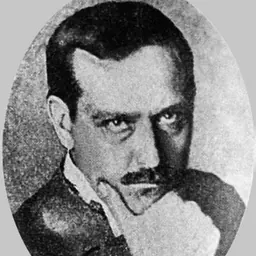
Related people
Same field, nearest in time





Contemporaries
People whose lives overlapped Radaslaŭ Astroŭski's



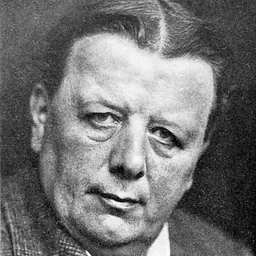
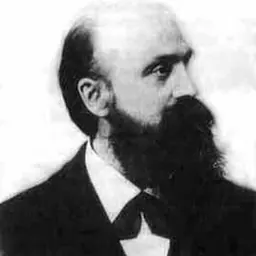

Frequently asked questions
Who was Radaslaŭ Astroŭski?
Belarusian politician
When was Radaslaŭ Astroŭski born?
Radaslaŭ Astroŭski was born on 25 October 1887 in Zapollie.
When did Radaslaŭ Astroŭski die?
Radaslaŭ Astroŭski died on 17 October 1976 in Benton Harbor.
What was Radaslaŭ Astroŭski's occupation?
Radaslaŭ Astroŭski was a politician, minister and activist.
What nationality was Radaslaŭ Astroŭski?
Radaslaŭ Astroŭski was Russian and Polish.
Sources & further reading
· Wikipedia: Radaslaŭ Astroŭski
Cite this page
APA: Biography.guide. (2026). Radaslaŭ Astroŭski. https://biography.guide/radaslau-astrouski/
MLA: "Radaslaŭ Astroŭski." Biography.guide, https://biography.guide/radaslau-astrouski/.
Chicago: "Radaslaŭ Astroŭski." Biography.guide. https://biography.guide/radaslau-astrouski/.
Data last updated: 2026-09-26 · Spot an error? Report a correction.
Page generated 2026-09-27 05:15 UTC