
About Rada Dyson-Hudson
Lived 1930 – 2016 (aged 85–86). Rada Dyson-Hudson was an American anthropologist and university teacher.
Vera Radaslava Dyson-Hudson (; July 8, 1930 – April 14, 2016) was an American anthropologist. Originally interested in Drosophila genetics and a winner of the 1947 Westinghouse Science Talent Search, she switched towards anthropology after meeting her husband Neville Dyson-Hudson. A 1955 Guggenheim Fellow, she did two field studies in east Africa, focusing on the Karamojong people and Turkana people. She was co author of Rethinking Human Adaptation: Biological and Cultural Models and HRAFlex (1985). Originally a lecturer at the University of Khartoum, she worked at Johns Hopkins University, Binghamton University, and Cornell University as a professor, retiring from the last school as a professor emeritus.
Biography Early life and education Vera Radaslava Dyson-Hudson was born on July 8, 1930, on Long Island in New York, daughter of science teacher Mary Alexandra ( Ziegler) and geneticist Milislav Demerec, who was working at nearby Cold Spring Harbor Laboratory at the time. During her youth, she assisted "world-class" scientists and other children in their experiments, and befriended Sophie Coe (who also later became an anthropologist like her) with whom she once assisted Coe's father, evolutionary biologist Theodosius Dobzhansky, in his field research.
After attending Swarthmore College, she obtained her PhD as a Fulbright Scholar from Somerville College, Oxford, in 1954; her dissertation, Taxonomy and ecology of the British species of drosophila, was supervised by Arthur Cain and Philip Sheppard. She switched to anthropological work after meeting Neville Dyson-Hudson at Oxford, this would later be one of the funding sources for the duo's three-year field study on the Karamojong people in the then–Protectorate of Uganda, which they undertook from January 1955 until September 1958; she would examine the ecological side of the people's pastoral life.
After her Karamojong field study, she later used the sociobiological approach in her research, applying it on her research on pastoral behavioral ecology and theorizing that human genetics explained the evolution of human behavior.
After a long break from fieldwork due to security instability in Uganda, the duo resumed with a research project on the Turkana people in neighboring Kenya, funded by the Andrew W. Mellon Foundation, National Geographic Society, National Science Foundation, and Wenner-Gren Foundation for Anthropological Research; Rada herself surveyed the area's geography and ecology alongside her son and two Turkana field assistants. and in 1973, she became associate professor at the State University of New York College of Environmental Science and Forestry.
She later moved to the Cornell University Department of Anthropology. she joined eight other Cornell employees in suing the university in 1978 for failing to act on their commitment to affirmative action for women, she later commented at an address at the 1979 Ithaca Spring Women's Festival that "if Cornell were hiring according to available qualified applicants, there would be 33 more women on the Cornell faculty." Although she and Cornell settled her lawsuit out of court in April 1979, she later became part of another planned sex discrimination lawsuit against Cornell in 1980, alongside the rest of the "Cornell 11". Subsequently, she became an associate professor at Cornell by 1985, and eventually professor emeritus.
Personal life, death, and legacy Originally a resident of Cold Spring Harbor, New York, in 1958, but had moved to Ithaca by 1992.
On November 15, 1992, she was involved in a car accident in State College, Pennsylvania.
She died on April 14, 2016, in Ithaca, New York; she was 85.
American Anthropologist said that her ecological approach made her a pioneer in East African pastoralist studies, also noting:
Don’t just read it —
keep it.
Full-length biographies made to live with: read them, listen on the way to work, watch them tonight.
- E-book
- Audio
- Video
Instant download · yours to keep · every purchase keeps this site free
Important facts
People in Rada Dyson-Hudson's life
Named in this biography and alive at the same time
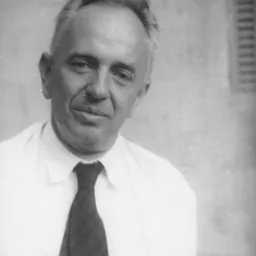





Related people
Same field, nearest in time
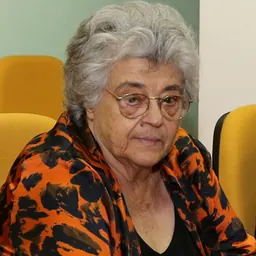

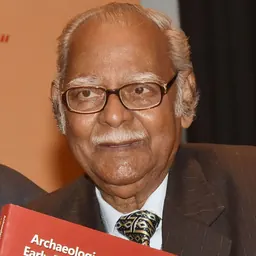
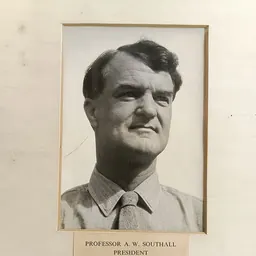
Contemporaries
People whose lives overlapped Rada Dyson-Hudson's

Frequently asked questions
Who was Rada Dyson-Hudson?
American anthropologist (1930–2016)
When was Rada Dyson-Hudson born?
Rada Dyson-Hudson was born in 1930 in Long Island.
When did Rada Dyson-Hudson die?
Rada Dyson-Hudson died in 2016 in Ithaca.
What was Rada Dyson-Hudson's occupation?
Rada Dyson-Hudson was an anthropologist and university teacher.
What nationality was Rada Dyson-Hudson?
Rada Dyson-Hudson was American.
Sources & further reading
· Wikipedia: Rada Dyson-Hudson
Cite this page
APA: Biography.guide. (2026). Rada Dyson-Hudson. https://biography.guide/rada-dyson-hudson/
MLA: "Rada Dyson-Hudson." Biography.guide, https://biography.guide/rada-dyson-hudson/.
Chicago: "Rada Dyson-Hudson." Biography.guide. https://biography.guide/rada-dyson-hudson/.
Data last updated: 2026-09-20 · Spot an error? Report a correction.
Page generated 2026-09-27 05:05 UTC