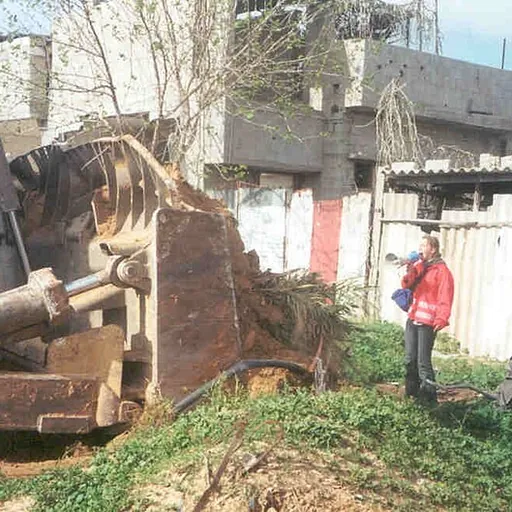
Rachel Corrie
American anti-war and human rights activist
About Rachel Corrie
Lived 1979 – 2003 (aged 23). Rachel Corrie was an American diarist, biographer, peace activist, writer, human rights defender and activist.
Rachel Aliene Corrie (April 10, 1979 – March 16, 2003) was an American nonviolence activist and diarist. She was a member of the pro-Palestinian International Solidarity Movement (ISM), and was active throughout the Israeli-occupied Palestinian territories. In 2003, she was in Rafah, a city in the Gaza Strip under Israeli occupation, where the demolishment of Palestinian houses by Israeli forces was taking place at the height of the Second Intifada. While protesting the demolitions as they were being carried out, she was killed by an Israeli driving an armored bulldozer that crushed her.
Corrie was born in Olympia, Washington, in 1979. After graduating from Capital High School, she went on to attend Evergreen State College. She took a year off from her studies to work as a volunteer in the Washington State Conservation Corps, where she spent three years making weekly visits to mental patients. While at Evergreen State College, she became a "committed peace activist", arranging peace events through a local group called "Olympians for Peace and Solidarity". She later joined the International Solidarity Movement (ISM) organization in order to protest the policies of the Israeli army in the West Bank and Gaza Strip. Corrie went to Gaza as part of her college's senior-year independent-study proposal to connect Olympia and Rafah with each other as sister cities. While in Rafah on March 16, 2003, she joined other ISM activists in efforts to nonviolently prevent Israel's demolition of Palestinian property, where she was killed by an Israeli bulldozer that crushed her. Corrie's death sparked controversy and led to international media coverage.
Physicians present and fellow ISM activists stated that Corrie had been wearing a high-visibility vest and was deliberately driven over, while the Israeli army said that it was an accident because the bulldozer operator did not see her. Following the incident, an Israeli military investigation concluded that Corrie's death was the result of an accident and that the bulldozer operator had limited visibility. The ruling attracted criticism from organizations such as Amnesty International, Human Rights Watch (HRW), B'Tselem, and Yesh Din. HRW stated that the ruling represented a pattern of impunity for Israeli forces.
While at Evergreen State College she became a "committed peace activist", Before leaving, she also organized a pen-pal program between children in Olympia and Rafah.
Activities in Gaza
While in Rafah, Corrie stood in front of armored bulldozers, in an attempt to impede house demolitions which were being carried out. These military operations were criticized as "collective punishment" by some human rights groups. Israel authorities said that demolitions were necessary because "Palestinian gunmen used the structures as cover to shoot at their troops patrolling in the area, or to conceal arms-smuggling tunnels under the Gaza-Egypt border."
Burning an American flag while protesting the Iraq War While in Gaza, Corrie took part in a demonstration as part of the February 15, 2003 anti-war protest against the invasion of Iraq. She was photographed burning a makeshift U.S. flag. After her death, the ISM released a statement quoting Corrie's parents on the widely circulated picture of the incident:
In the words of Rachel's parents: "The act, while we may disagree with it, must be put into context. Rachel was partaking in a demonstration in Gaza opposing the War on Iraq. She was working with children who drew two pictures, one of the American flag, and one of the Israeli flag, for burning. Rachel said that she could not bring herself to burn the picture of the Israeli flag with the Star of David on it, but under such circumstances, in protest over a drive towards war and her government's foreign policy that was responsible for much of the devastation that she was witness to in Gaza, she felt it OK to burn the picture of her own flag. We have seen photographs of memorials held in Gaza after Rachel's death in which Palestinian children and adults honor our daughter by carrying a mock coffin draped with the American flag. We have been told that our flag has never been treated so respectfully in Gaza in recent years. We believe Rachel brought a different face of the United States to the Palestinian people, a face of compassion. It is this image of Rachel with the American flag that we hope will be remembered most.
Corrie's emails to her mother
Corrie sent a series of emails to her mother while she was in Gaza, four of which were later published by The Guardian. In January 2008, Norton published a book titled Let Me Stand Alone by Corrie, which included the e-mails along with some of her other writings. Yale Professor David Bromwich said that Corrie left "letters of great interest". The play My Name Is Rachel Corrie, Corrie was part of a group of three British and four American ISM activists attempting to disrupt the IDF operation. Corrie placed herself in the path of a Caterpillar D9R armored bulldozer in the area and was run over by the bulldozer and fatally injured. After she was injured she was taken by a Red Crescent ambulance to the Palestinian Najar hospital, arriving at the emergency room at 5:05 pm, still alive but in critical condition. At 5:20 pm she was declared dead.
The events surrounding Corrie's death are disputed. Fellow ISM activists said that the soldier operating the bulldozer deliberately ran Corrie over while she was acting as a human shield to prevent the demolition of the home of local pharmacist Samir Nasrallah. They said she was between the bulldozer and a wall near Nasrallah's home, in which ISM activists had spent the night several times.
The major points of dispute are whether the bulldozer operator saw Corrie and whether her injuries were caused by being crushed under the blade or by the mound of debris the bulldozer was pushing. An IDF spokesman has acknowledged that Israeli army regulations normally require that the operators of the armored personnel carriers (APCs) that accompany bulldozers are responsible for directing the operators towards their targets because the Caterpillar D9 bulldozers have a restricted field of vision with several blind spots.
ISM accounts An ISM activist using the name "Richard", saying he had witnessed Corrie's death, told Haaretz:
There's no way he didn't see her, since she was practically looking into the cabin. At one stage, he turned around toward the building. The bulldozer kept moving, and she slipped and fell off the plow. But the bulldozer kept moving, the shovel above her. I guess it was about 10 or 15 meters that it dragged her and for some reason didn't stop. We shouted like crazy to the operator through loudspeakers that he should stop, but he just kept going and didn't lift the shovel. Then it stopped and backed up. We ran to Rachel. She was still breathing.
Joe Carr, an American ISM activist who used the assumed name of Joseph Smith during his time in Gaza, gave the following account in an affidavit recorded and published by the Palestinian Centre for Human Rights (PCHR):
Still wearing her fluorescent jacket, she sat down at least 15 meters in front of the bulldozer, and began waving her arms and shouting, just as activists had successfully done dozens of times that day.The bulldozer continued driving forward headed straight for Rachel. When it got so close that it was moving the earth beneath her, she climbed onto the pile of rubble being pushed by the bulldozer. She got so high onto it that she was at eye-level with the cab of the bulldozer. Her head and upper torso were above the bulldozer’s blade, and the bulldozer driver and co-operator could clearly see her. Despite this, he continued forward, which pulled her legs into the pile of rubble, and pulled her down out of view of the driver. If he'd stopped at this point, he may have only broken her legs, but he continued forward, which pulled her underneath the bulldozer. We ran towards him, and waved our arms and shouted, one activist with a megaphone. But the bulldozer driver continued forward, until Rachel was underneath the cab of the bulldozer.
On March 18, 2003, two days after Corrie's death, Joe (Smith) Carr was interviewed by British Channel 4 and The Observer reporter Sandra Jordan for a documentary, The Killing Zone, which aired in June 2003. He stated, "It was either a really gross mistake or a really brutal murder." According to The Seattle Times, "Smith, who witnessed Sunday's incident, said it began when Corrie sat down in front of the bulldozer. He said the operator scooped her up with a pile of earth, dumped her on the ground and ran over her twice."
Military investigation The Israeli army's report seen by The Guardian said:
The army was searching for explosives in the border zone when Corrie was "struck as she stood behind a mound of earth that was created by an engineering vehicle operating in the area and she was hidden from the view of the vehicle's operator who continued with his work. Corrie was struck by dirt and a slab of concrete resulting in her death.... The finding of the operational investigations shows that Rachel Corrie was not run over by an engineering vehicle but rather was struck by a hard object, most probably a slab of concrete which was moved or slid down while the mound of earth which she was standing behind was moved.|The Guardian, April 14, 2003.
In later IDF operations, the house was damaged (a hole was knocked in a wall) and was later destroyed. By that time, the Nasrallah family had moved into a different house. It was reported in 2006 that the house that Corrie was trying to protect was rebuilt with funds raised by The Rebuilding Alliance. A spokesman for the IDF told the Guardian that while it did not accept responsibility for Corrie's death, it intended to change its operational procedures to avoid similar incidents in the future. The level of command of similar operations would be raised, said the spokesman, and civilians in the area would be dispersed or arrested before operations began. Observers will be deployed and CCTV cameras will be installed on the bulldozers to compensate for blind spots, which may have contributed to Corrie's death.
The IDF gave copies of the report, titled "The Death of Rachel Corrie", to members of the U.S. Congress in April 2003, and Corrie's family released the document to the media in June 2003, according to the Gannett News Service. In March 2004, the family said that the entire report had not been released, and that only they and two American staffers at the U.S. Embassy in Tel Aviv had been allowed to view it. The family said they were allowed to look at the report in the Consulate General of Israel to the Pacific Northwest in San Francisco. The ISM rejected the Israeli report, stating that it contradicted their members' eyewitness reports and that the investigation had not been credible and transparent.
Reactions
Corrie's parents' reaction In 2012, Corrie's father, Craig Corrie said "I know there's stuff you can't see out of the double glass windows." But he has denied that as a valid excuse, saying "you're responsible for knowing what's in front of your blade... It's a no brainer that this was gross negligence". He added that "they had three months to figure out how to deal with the activists that were there."
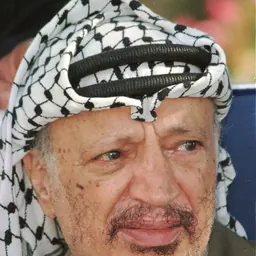
Political reactions In March 2003, U.S. Representative Brian Baird introduced a resolution in the United States Congress calling on the U.S. government to "undertake a full, fair, and expeditious investigation" into Corrie's death. The House of Representatives took no action on the resolution. The Corrie family joined Representative Baird in calling for a U.S. investigation. Yasser Arafat, the first president of the Palestinian Authority, offered his condolences and gave the "blessings of the Palestinian people" to Corrie,
On March 21, 2003, the Green Party of the United States called for an investigation of the "murder of American Peace Activist Rachel Corrie by Israeli Forces". In August 2012, U.S. Ambassador to Israel Dan Shapiro stated that the Israeli investigation was not satisfactory, and was not as thorough, credible or transparent as it should have been. Shapiro said further that the government of the United States is unsatisfied with the IDF's closure of its official investigation into Corrie's death. In 2005, Human Rights Watch published a report raising questions about the impartiality and professionalism of the IDF investigation. Some of the problems that the report mentioned were the investigators' lack of preparation, the "hostile", "inappropriate", and "mostly accusatory" questions they asked witnesses, the failure to ask witnesses to draw maps or to identify locations of events on maps, and their lack of interest in reconciling soldiers' testimonies with those of other eyewitnesses. Its president, Gerald Steinberg said, "Corrie's death was entirely unnecessary, and the leaders of the ISM bear much culpability for her death." A Catholic Worker house was named in her honor in Des Moines, Iowa.
Media
Sandra Jordan wrote in The Observer that because Corrie was American her death attracted more attention than the deaths of Palestinians under similar circumstances: "On the night of Corrie's death, nine Palestinians were killed in the Gaza Strip, among them a four-year-old girl and a man aged 90. A total of 220 people have died in Rafah since the beginning of the intifada. Palestinians know the death of one American receives more attention than the killing of hundreds of Muslims."
Charlie Wolf, formerly the Communications Director of Republicans Abroad UK, referred to Corrie as "scum" on his show on British radio station Talksport. Media regulator Ofcom ruled that this "seriously ill-judged" remark was in breach of the "Generally Accepted Standards" of Broadcasting.
Israeli court's justification Explaining the Israeli court's ruling, judge Oded Gershon said Corrie's death was "the result of an accident she brought upon herself." Corrie was in a closed military area, with entry forbidden to civilians. The area was the site of daily gunfire by snipers, missile fire and IED explosions. The United States government had issued a travel warning against American citizens visiting the Gaza Strip. "She did not distance herself from the area, as any thinking person would have done," the judge ruled.
Role of the International Solidarity Movement George Rishmawi, director of the Palestinian Center for Rapprochement between Peoples, told the San Francisco Chronicle that the ISM's main purpose is to "increase international awareness of Palestinian suffering through the involvement of foreign activists". He stated: "When Palestinians get shot by Israeli soldiers, no one is interested anymore ... ut if some of these foreign volunteers get shot or even killed, then the international media will sit up and take notice." Joseph Smith, also known as Joseph Carr, stated: "We knew there was a risk ... but we also knew it never happened in the two years that we (the ISM) have been working here. I knew we take lots of precautions so that it doesn't happen, that if it did happen it would have to be an intentional act by a soldier, in which case it would bring a lot of publicity and significance to the cause." The Corries have worked to set up the "Rachel Corrie Foundation for Peace and Justice" and launched projects in memory of their daughter. They have also advanced investigation into the incident and asked the U.S. Congress and various courts for redress.
Corrie's parents have visited the region several times since their daughter's death Following their daughter's death, they visited Gaza and Israel, seeing the place where she died, and meeting ISM members and Palestinians whom she had known. On March 28, 2008, they addressed a demonstration in Ramallah at which Craig Corrie said: "This village has become a symbol of nonviolent resistance. I call for solidarity with the people of Palestine in resisting the conditions imposed by the Israeli occupation to prevent the establishment of their state."
The Nasrallahs, whose home Rachel Corrie allegedly believed she was preventing from destruction, toured with the Corries across the United States in June 2005. The aim of the trip was, with the cooperation of the Rebuilding Alliance, to raise funds to rebuild the Nasrallah home and other homes destroyed in Rafah. In January 2011, Corrie's parents visited the MV Mavi Marmara in Turkey, together with the head of the IHH Bülent Yıldırım. Cindy Corrie called dead Mavi Marmara activists "martyrs" and compared them to her daughter.
After the outbreak of the Gaza war in 2023, the couple referred to the situation as genocide against Palestinian people and have been trying to keep in touch with Palestinians on the ground. Following the killing of Aysenur Eygi in 2024, Corrie's parents called for an inquiry into the death. Craig Corrie remarked that there were "so many similarities" between the killing of Eygi, who was shot dead by the Israel Defense Forces while protesting Israeli settlement expansion in the West Bank, and the death of his daughter.
Subsequent events Lawsuits In the United States
Corrie's family and several Palestinians filed a federal lawsuit against Caterpillar Inc. in the U.S. District Court for the Western District of Washington alleging liability for Corrie's death. The suit alleged Caterpillar supplied the bulldozers to the Israelis despite having notice they would be used to further "a policy plaintiffs contend violates international law". The case was dismissed by a Federal judge in November 2005 for lack of subject matter jurisdiction, citing, among other things, the political question doctrine. The judge found, alternatively, that the plaintiffs' claims failed on the merits.
The Corrie family appealed to the United States Court of Appeals for the Ninth Circuit. In September 2007 the Ninth Circuit affirmed the dismissal on the political question grounds and thus did not rule on the merits of the suit. The Court found that as the bulldozers were paid for by the U.S. Government as part of its aid to Israel, the Judicial Branch could not rule on the merits of the case without ruling on whether or not the government's financing of such bulldozers was appropriate and that this was a matter not entrusted to the Judicial Branch.
In Israel In 2010, Corrie's parents, represented by Attorney Hussein Abu Hussein, filed a lawsuit against the Israel Defense Forces and the Israeli Defense Ministry in the Haifa District Court, seeking US$324,000 in compensation. The case began in Haifa on March 10, 2010. Judge Oded Gershon presided over the case. On October 21, 2010, the bulldozer driver who had run over Corrie testified for four hours, and was cross-examined by the Corries' attorney. At the request of state prosecutors, who argued that his life could be imperiled if he was publicly identified, the driver was hidden behind a screen and visible to only the judge and attorneys. A request by the Corrie family that they also be allowed to see the driver was turned down by the judge. The driver was identified only by his initials, "YB", and a gag order was imposed on identifying details, although it was disclosed in court that he was a 38-year old Russian immigrant who had arrived in Israel at age 23, and was working for a food processing company at the time. The driver denied having seen her before hitting her. In addition, four experts, including an expert on the behalf of the Corrie family testified during the trial, and concluded that the bulldozer driver could not see Corrie. Four ISM witnesses testified during the case. However, the Palestinian physician from Gaza who had examined Corrie's wounds on the scene was unable to testify after Israel refused him an entry visa and rejected an application for him to testify by video link.
The court ruled against Corrie's family on August 28, 2012. In a 62-page verdict, Judge Oded Gershon ruled that Corrie's death was an accident for which she was responsible, and absolved the IDF of any wrongdoing. According to the judge "The mission of the IDF force on the day of the incident was solely to clear the ground.... The mission did not include, in any way, the demolition of homes." The court invoked the principle of the combatant activities exception, as the IDF was attacked in the same area where Corrie was killed a few hours earlier; that Corrie could have avoided the danger and that defendants were not at fault as there was neither intent nor negligence involved in her death. Gershon said: "I rule unequivocally that the claim that the deceased was intentionally hit by the bulldozer is totally baseless. This was an extremely unfortunate accident. I reached the conclusion that there was no negligence on the part of the bulldozer driver. I reject the suit. There is no justification to demand the state pay any damages. She [Corrie] did not distance herself from the area, as any thinking person would have done. She consciously put herself in harm's way."
Furthermore, Gershon pointed to three different entry bans, and also pointed out that the Philadelphi route was effectively a war zone and was formally declared a closed military zone when Corrie died. Gershon also noted that the United States had issued an Israel travel advisory warning to avoid Gaza and the West Bank. In addition, Gershon said that the ISM "abuses the human rights discourse to blur its actions which are de facto violence" and specialized in disrupting IDF activity, which "included an army of activists serving as 'human shields' for terrorists wanted by Israeli security forces, financial and logistical aid to Palestinians including terrorists and their families, and disruption of the sealing of suicide bombers' houses". The Corrie family lawyer, Hussein Abu Hussein, said they were "now studying our options", in regards to a possible appeal.
While rejecting the Corrie family's claims to damages, the judge also waived the Corrie family's court costs. Haifa District Court spokeswoman Nitzan Eyal said that her family could appeal the ruling. The amount sought was a symbolic US$1 and legal costs. Her mother reacted to the verdict in saying: "I am hurt. We are, of course, deeply saddened and deeply troubled by what we heard today from Judge Oded Gershon." Corrie's sister, Sarah Corrie Simpson, stated that she believed "without a doubt" that the driver had seen her as he approached, and stated that she hoped he would one day "have the courage" to tell the truth. The right wing political party Yisrael Beitenu issued a statement that called the verdict "vindication after vilification".
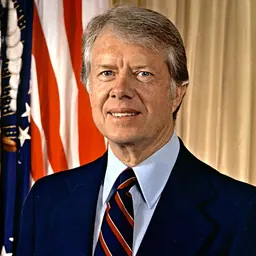
Former UN Special Rapporteur on the occupied Palestinian Territories Richard Falk said of the verdict that it was "a sad outcome, above all for the Corrie family that had initiated the case back in 2005, but also for the rule of law and the hope that an Israeli court would place limits on the violence of the state, particularly in relation to innocents and unarmed civilians in an occupied territory". Former U.S. President Jimmy Carter of the Carter Center said that the "court's decision confirms a climate of impunity, which facilitates Israeli human rights violations against Palestinian civilians in the Occupied Territory". The verdict of the Haifa District Court was appealed to the Supreme Court of Israel on May 21, 2014. The Supreme Court rejected the appeal and upheld the District Court's verdict regarding the circumstances of Corrie's death, which cleared the IDF from wrongdoing.
Memorial events
Immediately after her death, posters and graffiti praising Corrie were posted in Rafah, with one graffiti tag reading, "Rachel was an American citizen with Palestinian blood." According to the ISM's official publications, the day after Corrie died, about thirty American and European ISM activists with 300 Palestinians began protests during the public memorial service over the spot where she was fatally injured in Rafah. Gordon Murray, an ISM activist who attended the memorial, states that the IDF sent a representative to the event who intimidated the mourners into dispersing, allegedly using non-lethal weapons. In 2011, Iran named a street in Tehran after Corrie.
Artistic tributes
My Name Is Rachel Corrie at Playhouse Theatre, London, 2006.
In 2004, Alaska composer Philip Munger wrote a cantata about Corrie called The Skies are Weeping, which was scheduled to premiere on April 27 at the University of Alaska Anchorage, where Munger teaches. After objections to the upcoming performance were received, including from members of the Jewish community, a forum was held co-chaired by Munger and a local rabbi who claimed the work "romanticized terrorism". After the forum "disintegrate ", Munger announced, "I cannot subject 16 students ... to any possibility of physical harm or to the type of character assassination some of us are already undergoing. Performance of The Skies are Weeping at this time and place is withdrawn for the safety of the student performers." Munger later related that he had received threatening e-mails whose content he considered was "[just] short of what you'd take to the troopers", and that some of his students had received similar communications. The cantata was eventually performed at the Hackney Empire theatre in London, premiering on November 1, 2005.
In early 2005, My Name Is Rachel Corrie, a play composed from Corrie's journals and emails from Gaza and compiled by actor Alan Rickman and journalist Katharine Viner, in a production directed by Rickman, was presented in London and later revived in October 2005. The play was to be transferred to the New York Theatre Workshop, but when it was postponed indefinitely, the British producers denounced the decision as censorship and withdrew the show. It finally opened Off-Broadway on October 15, 2006, for an initial run of 48 performances. In the same year, My Name Is Rachel Corrie was shown at the Pleasance theatre as part of the Edinburgh (Fringe) Festival. The play has also been published as a paperback, and performed in ten countries, including Israel.
Singer Billy Bragg recounted Corrie's death in the song "The Lonesome Death of Rachel Corrie", composed to the tune of Bob Dylan's "The Lonesome Death of Hattie Carroll". After being originally released as a free digital download, it was included on the album Fight Songs in 2011. Irish folk music/world music group Kíla included the instrumental "Rachel Corrie" on their 2015 album Suas Síos. In 2003, Pittsburgh singer Mike Stout wrote and composed a song about Rachel Corrie, which was included with other anti-war songs in his album "War and Resistance". Also in 2003, David Rovics wrote the song "The Death of Rachel Corrie", included on his album Return.
Documentaries In 2003, British Channel 4 and The Observer reporter Sandra Jordan and producer Rodrigo Vasquez made a documentary that was aired June 2003 on Channel 4 titled The Killing Zone, about ongoing violence in the Gaza Strip. Jordan said: "There has been a lot of interest in Britain and around the world about what happened to Rachel, I find it highly disappointing that no serious American investigative journalist has taken Rachel's story seriously or questioned or challenged the Israeli Army version of events."
In 2005, the BBC produced a 60 minute documentary titled When Killing is Easy aka Shooting the Messenger, Why are foreigners suddenly under fire in Israel?, described as "a meticulous examination of" the shooting to death of James Miller, who was shot while filming in an Israeli war zone in May 2003; the shooting of British photography student Thomas Hurndall in April 2003, and the death of Corrie in March 2003. The documentary states that the attacks were not "random acts of violence", but rather "represent a culture of killing with impunity which is sanctioned by the higher echelons of the Israeli army."
Also in 2005, Yahya Barakat, who lectures on TV production, cinematography, and filmmaking at al-Quds University, filmed a documentary in Arabic with English subtitles, named Rachel Corrie – An American Conscience. In 2009, a documentary film titled Rachel is produced by Morocco-born French-Israeli director Simone Bitton detailing the death of Rachel Corrie from "an Israeli point of view". Its first North American public screening was at the 2009 Tribeca Film Festival.
MV Rachel Corrie
On March 30, 2010, an 1800-tonne vessel was bought at auction in Dundalk, Ireland, for €70,000 by the Free Gaza Movement. It was outfitted for use in a voyage to Gaza, named in honour of Rachel Corrie and launched May 12, 2010. It sailed to join a flotilla intended to break the blockade of the Gaza Strip. The flotilla was intercepted; however, the MV Rachel Corrie had not reached the other ships and continued towards Gaza by itself. Israeli navy officers addressed the ship as "Linda"—the vessel's name before it was renamed for Rachel Corrie. The ship was intercepted by the Israeli navy on Saturday, June 5, 2010, 23 miles off the coast, and diverted to the port of Ashdod. There the cargo was to be inspected and sent over land to Gaza.
Symbolic gravestone in Iran On the twelfth anniversary of Corrie's death, a symbolic gravestone with her name was installed in the Tehran cemetery to honor her by the Commemoration of Martyrs of movement of the Islamic World's Staff. Near her symbolic gravestone are twelve other symbolic gravestones.
Revelation of Caterpillar surveillance In 2017, documents emerged that showed Caterpillar had hired private investigators to spy on the family of Rachel Corrie following her killing in early 2003.
Parents' lawsuit In 2005, Corrie's parents filed a civil lawsuit, charging the Israeli state with not conducting a full and credible investigation into the case and therefore holding responsibility for her death. They contended that either she had been intentionally killed or the Israeli soldiers on scene had acted with reckless neglect.
May 2024 arson attack During the ongoing Gaza war protests in the United States, a presumably pro-Palestinian group calling itself "Rachel Corrie's Ghost Brigade" reported that it had cut through a fence at a Portland police facility and burned 17 police cars on 2 May 2024.
Don’t just read it —
keep it.
Full-length biographies made to live with: read them, listen on the way to work, watch them tonight.
- E-book
- Audio
- Video
Instant download · yours to keep · every purchase keeps this site free
Important facts
People in Rachel Corrie's life
Named in this biography and alive at the same time




Related people
Same field, nearest in time


Contemporaries
People whose lives overlapped Rachel Corrie's


Frequently asked questions
Who was Rachel Corrie?
American anti-war and human rights activist
When was Rachel Corrie born?
Rachel Corrie was born on 10 April 1979 in Olympia.
When did Rachel Corrie die?
Rachel Corrie died on 16 March 2003 in Rafah.
What was Rachel Corrie's occupation?
Rachel Corrie was a diarist, biographer, peace activist, writer, human rights defender and activist.
What nationality was Rachel Corrie?
Rachel Corrie was American.
Sources & further reading
Cite this page
APA: Biography.guide. (2026). Rachel Corrie. https://biography.guide/rachel-corrie/
MLA: "Rachel Corrie." Biography.guide, https://biography.guide/rachel-corrie/.
Chicago: "Rachel Corrie." Biography.guide. https://biography.guide/rachel-corrie/.
Data last updated: 2026-09-22 · Spot an error? Report a correction.
Portrait: Wikimedia Commons · author & licence
Page generated 2026-09-27 05:02 UTC