
About R. Swinburne Clymer
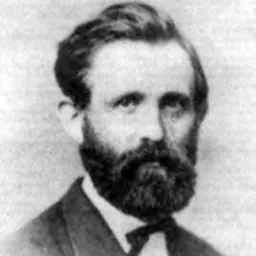
Lived 1878 – 1966 (aged 87). R. Swinburne Clymer was an American osteopath, anti-vaccine activist, writer, occultist, cleric and osteopathy, known for Fraternitas Rosae Crucis.
Reuben Swinburne Clymer (November 25, 1878 - June 3, 1966) was an American occultist and modern Rosicrucian Supreme Grand Master of the FRC (Fraternitas Rosae Crucis), perhaps the oldest continuing Rosicrucian organization in the Americas. He practiced alternative medicine, and wrote and published works on it as well as (his version of) the teachings of Paschal Beverly Randolph (1825-1875), alchemy, nutrition, religion, sex magic and spiritualism. This led to a number of conflicts with Harvey Spencer Lewis (1883-1939) and the AMORC (Ancient Mystical Order Rosae Crucis), FUDOSI, Aleister Crowley, and even the American Medical Association.
Life Clymer was born in Quakertown, Pennsylvania. He studied medicine in Chicago, Illinois, and registered as an osteopath in New York in 1910. Clymer was investigated by the AMA's Journal Bureau of Investigation in 1923. They commented that "our records fail to show that this man ever regularly graduated by any reputable medical college." and claimed that meat was the primary cause of cancer, and (especially when combined with beans, bread, potatoes, and beer) immorality and insanity.
Clymer promoted a pescatarian diet. He opposed the consumption of red meat which he believed was toxic. In 1917, The Rose Cross Aid Cook Book was authored by Clara Witt which conformed to the dietary advice of Clymer and reflected Rosicrucian theology. In 1919, Clymer authored Diet: The Way to Health. He commented that "Meat, of any nature, is entirely unnecessary for either the maintenance of health or for the restoration to health of those who have become weak and ill. Fish and other sea food, milk and other dairy products, and eggs, will take the place of meat, and these do not contain the unhealthy ingredients or the acids and toxins contained in meat."
Randolph and the FRC Clymer joined the FRC in 1897,
In either 1900 Clymer was deeply influenced by Randolph, of whom he created a hagiographic (and mostly fictitious) history. Clymer claimed that his occult orders were founded by Randolph (although many were completely unrelated), tying their already mostly fictional histories together under Randolph,
Clymer created a more consistent and palatable belief system from Randolph's thoughts, cleaning up the problematic sex magic practices Randolph espoused at times, as well as Randolph's self-contradictions on numerous points. The pseudo-history assembled by Clymer cast Randolph as the legitimate heir of an ancient Rosicrucian tradition in America. This was accomplished by turning many people Randolph mentioned running into members of various occult organizations secretly connected to ancient Egyptian Rosicrucians, known members into masters of groups they were members of, and an unknown young man who met Eliphas Levi into none other than a young Randolph. If Clymer lacked a starting point or could not fill a plot hole, he claimed that such gaps were the result of the destruction of records by enemies of Randolph's (and Clymer's) Fraternitas. In addition to the standard claims of Western Occultism of ties to famous Neoplatonists, alchemists, magicians, Clymer also connected Randolph's "order" to Abraham Lincoln, Napoleon III, Alexandre Saint-Yves d'Alveydre, Papus, Albert Pike, and the Count of St. Germain. Although Clymer apparently believed his biography of Randolph to be absolutely historical, it is understood now to be largely fictitious. The Church of Illumination serves as an outer body for the FRC, spreading its teachings under the name of "Divine Law" in hopes of bringing about a new era through symbolic alchemy.
Rivalry with Harvey Spencer Lewis and AMORC Clymer's claim to being the true leader of American Rosicrucianism put Clymer in direct competition with Harvey Spencer Lewis, founder of the AMORC (Ancient Mystical Order Rosae Crucis). This competition was turned to bitter rivalry thanks to disagreement on the role of sex in magic, both sides accusing the other of perverse teachings; while holding that the sexual practices they themselves advocated were enlightened and pure. Clymer's views, largely lifted from Randolph, were that bodily fluids produced by a married couple needed to be regularly exchanged for the physical and spiritual health of each partner.
Clymer and Lewis competed for the attention of different national branches of the OTO (Ordo Templi Orientis) for official ties, with both finding comparable success and neither being able to use their ties to the O.T.O. to claim legitimacy over the other. When Lewis co-founded FUDOSI (which recognized Lewis's AMORC as the true heirs of American Rosicrucianism), Clymer co-founded FUDOFSI with Constant Chevillon
Clymer wrote books on nutrition (such as Dietetics and Diet, the Way to Health), as well as authorizing a Rose Cross Aid cookbook.
Legacy
Clymer's involvement in new religious movements, the drama that invariably followed Clymer and similar leaders (such as Father Divine), inspired a number of early 20th century detective stories, such as Dashiell Hammett's The Dain Curse.
Clymer's works are also standard reading for American Rosicrucians, and his interest in medicine is continued by the FRC to this day, with the Beverly Hall headquarters housing chiropractic and naturopathic clinics. His prolific writing about Paschal Beverly Randolph and his teachings remain influential in the study of Randolph, in part because little is known about Randolph.
Selected publications
Don’t just read it —
keep it.
Full-length biographies made to live with: read them, listen on the way to work, watch them tonight.
- E-book
- Audio
- Video
Instant download · yours to keep · every purchase keeps this site free
Important facts
People in R. Swinburne Clymer's life
Named in this biography and alive at the same time





Related people
Same field, nearest in time



Contemporaries
People whose lives overlapped R. Swinburne Clymer's




Frequently asked questions
Who was R. Swinburne Clymer?
American occultist (1878–1966)
When was R. Swinburne Clymer born?
R. Swinburne Clymer was born on 25 November 1878 in Quakertown.
When did R. Swinburne Clymer die?
R. Swinburne Clymer died on 3 June 1966.
What was R. Swinburne Clymer's occupation?
R. Swinburne Clymer was an osteopath, anti-vaccine activist, writer, occultist, cleric and osteopathy.
What was R. Swinburne Clymer known for?
R. Swinburne Clymer was known for Fraternitas Rosae Crucis.
What nationality was R. Swinburne Clymer?
R. Swinburne Clymer was American.
Sources & further reading
· Wikipedia: R. Swinburne Clymer
· DBpedia: Reuben Swinburne Clymer
Cite this page
APA: Biography.guide. (2026). R. Swinburne Clymer. https://biography.guide/r-swinburne-clymer/
MLA: "R. Swinburne Clymer." Biography.guide, https://biography.guide/r-swinburne-clymer/.
Chicago: "R. Swinburne Clymer." Biography.guide. https://biography.guide/r-swinburne-clymer/.
Data last updated: 2026-09-26 · Spot an error? Report a correction.
Page generated 2026-09-27 05:14 UTC