
About R. M. Fox
Lived 1891 – 1969 (aged 77–78). R. M. Fox was a journalist and historian.
Richard Michael Fox (13 November 1891 – 28 December 1969), better known as R. M. Fox, was a British-Irish journalist and historian of the Irish left.
Biography Background Fox was born in Leeds in 13 November 1891, the second of four sons to a schoolteacher mother and engineering workman father. His family moved to London as a child, where he left school at age 14. Following this he began to work in factories where he became interested in socialism. His parents were active in the Co-operative Movement, and as a young man Fox joined the Socialist Party of Great Britain and the Industrial Workers of the World (IWW).
Fox attended the Lancastrian Elementary School and left at age 14 to work in a metal factory. He took night classes in economics and history, wrote poetry for small socialist publications, and became involved in the struggle for workers' rights. After studying engineering at night school, he worked at the Erith armaments complex in southeast London. Fox organized with the IWW and was an activist with the Herald League, which supported the syndicalist Daily Herald newspaper, advocating for Woman's suffrage, striking workers, and Irish independence. He also promoted international labour unity and campaigned against militarism. Fox was introduced to left-wing circles by Delia Larkin and through her met Alice Stopford Green, Hanna Sheehy-Skeffington, Dorothy Macardle, and Maud Gonne MacBride, with the latter two becoming his lifelong friends. Fox supported the Irish War of Independence following the death by hunger strike of Terence MacSwiney and subsequent atrocities carried out by the Black and Tans on behalf of the British authorities. Fox faced criticism that he was an apologist for Soviet communism by figures like Fr. Denis Fahey and other right-wing opponents, while also receiving some critique from the left for his biography of Larkin.
A committed pacifist, Fox later obtained Irish citizenship, served as vice president of the Irish Campaign for Nuclear Disarmament, and actively promoted Connolly's legacy in Ireland’s left-wing press. Sean O'Casey argued that Fox’s Jim Larkin portrayed Larkin as “a lighted match instead of the flaming torch the man was,” and Jack Carney found it “highly superficial,” claiming Fox “highlights the commonplace and ignores the important.” Though Peter Berresford Ellis deemed Fox’s work an “essential first step in studies of the Irish left,” a contemporary critic described Fox as more of a background journalist than a prominent figure in the Irish labour movement.
Death Fox died on 28 December 1969 aged 78 due to left ventricular failure and bronchopneumonia influenza at Bon Secours Hospital. He is buried in Glasnevin Cemetery.
Subjects Fox's journalism appeared in Factory Echoes and Other Sketches (1919), The Triumphant Machine (1928), and Drifting Men (1930), addressing topics like Taylorism, the insecurity of industrial work, and the subjugation of people to machines under mass production. He also authored memoirs and historical works: Smoky Crusade (1937) detailed his life up to the early 1920s; Rebel Irishwomen (1935) profiled figures like Sheehy-Skeffington, Eva Gore-Booth, Constance Markievicz, Nora Connolly O'Brien, and Helena Molony; and Green Banners: The Story of the Irish Struggle (1938) presented a popular account of 1916 to 1921, sympathetic to the Irish Citizen Army and anti-Treaty left-republican views.
In the late 1930s, after being approached by the Irish Citizen Army's Old Comrades Association, Fox interviewed veterans and accessed records to write the officially sanctioned History of the Irish Citizen Army (1943), rich with personal testimonies. His James Connolly: The Forerunner (1946) defended James Connolly’s role in the Easter Rising, albeit with a simplified analysis. Fox also published labour and republican pamphlets, including Labour in the National Struggle (1947) and Years of Freedom: The Story of Ireland 1921–1948 (1948), which continued the narrative from Green Banners. His Jim Larkin: The Rise of the Underman (1957), based on interviews with James Larkin Jnr, portrayed Larkin within the English school of socialism rather than as a syndicalist, while Louie Bennett: Her Life and Times (1958), though largely anecdotal, offered valuable insights into her early years.
Don’t just read it —
keep it.
Full-length biographies made to live with: read them, listen on the way to work, watch them tonight.
- E-book
- Audio
- Video
Instant download · yours to keep · every purchase keeps this site free
Important facts
People in R. M. Fox's life
Named in this biography and alive at the same time
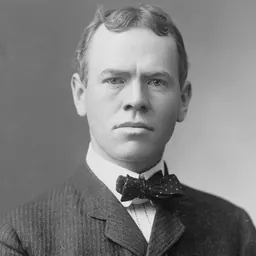

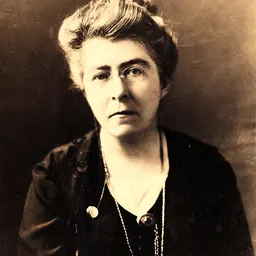


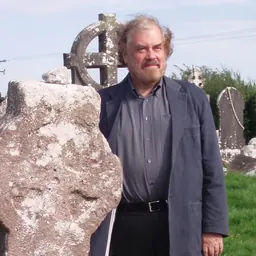


Related people
Same field, nearest in time

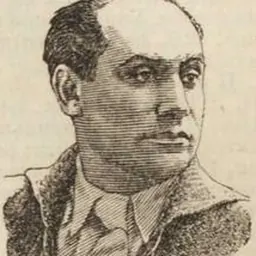
Contemporaries
People whose lives overlapped R. M. Fox's


Frequently asked questions
Who was R. M. Fox?
British historian and journalist
When was R. M. Fox born?
R. M. Fox was born in 1891.
When did R. M. Fox die?
R. M. Fox died on 1 December 1969.
What was R. M. Fox's occupation?
R. M. Fox was a journalist and historian.
Sources & further reading
Cite this page
APA: Biography.guide. (2026). R. M. Fox. https://biography.guide/r-m-fox/
MLA: "R. M. Fox." Biography.guide, https://biography.guide/r-m-fox/.
Chicago: "R. M. Fox." Biography.guide. https://biography.guide/r-m-fox/.
Data last updated: 2026-09-20 · Spot an error? Report a correction.
Page generated 2026-09-27 05:33 UTC