
About R. Budd Dwyer
Lived 1939 – 1987 (aged 47). R. Budd Dwyer was an American politician and teacher.
Early life and education
Robert Budd Dwyer was born on November 21, 1939, in St. Charles, Missouri, to Robert Malcolm Dwyer (1899–1980) and Alice Budd Dwyer (1907–1972). in Meadville, Pennsylvania, where he was a member of the Beta Chi chapter of Theta Chi fraternity. After earning a master's degree at Cambridge Springs High School. In 1970, while still a State Representative, Dwyer campaigned to become a Pennsylvania State Senator for the Senate's 50th district, and won. Soon after his victory he resigned as Representative and was sworn in as Senator in January 1971.
Pennsylvania Treasurer After being elected to two additional terms in 1974 and 1978, He campaigned for a second and last term in 1984 and won re-election, defeating Democratic nominee and former auditor general Al Benedict.
CTA scandal Background From 1979 to 1981, before Dwyer was state treasurer, public employees of the Commonwealth of Pennsylvania overpaid millions of dollars in Federal Insurance Contributions Act (FICA) taxes. As a result, the state required an accounting company to determine refunds for its employees. Schatzman later contacted officials of the accounting company Arthur Young and Associates, who confirmed that the no-bid CTA contract was overpriced by millions of dollars. In June 1984, the Office of the Pennsylvania Auditor General informed the Federal Bureau of Investigation (FBI) of the alleged bribery that occurred during the awarding of the contract.
During late July 1984, Janice R. Kincaid, a former CTA employee, released a sworn statement claiming that Dwyer awarded the contract to CTA because he was promised a $300,000 kickback by the company. Kincaid also indicated that Torquato directed female CTA employees to give sexual favors to potential clients.
Dwyer's awarding of the CTA contract was investigated by federal prosecutors. Upon learning of this investigation, Dwyer rescinded the contract with CTA on July 11, 1984. Dwyer later admitted to telling his staff to withhold request for proposal (RFP) information from the U.S. attorney and the FBI during the investigation. After being indicted by a federal grand jury, Dwyer was finally charged with agreeing to receive a kickback of $300,000 in return for awarding CTA the contract.
Dwyer stated that he offered to take a polygraph test on the condition that if he passed it, he would not be indicted. The state rejected Dwyer's offer. Prior to Dwyer's indictment, on October 22, 1984, a grand jury indicted Torquato, Torquato's attorney William T. Smith, Judy Smith, Alan R. Stoneman, and David Herbert. At his 1985 trial, Smith, who was a friend of Dwyer's, testified that he did not bribe Dwyer, and instead that Torquato offered Dwyer a campaign contribution in return for the CTA contract, yet Dwyer rejected Torquato's offer. In contrast, Torquato testified that Smith offered Dwyer a $300,000 bribe in return for the CTA contract. Dwyer, acting as a defense witness at Smith's trial, denied that he was offered a contribution. In August 1984, Smith failed a polygraph test when he stated that he did not bribe Dwyer or any state official.
I met with Dwyer in his office and at the insistence of Torquato offered to give him $300,000 if he signed a contract with CTA LTD. Dwyer talked about $100,000 to him personally—$100,000 to his campaign committee—$100,000 to Republican State Committee. [Dwyer] was going to see Robert Asher in Montgomery County that weekend to talk to him about how this should be done.
Asher indicated that he had had a conversation with Mr. Dwyer, and he knew that I had made an offer to him of a $300,000 contribution, and then he was very angry when he began to talk about that, angry with me. Said he thought I knew better than to offer a contribution to Mr. Dwyer, and he said if there was going to be a contribution, it was going to go to Republican State Committee. In the hopes of reducing his twelve-year sentence resulting from his 1985 conviction, Smith testified on behalf of the federal government against Dwyer and Asher at their 1986 trial. Ultimately, Smith did not receive any reduction of his sentence for testifying against Dwyer (although his wife, Judy Smith, was granted immunity from prosecution). Before testifying against Dwyer, Smith passed a polygraph test. Moreover, Smith and Torquato's claims about Dwyer being bribed were corroborated by four independent and impartial witnesses, and Smith's testimony against Dwyer was virtually identical to written statements Smith made long before entering into a plea agreement. Additionally, FBI agents testified that Dwyer attempted to conceal his involvement with the scheme when, after learning of the FBI investigation, he erased the entry in his appointment book of the March 2, 1984, meeting with Torquato and Smith in which he was first offered a bribe.
Dwyer maintained that he awarded CTA the contract on the basis of his treasury task force recommendation; this conflicted with the fact that Dwyer personally managed all matters relating to the contract six days prior to awarding it to CTA. Furthermore, his task force's contribution merely consisted in the making of a single telephone call to David I. Herbert (the former State Director for Social Security, who controlled FICA recovery for Pennsylvania's public employees, and who was convicted subsequently for conspiring with CTA). Dwyer awarded the contract to CTA—an obscure California-based company with three employees, little equipment, and little experience—despite being informed in April 1984 by the major Pennsylvania-based accounting company Arthur Young and Associates, which had 250 employees and submitted a proposal on April 13, 1984, at least 14 days prior to CTA's proposal, that they could perform the FICA recovery as fast as CTA for half the cost.
Trial and conviction Charles Collins, Arthur Young's former management consulting director in Pittsburgh, testified at Dwyer's trial that Arthur Young and Associates, who, unlike CTA, had experience in identical tax recovery work, was prepared to negotiate the FICA recovery contract (that was half the cost of the CTA contract) and that Dwyer was clearly aware of Arthur Young's offer before committing the contract to CTA. Additionally, 16 other competitors were willing to be considered for the FICA recovery contract and many had communicated with Treasurer Dwyer's office to request an opportunity to bid on the contract, yet Dwyer did not respond. Dwyer repeatedly stated that he awarded the contract to CTA as a result of his task force's recommendation on the basis of CTA's providing "immediate credit", yet the contract between CTA and Dwyer contained no information regarding CTA's ability to provide such credit. Moreover, Dwyer admitted that he did not mention the concept of "immediate credit" to Arthur Young and Associates when officials from the company asked why CTA was chosen instead of them. In this conspiracy, which was investigated by the office of the Pennsylvania Attorney General, Dwyer allegedly siphoned money from his campaign into his personal funds. His sentencing was scheduled for January 23, 1987, to be performed by U.S. District Court Judge Malcolm Muir. One juror, Carolyn Edwards of Williamsport, found it emotionally difficult to convict Dwyer (and Asher) since they were men of "very high integrity ... they just made a mistake", while Dwyer made a statement after the verdict saying "This is a sad and shocking day for me, totally unbelievable, I'm totally innocent of all of these charges and I don't know how this could have happened". Robert B. Asher, Dwyer's co-defendant, was sentenced to one year in jail.
Accounting company Levin-Horwath ultimately fulfilled the contract for $1.3 million with slightly more than a third of the fee possibly being subject to rebate. Had CTA performed the recovery work, Pennsylvania would have lost $6 million. and to Senator Arlen Specter seeking assistance with this effort. The week of Dwyer's sentencing, Pennsylvania State Attorney General LeRoy Zimmerman and state prosecutors were investigating a provision of the Pennsylvania state constitution such that dismissal of a civil worker from office who has been convicted of a crime is "self-executing", thus, automatic upon that person's sentencing. A decision confirming this constitutional provision was expected on January 22, the day before Dwyer's sentencing hearing.
Final press conference and suicide
In a meeting in his home on January 15, 1987, Dwyer discussed the idea of a press conference with his press secretary, James "Duke" Horshock, and Deputy Treasurer, Don Johnson. At the meeting, both Horshock and Johnson cautioned Dwyer not to use the conference to attack the governor, or other individuals involved with his criminal conviction, and both suggested to Dwyer that he should have the conference at a location other than his office. Dwyer angrily rejected their suggestion, but nevertheless assured both men that he would not attack anybody involved with his conviction. He said that he would not announce his resignation at the conference, but rather thank his staff and friends. Both men left assuming Dwyer would ultimately resign at the conference, although Horshock had fears that Dwyer would break his promise. Horshock arranged the press conference for 10:30 a.m. EST the next day, January 22. The press secretary summoned dozens of reporters asking them to attend, and told them he did not know its subject. he began reading from a 21-page prepared text, while aides handed a 20-page version to the media. The final page was expected to be his announcement that he would resign from office. Appearing agitated, Dwyer again professed his innocence and accused acting U.S. Attorney James West, FBI agents, U.S. District Court Judge Malcolm Muir, the media and others for abusing the justice system and ruining him. Dwyer stated that Attorney West purposely held his trial not in Harrisburg but in Williamsport, due to it being located in Lycoming County, one of the most uneducated counties in Pennsylvania. Dwyer spoke out against the death penalty and expressed regret for voting in favor of it while he was in the Pennsylvania assembly. This speech lasted nearly 30 minutes, and approximately halfway through it, some of the gathered press began to pack and leave. Dwyer spotted this and interrupted himself to say, "Those of you who are putting your cameras away, I think you ought to stay because we're not, we're not finished yet." and suggested funeral arrangements.
Suicide Dwyer holding a .357 Magnum Smith & Wesson Model 19 revolver seconds before he fired a single shot through the roof of his mouth, killing himself instantly. After he had finished speaking and handing out the notes to his staffers, Dwyer grabbed a manila envelope and drew a Model 19 .357 Magnum revolver from it, causing others to panic. Kenn Marshall, a reporter with The Patriot-News, later stated in an interview that he feared Dwyer would turn the gun on the reporters in attendance. Reporters David Morris of the Associated Press, Thom Cole of UPI and Gary Warner of afternoon newspaper The Pittsburgh Press were at the rear of the room, waiting for Dwyer to say he had resigned so they could run down the hall to telephones to tell their editors they could publish pre-written stories and add Dwyer's direct quote. When Dwyer produced the revolver, the three ran into the hallway and shouted to a state police kiosk in the center of the long hallway that the treasurer had a gun. Dwyer then killed himself with a single shot through the roof of the mouth. His death was recorded by at least five running news cameras. Dwyer was pronounced dead at 11:31 a.m. By the time his body was recovered, it had been too long since his death for any other organs to be usable. It chose not to show the gunshot a second time. During the next several hours, news editors had to decide how much of the explicit footage they wanted to broadcast. Many chose not to broadcast the final moments of the suicide.
Many stations, including KYW-TV and WCAU-TV in Philadelphia and KDKA-TV in Pittsburgh, stopped the action just before the gunshot. However, the last two allowed the audio of the shooting to continue with the stopped image. Westinghouse Broadcasting (then-parent of KYW-TV and KDKA-TV) news cameraman William L. Martin and reporter David Sollenberger had a camera set up at the conference; they chose to broadcast the audio with a freeze-frame of the gun in Dwyer's mouth. Only a handful broadcast the unedited press conference. WPVI-TV rebroadcast the suicide footage in full on their 5:00 p.m. and 6:00 p.m. Action News broadcast without warning the viewers. That station's broadcast is a source for copies available on the Internet. WPXI in Pittsburgh is reported by the Associated Press to have broadcast the footage uncensored on an early newscast. In explaining the decision to broadcast, WPXI operations manager By Williams said, "It's an important event [about] an important man." Williams avoided broadcasting the footage in the evening newscasts, explaining, "Everyone knows by then that [Dwyer] did it. There are children out of school." However, in central Pennsylvania, many children were home from school during the day of Dwyer's suicide due to a snowstorm.
The letter Dwyer sent Casey stated, "By the time you receive this letter ... the office of State Treasurer of Pennsylvania will be vacant. I stress to you that I did not resign but was State Treasurer of Pennsylvania to the end." It also stated that Casey "will be the great Governor that Pennsylvania needs at this time in our history." He suggested his wife Joanne as his successor, describing her as "very talented, personable, organized and hard-working." Governor Casey did not accept Dwyer's suggestion. Regardless of the events of January 22, the governor and legislature of Pennsylvania already expected Dwyer to either resign or be dismissed from office. As such, a deal had already been brokered wherein the next treasurer, a Democrat, would serve the remnant of Dwyer's term and resign at its end. This was G. Davis Greene Jr., who was appointed as the 71st Treasurer of Pennsylvania on January 23, 1987, the day after Dwyer's suicide.
Posthumous appeals On January 27, 1987, Dwyer's lawyers filed an appeal in the U.S. District Court for the Middle District of Pennsylvania seeking the dismissal of all post-trial motions that were then pending against Dwyer, abatement of Dwyer's conviction and the dismissal of his May 13, 1986 indictment. On March 5, 1987, the district court denied all motions, stating that "there were no grounds whatsoever upon which Mr. Dwyer could hope to succeed upon appeal" and ordered to "close this file as to R. Budd Dwyer". This request was denied in October of the same year.
Electoral history
Don’t just read it —
keep it.
Full-length biographies made to live with: read them, listen on the way to work, watch them tonight.
- E-book
- Audio
- Video
Instant download · yours to keep · every purchase keeps this site free
Important facts
People in R. Budd Dwyer's life
Named in this biography and alive at the same time



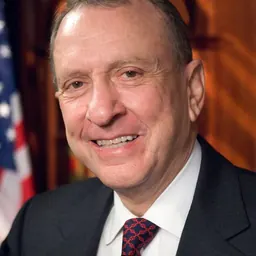
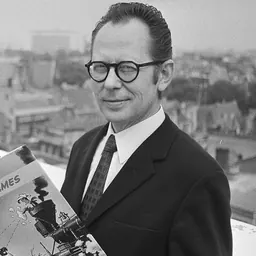


Related people
Same field, nearest in time






Contemporaries
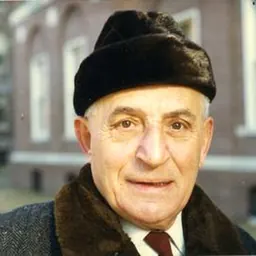
People whose lives overlapped R. Budd Dwyer's




Frequently asked questions
Who was R. Budd Dwyer?
American politician (1939–1987)
When was R. Budd Dwyer born?
R. Budd Dwyer was born on 21 November 1939 in St. Charles.
When did R. Budd Dwyer die?
R. Budd Dwyer died on 22 January 1987 in Harrisburg.
What was R. Budd Dwyer's occupation?
R. Budd Dwyer was a politician and teacher.
What nationality was R. Budd Dwyer?
R. Budd Dwyer was American.
Sources & further reading
Cite this page
APA: Biography.guide. (2026). R. Budd Dwyer. https://biography.guide/r-budd-dwyer/
MLA: "R. Budd Dwyer." Biography.guide, https://biography.guide/r-budd-dwyer/.
Chicago: "R. Budd Dwyer." Biography.guide. https://biography.guide/r-budd-dwyer/.
Data last updated: 2026-09-20 · Spot an error? Report a correction.
Page generated 2026-09-27 05:24 UTC