
R. Bruce Ricketts
Union Army officer
About R. Bruce Ricketts
Lived 1839 – 1918 (aged 79). R. Bruce Ricketts was an American.
Robert Bruce Ricketts (April 29, 1839 – November 13, 1918) distinguished himself as an artillery officer in the American Civil War. He is best known for his battery's defense against a Confederate attack on Cemetery Hill on the second day of the Battle of Gettysburg on July 2, 1863.
After the battle, Ricketts criticized Adelbert Ames' division of XI Corps, although he probably could not see what was going on down there at the foot of the hill. He thought they fled unnecessarily. Ricketts' account of the action makes it look as if his battery stood alone for an extended time. However, a less colorful account by a modern historian shows that some of the XI Corps troops had rallied and stood fast atop Cemetery Hill even before reinforcements from Col. Carroll's brigade of II Corps came up behind Ricketts' position.
After Gettysburg After Gettysburg, Ricketts' battery F was transferred to the artillery brigade of II Corps in time for the Bristoe Campaign. At the Second Battle of Auburn on October 14, 1863, the battery helped first division II Corps cover the withdrawal of the corps under harassing fire from horse artillery of Major General J. E. B. Stuart's command. At the Battle of Bristoe Station later that day, Ricketts' battery F came up at a gallop and unlimbered behind BG Alexander S. Webb's second division II Corps. Their fire helped defeat Major General Henry Heth's attack on the federal line. The battery was given the privilege of presenting captured Confederate guns to Major General George G. Meade, the commanding general.
Ricketts' battery remained with the II Corps for the Overland Campaign. During the Battle of the Wilderness, a section of Ricketts' battery advanced on the Plank Road with Major General Winfield Scott Hancock's attack on the Confederate lines on May 5, 1864, at about 3:30 PM. The section accompanied BG George Getty's division of VI Corps, serving with Hancock at that time. A Confederate counterattack captured the section, but Col. Carroll's brigade recaptured the guns by 6:00 PM. BG Getty praised Ricketts for his "great coolness and courage" in this action.
Ricketts was engaged in support of Grant's offensive attacks on the Confederate positions in the Battle of Spotsylvania Court House on May 18, 1864, being moved up close to the captured Confederate works. He also supported Hancock's attack on Henagan's redoubt at the Battle of North Anna on May 23. The battery remained with II Corps throughout the remainder of the campaign, except at the Battle of Cold Harbor, when it was detached to serve with XVIII Corps on June 3.
Ricketts' battery crossed the James River with II Corps and participated in the Second Battle of Petersburg. Battery F fired some of the first federal shots into the beleaguered city. Ricketts' guns were on the battle front for two weeks until they were relieved by a battery from V Corps.
During the subsequent siege of Petersburg, Ricketts was promoted to higher ranks in the First Pennsylvania Light Artillery. When Major James H. Cooper reached the expiration of his term of service on August 8, 1864, Ricketts was named his successor. When, in 1865, Colonel R. M. West was commissioned colonel of the Fifth Pennsylvania Cavalry, Major Ricketts was promoted to the rank of colonel in his place to date from March 15.
During the early stages of the siege, Ricketts continued in command of his battery with II Corps. This included a role supporting BG Gershom Mott's division in the Second Battle of Deep Bottom. After returning to the Petersburg front, the battery was assigned to positions near the Jerusalem Plank Road. During this period, Capt. Ricketts presided over a court of inquiry into the loss of a gun at the Second Battle of Ream's Station. He also served on a board deciding which units could add the names of particular battles to their flags. In December 1864, Ricketts, as "acting major," commanded the II Corps batteries serving on the lines of IX Corps for a period of three weeks.
In 1865, Ricketts played a role in the Artillery Reserve; and, by the spring of 1865 he was assistant chief of artillery of IX Corps. Whenever the chief of artillery, Colonel John C. Tidball, was absent, Ricketts took charge of the guns of IX Corps in his place.
The report that a Confederate veteran looked at Ricketts, a slight man, and commented, "And did this little cuss command Battery Hell!," may be apocryphal.
Post-war After the war, Ricketts, with his father and an uncle, began buying timber land in Columbia, Luzerne and Sullivan counties. By 1873, they had ca. . In 1872 Ricketts and partners opened a saw mill. He used his own lumber to build North Mountain House at Ganoga Lake in the area where he had his timber lands. The house took guests until 1903, when it became his family's summer home. Ricketts' interests suffered financial hardship in the years 1883 to 1885, and he had to sell off much of his land.
Ricketts married Elizabeth Reynolds in Wilkes-Barre, Pennsylvania, on October 1, 1868. They had three children: William Reynolds (1869–1956); Jean Holberton (1873–1929), and Frances Leigh (1881–1970). Lakes Jean and Leigh are named for their two daughters.
Ricketts belonged to the Grand Army of the Republic and the Military Order of the Loyal Legion of the United States. The colonel was politically active too. He supported Major General Winfield Scott Hancock for president in 1880.
At his death on November 14, 1918, at Ganoga Lake, Ricketts still owned about around Red Rock Mountain in Columbia, Luzerne and Sullivan counties, including Ganoga Lake (or Long Pond) and Lake Jean. Ricketts was buried nearby. His heirs sold much of this timber land to the state of Pennsylvania via the Central Penn Lumber Company 1920-1924. This land became the nucleus of Ricketts Glen State Park.
Don’t just read it —
keep it.
Full-length biographies made to live with: read them, listen on the way to work, watch them tonight.
- E-book
- Audio
- Video
Instant download · yours to keep · every purchase keeps this site free
Important facts
Family & relationships
People in R. Bruce Ricketts's life
Named in this biography and alive at the same time

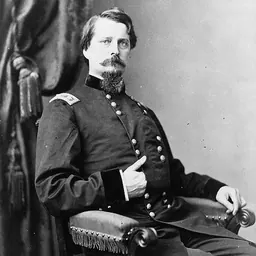
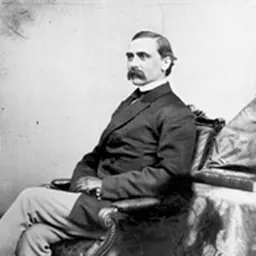

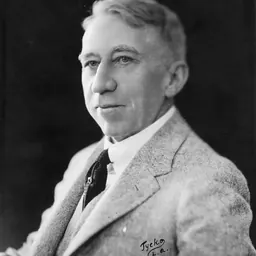
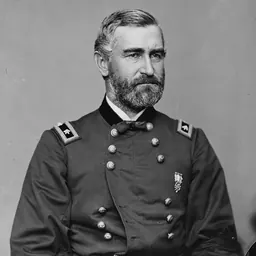
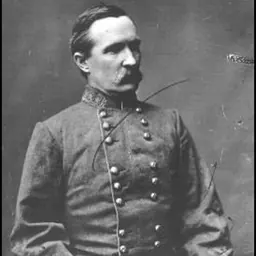

Contemporaries
People whose lives overlapped R. Bruce Ricketts's



Frequently asked questions
Who was R. Bruce Ricketts?
Union Army officer (1839–1918)
When was R. Bruce Ricketts born?
R. Bruce Ricketts was born on 29 April 1839 in Orangeville.
When did R. Bruce Ricketts die?
R. Bruce Ricketts died on 13 November 1918 in Ganoga Lake.
What nationality was R. Bruce Ricketts?
R. Bruce Ricketts was American.
Sources & further reading
· Wikipedia: R. Bruce Ricketts
Cite this page
APA: Biography.guide. (2026). R. Bruce Ricketts. https://biography.guide/r-bruce-ricketts/
MLA: "R. Bruce Ricketts." Biography.guide, https://biography.guide/r-bruce-ricketts/.
Chicago: "R. Bruce Ricketts." Biography.guide. https://biography.guide/r-bruce-ricketts/.
Data last updated: 2026-09-22 · Spot an error? Report a correction.
Page generated 2026-09-27 05:19 UTC