
About R. Bruce Elder
Born 1947. R. Bruce Elder is an American and Canadian film director, filmmaker and film scholar.
R. Bruce Elder, FRSC (born June 12, 1947) is a Canadian filmmaker, writer, critic, curator, and educator known for his contributions to experimental cinema, film theory, media studies, and aesthetics. His work spans filmmaking, literary criticism, philosophy, communication theory, and the history of avant-garde art. Elder is particularly known for the forty-two-hour film cycle The Book of All the Dead, his writings on experimental cinema and modernist art, and his scholarship on Stan Brakhage, Marshall McLuhan, George Grant, and the Toronto School of Communication Theory.
In 2007, Elder was elected a Fellow of the Royal Society of Canada and received the Governor General's Award in Visual and Media Arts. His films have been exhibited internationally at institutions including the Museum of Modern Art in New York, Centre Pompidou in Paris, Kino Arsenal in Berlin, Anthology Film Archives, the Art Gallery of Ontario, and numerous international film festivals devoted to experimental cinema.
Early life and education Elder began his artistic and intellectual career while studying philosophy at McMaster University during the late 1960s. There he studied under political philosopher George Parkin Grant, whose writings on technology, ethics, religion, and Canadian identity became a lasting influence on Elder's thought. Grant's engagement with Martin Heidegger's philosophy of technology would later shape Elder's own concerns regarding modernity, media, and the effects of technological systems on human experience.
While attending McMaster, Elder became active in the university's literary and artistic community. During this period he helped organize visits by American poets Kenneth Rexroth, Allen Ginsberg, and Robert Creeley. Elder later recalled that extended conversations with these figures influenced both his understanding of poetry and his subsequent artistic development.
Initially committed to poetry, Elder published an eponymous chapbook in 1970 through Delta Canada, a publishing house founded by poet Louis Dudek. The volume received a favorable review from critic George Woodcock in Canadian Literature. His poetry also appeared in various anthologies and literary journals.
His early films included Barbara Is a Vision of Loveliness, which received a Canadian Film Award for Best Experimental Film, and The Art of Worldly Wisdom, which received recognition from the Los Angeles Film Critics Association.
The Book of All the Dead Elder's ambitious project is The Book of All the Dead, a forty-two-hour cycle produced between 1974 and 1993. The cycle comprises four major regions: Illuminated Texts, Lamentations, Consolations, and Exultations.
The work combines philosophical speculation, autobiographical reflection, literary references, music, theology, mythology, and extensive experimentation with cinematic form. Drawing on sources ranging from Dante, Ezra Pound, Friedrich Nietzsche, and Martin Heidegger to Marshall McLuhan and George Grant, the cycle examines the spiritual, political, and cultural crises of modernity.
Writing in the Images Festival catalogue, Bart Testa described The Book of All the Dead as one of the most ambitious achievements in international avant-garde cinema. He argued that the cycle transformed the condition of artistic belatedness into a productive aesthetic strategy and represented a sustained engagement with questions of history, memory, and cultural inheritance. Crack, Brutal Grief (2000), Eros and Wonder (2003), Infunde Lumen Cordibus (2004), The Young Prince (2007), What Troubles the Peace at Brandenburg? (2011), Return to Nature! (2012), A Gathering of Crystals (2015), and Alone (All Flesh Shall See It Together) (2023).
A profile published by the Social Sciences and Humanities Research Council noted that Elder acquired expertise in applied mathematics and computer science in order to incorporate emerging technologies into his artistic work. The article reports that he developed an image-processing application, informally known as the "Cagey One," which enabled filmmakers to experiment with geometric distortions and new forms of image transformation. The project reflected his broader interest in the intersection of technology, aesthetics, mathematics, and experimental cinema.
Scholarship and criticism
Beginning in the 2000s, Elder developed a series of studies examining what he termed the "new paragone." Rather than arguing that cinema was merely influenced by modernist artistic movements, Elder proposed that many twentieth-century artists viewed cinema as a potentially supreme modern art form and reshaped painting, poetry, dance, and other artistic practices in response to cinema's distinctive capacities.
His later scholarship expanded these investigations into the relationship between artistic innovation, technology, media theory, and modernism, culminating in major studies including Harmony and Dissent (2008), DADA, Surrealism, and the Cinematic Effect (2013), and Cubism and Futurism: Spiritual Machines and the Cinematic Effect (2018).
The Cinema We Need In 1985 Elder published "The Cinema We Need," a manifesto advocating a cinema grounded in spontaneity, perception, multiplicity, and philosophical reflection.
Elder has curated and presented programs devoted to experimental film, Canadian cinema, communication theory, and avant-garde art. His programming and public presentation activities have included collaborations with institutions such as the Art Gallery of Ontario, Cinematheque Ontario, Images Festival, CineCycle, universities, cinematheques, and international conferences devoted to film and media studies. Region One: The System of Dante's Hell Breath/Light/Birth (1975) The Art of Worldly Wisdom (1979) 1857 (Fool's Gold) (1981) Illuminated Texts (1982) Lamentations: A Monument to the Dead World, Part 1: The Dream of the Last Historian (1985) Sweet Love Remembered (1980) Lamentations: A Monument to the Dead World, Part 2: The Sublime Calculation (1985) Permutations and Combinations (1976) Region Two: Consolations (Love Is an Art of Time) Consolations (Love Is an Art of Time) Part 1: The Fugitive Gods (1988) Consolations (Love Is an Art of Time) Part 2: The Lighted Clearing (1988) Consolations (Love Is an Art of Time) Part 3: The Body and the World (1988) Region Three: Exultations (In Light of the Great Giving) Flesh Angels (1990) Look! We Have Come Through! (1978) Newton and Me (1990) Barbara Is a Vision of Loveliness (1976) Azure Serene (1992) She Is Away (1976) Exultations: In Light of the Great Giving (1993) Burying the Dead: Into the Light (1993) Trace (1980) Et Resurrectus Est (1994)
The Book Of Praise (1997 – ) A Man Whose Life Was Full Of Woe Has Been Surprised By Joy (1997) Crack, Brutal Grief (2000) Eros and Wonder (2003) Infunde Lumen Cordibus (2004) The Young Prince (2007) What Troubles The Peace At Brandenberg? (2011) A Gathering Of Crystals (2015)
Don’t just read it —
keep it.
Full-length biographies made to live with: read them, listen on the way to work, watch them tonight.
- E-book
- Audio
- Video
Instant download · yours to keep · every purchase keeps this site free
Important facts
People in R. Bruce Elder's life
Named in this biography and alive at the same time


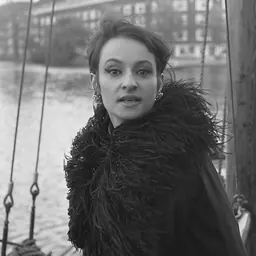



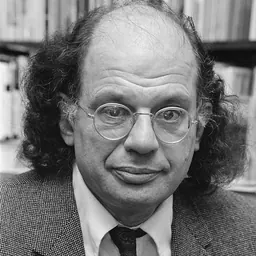

Related people
Same field, nearest in time

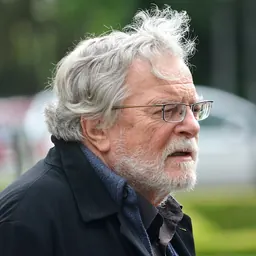
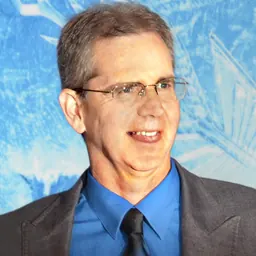

Contemporaries
People whose lives overlapped R. Bruce Elder's



Frequently asked questions
Who is R. Bruce Elder?
Canadian filmmaker
When was R. Bruce Elder born?
R. Bruce Elder was born on 12 June 1947 in Hawkesbury.
What is R. Bruce Elder's occupation?
R. Bruce Elder is a film director, filmmaker and film scholar.
What nationality is R. Bruce Elder?
R. Bruce Elder is American and Canadian.
Sources & further reading
Cite this page
APA: Biography.guide. (2026). R. Bruce Elder. https://biography.guide/r-bruce-elder/
MLA: "R. Bruce Elder." Biography.guide, https://biography.guide/r-bruce-elder/.
Chicago: "R. Bruce Elder." Biography.guide. https://biography.guide/r-bruce-elder/.
Data last updated: 2026-09-20 · Spot an error? Report a correction.
Page generated 2026-09-27 05:31 UTC