
Qeytuqo Aslanbech
Supreme Prince of Kabardia, 1737–1746
About Qeytuqo Aslanbech
Lived 1657 – 1746 (aged 88–89).
Biography Early life
In his youth, he was educated by Jabagh Qazanoqo. Aslanbech's views and policy were influenced by his teacher. In the letter, the Tsar said:
Aslanbech believed that the struggles between princes, lords and khans must end and the unity of the tribes should be ensured in order to gather first Kabardia and then the whole Caucasus under a state roof. He gained the support of Jabagh Qazanoqo in this endeavor.
In 1711, the Governor of Astrakhan, P. M. Apraksin, led a campaign against Kuban together with Kalmyks and Kabardians. On August 30, five thousand Kabardians under the command of Princes Tatarkhan Bechmirza and Aslanbech Qeytuqo, marched one hundred versts and, after a short battle on the banks of the Kuban River, routed a 10,000-strong army of the Nureddin and about 150 Nekrasovites. They pursued the enemy for two hours, killed 359 and captured 40 men, and seized 2,700 horses. Many Nogais drowned trying to escape across the river. The Nureddin, wounded in the leg, escaped with only a small number of people. Few Nekrasovites survived. The Kabardians lost 70 killed and 120 wounded. In 1712, the Posolsky Prikaz rewarded both princes with furs worth 3,000 rubles and 2,000 rubles in cash, and on May 16, 1713, Peter I sent a letter of gratitude.
In August of 1720, Aslanbech, along with princes like Tatarkhan Bechmirza and Batoqo Bechmirza, led a Campaign against the Chechen clans on the lower Sunzha. Aslanbech ravaged the lands of the Chechens until he had to retreat because of a low supply caused by the Crimean raids on Kabardia.
Civil War in Kabardia
As a successor state to the Golden Horde, the Crimean Khanate claimed sovereignty over Circassia. This political relationship was characterized primarily by the obligation of Circassian princes to pay tribute to the Crimean Khan, predominantly in the form of slaves. This tribute was demanded upon the ascension of a new Khan to the throne or levied as fines for crimes committed by Circassian subjects. Despite some legal rulings (kanunname) suggesting Sharia should apply to certain tribes (which would protect them), the Ottoman state supported the Crimean Khan in enslaving Circassians, treating the region effectively as a source of slaves regardless of religious affiliation. It was not possible to determine whether the Circassians entering the Ottoman market were from Dar al-Harb or not, as both allied Muslim Circassians and non-Muslim Circassians were raided by the Khanate. The Circassians were described as "neither Christians nor Muslims" by a courtier of the Crimean Khan. Some Ottoman chroniclers mention that the Circassians fought against the Crimean Khanate because they could not stand the "Tatar tyranny and oppression" .
In 1720, Saadet IV Giray (as revenge for the Kabardian invasion of Kuban and Chechnya) invaded Kabardia with 40,000 troops, demanding allegiance to the Ottoman Empire and Crimean Khanate, 4,000 jasyrs, and restitution for past losses. Pro-Crimean princes capitulated, while Kashkatau party leaders fortified the Cherek Fortress. A khasa was convened, attended by princes, Tlekotlesh, and representatives of the peasants. They discussed the current situation and the dispatch of an embassy to St. Petersburg. The Misosts' supporters prevailed at the meeting; reasonable proposals were rejected, and it was decided to accept the Crimean terms and pay a shameful tribute of 1,000 yasyrs "for the dishonor" of Kaplan Giray, "and if he, the khan, were to march on Kabardia, they would give nothing." They sent ambassadors with this proposal to the khan, who executed them and moved his troops across the Kuban. Those who disagreed with Yislam Misost's decision united around Aslanbech and his supporters and retreated into the mountains.
The Qeytuqo and Bechmirza families, representatives of the Jambot clan, according to V.N. Sokurov, left with their people for Kashkatau. In other words, Aslanbech returned to his former possessions and built the Cherek town.
The Crimean Khan sent a thousand well-armed seimen soldiers to Kabardia under the command of Salih Giray, the Sultan. By mid-June 1720, the Crimeans were encamped on Kyzburun. Salih Giray accepted the oath of allegiance to Crimea from the Misost and Hatokhshoqo families, in confirmation of which he demanded hostages and the payment of tribute in slaves.
Saadet Giray IV presented the following demands to the Jambot clan: Severance of relations with Russia Acceptance of Crimean citizenship and payment of a tribute of one yasyr from each household Relocation to the Kuban region
The first three points were mandatory; if they were not fulfilled, the khan threatened to destroy their homes, burn them down, and execute everyone. However, the Kabardians categorically refused all demands. Aslanbech's group declared that the Kabardian princes had never been under Crimean rule, but had long been allies of Russia and served it faithfully. After this, Salih Giray Sultan gave the order to attack Kashkhatau. On June 24, 1720, the Crimean detachment stood at Tatartu.
Over 2,000 warriors participated in the battle on the side of the Jambots. Salih Giray's detachment consisted of approximately 1,000 horsemen, while Yislambech Misostov fielded 700 nobles. During the battle, most of the Kabardian nobles suddenly defected to Aslanbech Qeytuqo's side. As a result, the Crimean troops were routed and fled from Greater Kabardia. At the site of the battle alone, the Crimeans left 360 dead. Retreating, the Crimean detachments and the Misost nobles decided to fortify themselves in the Qudenet villages on the Chegem. However, the local population did not allow the Crimeans and their Kabardian princes into their homes and drove them away.
Persian campaign
Aslanbech participated in the Persian campaign of Peter the Great on the Russian side. According to E. J. Naloeva, a record from September 2, 1722, was preserved in the travel journal:
“The Kabardian ruler Aslanbek was informed through conversations that he, His Imperial Majesty, a high-ranking personage, could see him tomorrow.”
Aslanbech received an audience with Emperor Peter the Great on September 3. There is no record of their conversation. Other entries in the war diary also attest to Kaitukin's participation in the Persian campaign. For example, on September 12, enemy troops appeared in the mountains of the Utemshinsky domain, threatening to attack the Russian convoy. E. J. Naloeva cites the diary entry:
"That day, the Kabardian ruler Aslanbek and Elmurza Cherkassky with their men were dispatched along with the Don Cossacks... to obtain prisoners of war, three of whom this party had captured."
Alliance with Crimea From 1722 to 1724, conflicts continued. The Bechmirzas and Qeytuqos remained besieged in the Kashkatau area, defending themselves entirely with their own resources. In 1724, Aslanbech Qeytuqo asked for military aid from Peter I. After receiving no answer to his request, he started to strengthen his ties with the new Crimean khan, Mengli II Giray. At this point, Peter the Great shifted his favor toward the Bakhsan faction, which caused the Kashkatau party to ally with the Crimeans—effectively leading both parties to swap their international allegiances.
Following this change in Crimean leadership under Meñli II Giray, Aslanbech Qeytuqo sought a rapprochement with Bakhchisarai. A political realignment followed, and alliances were reinforced through marriage between the Qeytuqey family and the Crimean ruling house. The new khan appointed Bakhty-Girey as serasker in Kuban, who in turn negotiated an agreement with Aslanbech for the seizure of supreme authority in Kabardia and its incorporation under Ottoman influence.
These plans were ultimately disrupted. The Kabardian statesman Jabagh Qazanoqo played a key diplomatic role in maintaining peace and restoring relations with Russia. Under his influence, Yislambech Misost convened a khasa (council), which resolved to send an embassy to Peter the Great. The emperor received the delegation, relations were restored, and military assistance was again promised.
In April 1725, despite these diplomatic turns, the Bakhsan leaders Yislambech Misost and other Hatokhshoqo princes ultimately capitulated and surrendered to Aslanbech at the Pshiqo encampment. The Kashkatau faction achieved a temporary victory over the Russian-supported Bakhsan party.
Following the defeat of the Bakhsan party in April 1725, the political situation in Greater Kabardia fell into disorder. For the first time in decades, Kabardia was forced to pay regular tribute to the Crimean Khanate, while Crimean troops remained stationed in Kabardian territory. Although Prince Aslanbech Qeytuqo had achieved victory over his rivals, his position soon became unstable. Qeytuqey's dependence on Crimean military support damaged his reputation among the Kabardian nobility. Before 1724, he had been known as a strong defender of Kabardian independence and an opponent of Crimean influence. His later cooperation with the Crimean Khanate caused many nobles to turn against him. The Bechmirzas, who had previously supported the Kashkatau coalition, abandoned Aslanbech and joined the remaining leaders of the defeated Bakhsan faction, creating a rare alliance between former rivals.
Exile Without the support of the Kabardian princes, Aslanbech Qeytuqo quickly lost his authority. Hoping to preserve his position, he requested a redistribution of lands and subjects from the ruling princes, but his request was rejected. Isolated politically and left without allies, Aslanbech fled Kabardia together with his brother and son, seeking refuge in the Crimean Khanate.
In 1730, the Ottoman Sultan removed the Crimean Khan Mengli Giray from power and reinstated Qaplan I Giray. His rival for the Khan's throne, Salih Giray, fled to his father-in-law, Prince Yislambech Misost. He took with him 2,000 Nogai families, approximately 35,000-40,000 people. Qaplan Giray, in turn, recognized Aslanbech Qeytuqo as the sole claimant to the throne of Kabardia, who in turn received a 19,000-strong army from the Khan. Aslanbech, in turn, swore allegiance to the Khan and promised to bring the entire region into submission. After Aslanbech became the prince, Qazanoqo was his closest advisor and influenced Aslanbech's Pan-Caucasian views. The first action of Prince Aslanbech was to introduce the principle that "only one state should exist between two seas" (the Black Sea and Caspian Sea) Aslanbech advocated for unification with other regions of the Caucasus, but did not have enough time or opportunity to fully implement this principle.
Kuban campaigns In 1736 a 2,000-strong Kabardian detachment led by Aslanbech, Bemat Kurghoqo, and Qasey Hatokhshoqo, arrived in Kuban and helped Kalmyks on their campaign against Nogais. During continuous attacks, on the 37th day of the siege, the Kuban mirzas were forced to negotiate, agreeing to accept Russian allegiance. Two hundred Nogai mirzas from four families, along with their sultan, signed a written oath of allegiance and gave their sons as hostages. The mirzas also received assurances from the Russian side that after the war they would remain under Russian protection and would not be handed over to the Ottomans. The Nogai rulers were ordered to migrate to the regions along the Terek River, Malka, and Kuma rivers, near the Russian frontier, where they immediately began to move.
In the spring of 1739, the Kabardians, along with the Kalmyks who had voluntarily joined them, launched a campaign against Kuban. They were led by Aslanbech himself. In December, he reported to St. Petersburg that, with the Kalmyk Khan Ombo, they went beyond the Laba River. And to the top of the Khevz River. They took five thousand Bezlaya villages and two thousand Begbai villages. In the summer of the same year, when the Crimeans, having unexpectedly attacked Kabardia, along with the Chemguy Circassians, attacked Kabardian summer pastures, capturing 500 people and seizing about 200,000 sheep and 7,000 cattle. However, shortly after the Ottoman defeat at the Battle of Stavuchany on August 17, the Kabardian and Kalmyk forces mounted a counterattack. On August 20, they confronted Kazi-Girey's forces near the Laba River. In the ensuing battle, the Crimean-led forces were defeated; many were killed or captured, and Kazi-Girey himself was mortally wounded.
It was Yese Kanukov, the renowned elder of Donifars, who managed to rally his fellow villagers to repel the Kabardian prince Sari-Aslanbek (name of Aslanbech in Ossetian folklore) in the early 18th century. This tower, which offers a clear view of the main roads leading to Donifars, bears witness to those turbulent times. It was clearly an important defensive point from which signals could be transmitted to nearby mountain villages. Digor legends contain references to Yesa Kanukov, before the enemy attacked the Donifars, hiding all the villagers in one of the village towers.
The song goes as follows: Balatukov's daughter, Princess Daum, had a dream. Waking up in fear, she told her husband the dream: - My prince, I saw a dream in my dream, I saw things unsuitable for us: I saw red blood on the saklya floor, I saw a dead man who looked like you on the bed. Dress yourself in old iron. - Oh, don't be afraid, don't be afraid, Princess Daum! Yesterday, my younger brother Zhanchek went after the deer; He probably killed the deer, that's what your dream means. - So said Alisultan, and they slept until dawn. In the morning, waking up early, she looked out the window. - Several horsemen are riding below; Two in front are holding a council: If my eyes are not mistaken, By God, our princes are being exterminated. - Oh, don't be afraid, don't be afraid, Princess Daum! Kaitukov Aslanbek - sworn friend; What will they do to me without Aslanbek's knowledge? - I accept your illnesses, be careful! Aslanbek with piebald eyes, And he flatters well those he wants to kill. - I'll wear a shirt under my armor. What can happen through Aslanbek's mercy? - Put on your armor And recall all your bad deeds. She looked through the telescope; She recognized the horseman riding ahead. - If my eyes do not deceive me, Then Bekmurzin Tatarhan is riding. - Oh, do not be afraid, do not be afraid, Princess Daum! Cook the soup thicker, season it with onions. Before dinner (the guests) will play chess, And after dinner they will go home. These cowards, having gone away, what will they do to me? While they were reasoning like this, the guests arrived. They chopped Alisultan into shashlik. Weeping and sobbing, Princess Daum said: - Black blood spilled across the saklya floor; Flattering us, Aslanbek, the red bear, puffed himself up over us. Red silk clothes are soaked with blood, The Emcheks, fed on our milk, came to kill us. Having washed her kerchief, she spread it on the stone fence, So that they could strangle my swan neck? Let this unfortunate day of mine become the same day For Aslanbek's wife, the witch Chual. Zhanchek returned with loaded game. Aslanbek, having returned, destroyed the last descendant of the Shaugenukovs: Zhanchek was strangled with a lasso; Princess Daum was driven away barefoot. Having learned of the death of Aslanbek and Zhanchek, The Emcheks, gifted with seven horses, regretfully do not return.
Balkar folklore Knowing that the Balkars were the most well-organized society, that they wielded significant influence over other societies, and that if they were subjugated, the others would surrender, Aslanbech first attempted to act by force against Balkaria and once penetrated it. An ancient Kabardian song and Balkar stories, passed down from generation to generation, recount this incident and the subsequent relationship between Aslanbech and his contemporary, the Balkar Prince Sosran Abaev, whom the Kabardians called "Alshagir."
One of the Aidebulovs (a princely family), dissatisfied with the Prince and seeking power, secretly communicated with Aslanbech and urged him to march with an army to Balkaria, arguing that with the help of men loyal to him, Aidebulov, they would conquer Balkaria. After lengthy discussion of this proposal, Aslanbech decided to visit Balkaria, not with an army, but with a retinue and a small guard, and to propose to Sosran Abaev, the Prince, that he voluntarily submit and pay tribute. Abaev was vigilant and, aware of Aidebulov's intentions, was always prepared to meet the enemy. Aslanbech entered the Balkar gorge and, stopping in a cave called "Zyna-Dorbun", sent ambassadors to the oliy Sosran Abaev Kuchukovich with notice of his arrival to receive tribute from the Balkars, but "Alshagir" instead of meeting him ordered the ambassadors to go to his prince and tell him that if he had business in Balkaria, he could appear at the meeting of Tyore (Balkar council), but if he intended to visit Abaev himself personally, he could come to his kunatskaya (living room); when the ambassadors attempted to object and make it clear that Aslanbech was demanding tribute, the oliy strictly forbade them to reason and ordered them to immediately leave and convey his words to Aslanbech. When the ambassadors left, he placed a chain of archers across the gorge and gave them the following orders: "Come to me, the guests are coming, amuse them: when they come within shooting distance, fire a volley at them, but aim at the handles of their daggers and sabers, at their papakhas, it doesn’t matter if you hit the horses, but don’t kill the people; if the guests don’t stop and respond with shots, then, without retreating, let me know.”
Aslanbech, having learned of this order and convinced of the futility of his journey, returned from the gorge, despite the contrary opinion of some of his courtiers. Therefore, on the return journey, the latter composed a song in which they praised the Prince of Abaev and ridiculed Aslanbech. The song begins thus: "Чы эймы дего Басиятыпше, Кушук-ико-Альшагир пши как жуап ирийтыргам, илик как ворогус ирийхргам," ("The Basiat prince Alshagir Kuchukovich, who lives on bad land, does not deign to answer the princes, and does not greet the nobles,")
Further in the song, Aslanbech's nobles criticize his indecisiveness and their own readiness to defect to Alshagir.
After this, Sosran Abaev and Kaitukin began to test each other in different ways. Aslanbech usually spent the summer in his hunting lodge, built in a large forest in a small clearing on the banks of the Cherek River at the exit from the Balkar Gorge. He hunted in this forest alone and allowed no one else there. In his free time, he liked to sit atop a large rock in the middle of the clearing, smoking a pipe, with a "kubgan" (washstand) standing next to him.
Abaev knew all this, and he ordered two of his renowned marksmen and hunters to test Aslanbech's courage in two ways: hide in the forest at the edge of a clearing and, just before dusk, while Kaitukin was sitting on a rock, fire simultaneously, one bullet hitting his pipe and the other his kubgan. If he wasn't frightened, they would remain in the forest when Aslanbech went hunting, but in such a way that he wouldn't see them until the beast leaped out. The hunters carried out this order precisely, for which he himself later gifted them a plot of land, which the descendants of the Attasauva hunters still own.
Aslanbech's bravery was so great that he continued to sit perfectly still while bullets knocked the pipe from his mouth and knocked over the kubgan. In the forest, when the frightened deer jumped out, three shots rang out simultaneously, and all three bullets hit him, and he fell, and at the same time, Kaitukin and two Balkarian hunters ran up to him. Aslanbech, enraged by the highlanders' audacity, raised his rifle and aimed at them, at which moment they too pointed their guns at Aslanbech's chest. Then Aslanbech came to his senses, lowered his rifle, and returned home, while the hunters took the deer and also set off for Balkaria and reported what had happened to Sosran. After these pranks, he decided to punish Alshagir by driving away his sheep along with the shepherds, who were far from the Balkar society, behind two mountain ranges, to the Khizni-bashi pasture, which can be reached through a special gorge.
Having set out with his men, he hesitated to attack the kosh immediately due to the overwhelming number of armed men. He left his men, hiding them in the forest, and dressed himself in the garb of a simple Kabardian. He walked to Sosran's kosh on foot, like a hunter, for the night. He was received, and the elders ordered a lamb to be slaughtered for the guest, who pretended not to speak Balkarian.
The conversation turned to the topic of the day, that is, to Kaitukin and Abaev. Some said Aslanbech would win, while others said that as long as Sosran lived, Aslanbech would not succeed in conquering Balkaria. Then a young man from Sosran's "atalyks" intervened and, having first asked permission from his elders, said this: "I think that Aslanbech, while perhaps brave, is not a smart man. If he were smart, instead of engaging in combat with Sosran, he would seek his friendship and, having formed an alliance with him, would quietly, together with the young Balkarian taubii, conquer all the neighbors and receive tribute from them." These words gave Aslanbech pause for thought. After supper, the elders went to bed in the kosh, and the young people with the dogs went to the fires lit around the sheep encampment at some distance from each other. But soon Kaitukin heard isolated shots ringing out nearby at short intervals. He stood up, left the tent, and saw the following scene: the young people near the fires, instead of sleeping, were practicing target shooting. They were setting ribs and other bones from a eaten lamb at one fire, and those at the other fire were shooting at these bones, hitting them, and this exercise continued until morning.
Aslanbech realized that these shepherd-shooters would not be easily captured and would not give up the ram cheaply, so he did not dare to carry out his intention and went home, but nevertheless, being proud and spoiled by success, he decided, before seeking Sosran's friendship, to study the internal order of the government of Balkaria, its means and forces and for this he sent two of his faithful and intelligent confidants, of Kumyk origin, who spoke the Balkarian language, to Balkaria so that they would come to the house of Sosran Abaev as wanderers and, having lived there for a year, study the life and customs of the Balkars and Sosran himself.
But when these ambassadors returned a year later, they told him that the entire population obeyed Sosran unquestioningly, he himself had significant resources, had relations with Georgia, Imereti, everything that was not in Balkaria, he received from there, had a trained army from the youth, they made gunpowder themselves, they mined lead locally, Sosran himself was a cultured man, he had high Towers with embrasures built of lime, underground water pipes to his estate, and an orchard planted.
Hearing all this and the ambassadors' opinion of the futility of fighting Sosran, Aslanbech initiated peace negotiations with him, and they concluded an alliance. Kaitukin granted Sosran the right to drive the Balkar community's herds free of charge to Kabardian lands for grazing in the fall and spring, and to set up a "basiat-kosh" (camp) wherever the taubii wished, up to the banks of the Terek River. Sosran, in turn, pledged not to hinder Aslanbech's occasional forays into the neighboring communities of Bezengi and Khulam for profit and to steal bulls and rams for slaughter.
But Sosran was cautious, apparently knowing that in international treaties, right is reserved only for the strong. Therefore, during periods when the cattle were on the plains, he sent a detachment of young taubii with bridlers and riflemen, who would set up camp below the kosh farmsteads to prevent any malicious intent on the part of Aslanbech and the Kabardians in general. At the same time, this detachment would travel to Chechnya, Ossetia, and other places in search of profit, often carrying off young men and women who were enslaved. The taubii camps were called "basiat-kosh," where young men from neighboring friendly tribes and other mountain communities often came to learn the art of war. This order existed until the arrival of Russian troops and the annexation of Kabardia and Balkaria to Russian Empire.
Don’t just read it —
keep it.
Full-length biographies made to live with: read them, listen on the way to work, watch them tonight.
- E-book
- Audio
- Video
Instant download · yours to keep · every purchase keeps this site free
Important facts
People in Qeytuqo Aslanbech's life
Named in this biography and alive at the same time
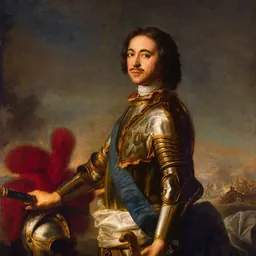
Contemporaries
People whose lives overlapped Qeytuqo Aslanbech's




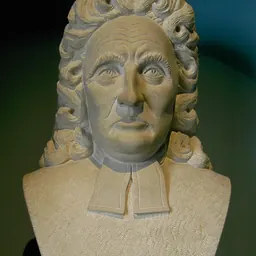
Frequently asked questions
Who was Qeytuqo Aslanbech?
supreme Prince of Kabardia, 1737–1746
When was Qeytuqo Aslanbech born?
Qeytuqo Aslanbech was born in 1657 in Kabardia.
When did Qeytuqo Aslanbech die?
Qeytuqo Aslanbech died in 1746 in Kabardia.
Sources & further reading
· Wikipedia: Qeytuqo Aslanbech
· DBpedia: Aslanbech the Red-Mustached
Cite this page
APA: Biography.guide. (2026). Qeytuqo Aslanbech. https://biography.guide/qeytuqo-aslanbech/
MLA: "Qeytuqo Aslanbech." Biography.guide, https://biography.guide/qeytuqo-aslanbech/.
Chicago: "Qeytuqo Aslanbech." Biography.guide. https://biography.guide/qeytuqo-aslanbech/.
Data last updated: 2026-09-20 · Spot an error? Report a correction.
Page generated 2026-09-27 05:21 UTC