
About Qakare Ibi
Born 2150 BC. Qakare Ibi was a statesperson.
Qakare Ibi (died 2167 BC) was an ancient Egyptian king during the early First Intermediate Period (2181–2055 BC) and the 14th ruler of the Eighth Dynasty. As such, Ibi's seat of power was Memphis and he probably did not hold power over all of Egypt. Ibi is one of the best attested kings of the Eighth Dynasty due to the discovery of his small pyramid in South Saqqara.
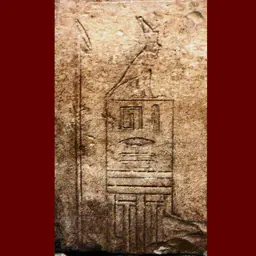
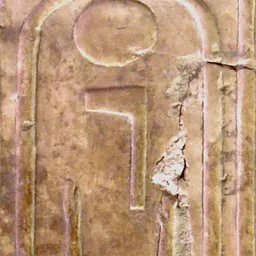
Attestations Qakare Ibi is attested on the 53rd entry of the Abydos King List, a king list which was redacted some 900 years after the First Intermediate Period during the reign of Seti I. According to Kim Ryholt's latest reconstruction of the Turin canon, another king list compiled in the Ramesside era, Qakare Ibi is also attested there on column 5, line 10 (Gardiner 4.11, von Beckerath 4.10). The Turin canon further indicates that he reigned for "2 years, 1 month and 1 day". The pyramid was excavated from 1929 until 1931 by Gustave Jéquier. It is very similar in plan, dimensions and decorations to the pyramids of the queens of Pepi II, the last great pharaoh of the Old Kingdom. Consequently, it was proposed that the pyramid was originally that of Ankhnespepi IV (ˁnḫ-n=s ppj, "Pepi lives for her") a wife of Pepi II, and was only later appropriated by Ibi. Adjacent to the pyramid is a small chapel where the funerary cult took place. No trace of a causeway nor of a valley temple has been found to this day, and it is likely that there never was any.
The pyramid Ibi's pyramid is not oriented to any cardinal point, being rather on a northwest–southeast axis. The edifice would have been around large and high with a slope of 53°7′ at the time of its construction. Behind this portcullis lay the king's burial chamber. Both the corridor and the walls of the burial chamber were inscribed with the last known instance of the Pyramid Texts. The texts seem to have been directly inscribed for Ibi rather than appropriated by him, although the possibility of the texts being rescribed can not be ruled out. Jéquier judged the quality of the inscriptions as "very average". Furthermore, the placement of the spells appears relatively indiscriminate. The burial chamber's ceiling was flat and decorated with stars. It was probably made of a single long block of Tura limestone now missing. Today a large block of concrete protects the chamber.
On the west side of the burial chamber is a false door and a huge granite block on which once stood the sarcophagus of the king. On the east side there is a serdab for the statue of the Ka of the deceased.
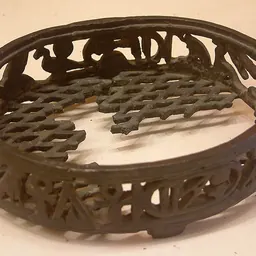
Chapel Adjacent to the east side of the pyramid is a small mudbrick chapel which served as temple for the cult of the dead king. The entrance of the chapel is located on its north side. Inside the temple, immediately against the pyramid wall is an offering hall where Jequier found a stone washbasin as well as stele or a false door of which only the foundations remain. An alabaster tray and obsidian mortar tools were also discovered there.
The south part of the chapel is occupied by magazine rooms.
Don’t just read it —
keep it.
Full-length biographies made to live with: read them, listen on the way to work, watch them tonight.
- E-book
- Audio
- Video
Instant download · yours to keep · every purchase keeps this site free
Important facts
Related people
Same field, nearest in time


Frequently asked questions
Who was Qakare Ibi?
Egyptian pharaoh
When was Qakare Ibi born?
Qakare Ibi was born in 2150 BC.
What was Qakare Ibi's occupation?
Qakare Ibi was a statesperson.
Sources & further reading
Cite this page
APA: Biography.guide. (2026). Qakare Ibi. https://biography.guide/qakare-ibi/
MLA: "Qakare Ibi." Biography.guide, https://biography.guide/qakare-ibi/.
Chicago: "Qakare Ibi." Biography.guide. https://biography.guide/qakare-ibi/.
Data last updated: 2026-09-20 · Spot an error? Report a correction.
Page generated 2026-09-27 05:25 UTC