
About Pyotr Boborykin
Lived 1836 – 1921 (aged 84). Pyotr Boborykin was a Russian journalist, writer and literary critic.
Pyotr Dmitriyevich Boborykin (; – 12 August 1921) was a Russian writer, playwright, and journalist.
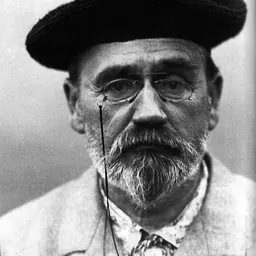
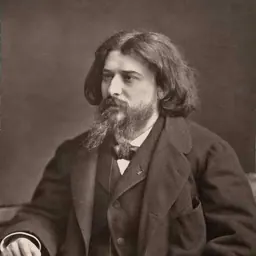
Biography Boborykin was born into the family of a landowner. He studied at Kazan State University and the Dorpat University, but he never completed his education. He made his debut as a playwright in 1860. In 1863–1864 he published an autobiographical novel, The Pathway. He was the editor-publisher of the journal Library for Reading (1863–1865), worked for the theatre magazine Russian Stage, and was "Paris correspondent of several Russian newspapers". He spent a long period abroad in the 1890s, where he met Émile Zola, Edmond de Goncourt and Alphonse Daudet. In 1900 he was elected an honorary member of the Russian Academy of Sciences.
He married Sophia Zborzhevskaya or Zborzewska (1845-1925), an actress and translator, in 1872. He died in 1921, in Switzerland.
Works Boborykin worked on the journals Notes of the Fatherland, The European Herald, The Northern Herald, Russian Thought, Artist and other publications. He was the author of numerous novels, novellas, short stories, plays, and works on the history of Western European and Russian literature. His most famous works were the novels Evening Sacrifice (1868), Dealers (1872–1873), Half a Life (1873), Kitay-Gorod (1882), Vasily Tyorkin (1892), Thirst (1898), the story Wiser (1890), and the comedy The Scale (1899). His great volume of writing was mocked by his peers; "Few writers have taken themselves more seriously, yet few have attracted more ridicule and ribaldry from their contemporaries."
The wide use of the term "intelligentsia" in Russian culture began in the 1860s, when Boborykin first used it in the press. He explained that the term was borrowed from German culture, where it was used to describe the part of society which is engaged in intellectual activity. He added a special meaning to the term: the definition of intellectuals as representatives of "high intellectual and ethical culture," and not simply "knowledge workers". In his view, the Russian intelligentsia was a special moral and ethical phenomenon. Intellectuals in this sense were representatives of different professional groups, different political beliefs, but with a common spiritual and moral foundation. The use of the term "intelligentsia" in this sense was regarded as purely Russian by westerners.
The novel Kitay-Gorod was one of Boborykin's most famous works. It was originally conceived as a study on the life and mores of the inhabitants of Kitay-gorod. This work is interesting not only from an artistic, but also from a historical point of view. In the novel, he describes with almost scientific precision the details of merchant life; culinary preferences, daily duties, and the customs of merchants and nobles against the backdrop of anticipated social and political change. His main task is the treatment of the historical role of Moscow in the last third of the nineteenth century.
Don’t just read it —
keep it.
Full-length biographies made to live with: read them, listen on the way to work, watch them tonight.
- E-book
- Audio
- Video
Instant download · yours to keep · every purchase keeps this site free
Important facts
People in Pyotr Boborykin's life
Named in this biography and alive at the same time

Related people
Same field, nearest in time

Contemporaries
People whose lives overlapped Pyotr Boborykin's





Frequently asked questions
Who was Pyotr Boborykin?
Russian writer and journalist (1836-1921)
When was Pyotr Boborykin born?
Pyotr Boborykin was born on 15 August 1836 in Nizhny Novgorod.
When did Pyotr Boborykin die?
Pyotr Boborykin died on 12 August 1921 in Lugano.
What was Pyotr Boborykin's occupation?
Pyotr Boborykin was a journalist, writer and literary critic.
What nationality was Pyotr Boborykin?
Pyotr Boborykin was Russian.
Sources & further reading
Cite this page
APA: Biography.guide. (2026). Pyotr Boborykin. https://biography.guide/pyotr-boborykin/
MLA: "Pyotr Boborykin." Biography.guide, https://biography.guide/pyotr-boborykin/.
Chicago: "Pyotr Boborykin." Biography.guide. https://biography.guide/pyotr-boborykin/.
Data last updated: 2026-09-26 · Spot an error? Report a correction.
Page generated 2026-09-27 05:16 UTC