
Ptolemy V Epiphanes
Fifth ruler of the Ptolemaic dynasty in Egypt (209–179 B.C.)
About Ptolemy V Epiphanes
Lived 210 BC – 180 BC (aged 29–30). Ptolemy V Epiphanes was an Egyptian sovereign.
Background and early life Ptolemy V was the only child of Ptolemy IV and his sister-wife Arsinoe III. The couple had come to power relatively young and ancient historiography remembered Ptolemy IV as being given over to luxury and ceremony, while leaving the government of Egypt largely to two courtiers, Sosibius and Agathocles (the latter being the brother of Ptolemy IV's concubine Agathoclea). In his early reign, Ptolemy IV successfully defeated the rival Seleucid Empire in the Fourth Syrian War (219-217 BC), successfully preventing the Seleucid king Antiochus III from seizing Coele Syria for himself. His later reign, however, was troubled by native Egyptian revolts. Between 206 and 205 BC, Ptolemy IV lost control of Upper Egypt to the self-styled pharaoh Hugronaphor.
Ptolemy V was born in 210 BC, possibly on 9 October. He was made co-regent with his father shortly thereafter, probably on 30 November. In July or August of 204 BC, when Ptolemy V was five years old, his father and mother died in mysterious circumstances. It appears that there was a fire in the palace that killed Ptolemy IV, but it is unclear whether Arsinoe III also perished in this fire or was murdered afterwards to prevent her from becoming regent.
Agathocles took a number of actions to solidify the new regime. Two months' pay were granted to the soldiers in Alexandria. Prominent aristocrats were dispatched overseas - to secure recognition of the succession from foreign powers and to prevent the aristocrats from challenging Agathocles for supremacy at home. Philammon, said to have carried out the murder of Arsinoe III, was sent to Cyrene as governor in order to assert Ptolemaic rule there. Pelops, governor of Cyprus, was sent to Antiochus III to ask him to continue to respect the peace treaty made with Ptolemy IV at the end of the Fourth Syrian War. Ptolemy, Sosibius' son, was sent to Philip V of Macedon to attempt to arrange an alliance against Antiochus III and a marriage between Ptolemy V and one of Philip V's daughters. Ptolemy of Megalopolis was sent to Rome, probably seeking support against Aniochus III. These missions were failures. Over the following year, Antiochus III seized Ptolemaic territory in Caria, including the city of Amyzon, and by late 203 BC he and Philip V had made a secret agreement to divide the Ptolemaic territories between themselves. Alexandrian revolution (203–202 BC) Agathocles and Agathoclea had already been unpopular before Ptolemy IV's death. This unpopularity was exacerbated by the widespread belief that they had been responsible for the death of Arsinoe III and a string of extrajudicial murders of prominent courtiers. Opposition crystallised around the figure of Tlepolemus, the general in charge of Pelusium, whose mother-in-law had been arrested and publicly shamed by Agathocles. In October 203 BC, Shortly after this, Agathocles had Moeragenes, one of the royal bodyguards, arrested on suspicion of ties to Tlepolemus and had him stripped and tortured. He escaped and convinced the army to go into active revolt. After an altercation with Oenanthe (the mother of the regent and his sister) at the temple of Demeter, the Alexandrian women joined the revolt as well. Overnight, the populace besieged the palace calling for the king to be brought to them. The army entered at dawn and Agathocles offered to surrender. Ptolemy V, now about seven years old, was taken from Agathocles and presented to the people on horseback in the stadium. In response to the crowd's demands, Sosibius, son of Sosibius, persuaded Ptolemy V to agree to the execution of his mother's killers. Agathocles and his family were then dragged into the stadium and killed by the mob.
Fifth Syrian War (202–196 BC)
Since his defeat by Ptolemy IV in the Fourth Syrian War in 217 BC, Antiochus III had been waiting for an opportunity to avenge himself. He had begun seizing Ptolemaic territory in western Asia Minor in 203 BC and made a pact with Philip V of Macedon to divide the Ptolemaic possessions between themselves late in that year. At some point over the winter, Tlepolemus was replaced as regent by Aristomenes, a member of the bodyguard who had been instrumental in the seizure of young Ptolemy V from Agathocles.
The Ptolemaic general Scopas led a successful reconquest of Palestine over the winter of 201/200 BC, but Antiochus III invaded again in 200 BC and defeated him decisively at the Battle of Panium. A Roman embassy made an ineffectual attempt to broker a peace between Ptolemy V and Antiochus III, but largely abandoned the Egyptians to their fate. Scopas was besieged at Sidon over the winter, but had to surrender at the beginning of summer 199 BC. He was sent off to his homeland of Aetolia to recruit troops in case Antiochus III moved on to attack Egypt itself. Instead, Antiochus III spent 198 BC solidifying his conquest of Coele-Syria and Judea, which would never again return to Ptolemaic control. In 197 BC, Antiochus III turned on the Ptolemaic territories remaining in Asia Minor, conquering their cities in Cilicia, as well as several of their cities in Lycia and Ionia, notably Xanthos, Telmessus, and Ephesus.
Shortly after this, Ptolemy V launched a massive southern campaign, besieging Abydos in August 199 BC and regaining Thebes from late 199 BC until early 198 BC. The next year, however, a second group of rebels in the Nile Delta, who were linked to Ankhmakis in some way that is not entirely clear, captured the city of Lycopolis near Busiris and invested themselves there. After a siege, the Ptolemaic forces regained control of the city. The rebel leaders were taken to Memphis and publicly executed on 26 March 196 BC, during the feast celebrating Ptolemy V's coronation as pharaoh. He was crowned in Memphis by the High Priest of Ptah on 26 March 196. Polycrates now became the chief minister in Alexandria and Aristomenes was forced to commit suicide in the following years. Günther Hölbl instead interprets the decree as a sign of the priests' increased power. In his view, the priests asserted their right to the remission of taxes, aware that Ptolemy V was relying more heavily on their support than his predecessors had, and he had no choice but to concede.
Peace with Antiochus III
After the Romans decisively defeated Philip V at the Battle of Cynoscephalae in 197 BC, they turned their attention to Antiochus III, whose troops had crossed the Hellespont and entered Thrace. In late 196 or early 195 BC Lucius Cornelius Lentulus met with the Syrian king and, among other things, demanded that Antiochus III return everything he had conquered from Ptolemy V. However, Antiochus announced that he had already begun peace negotiations with Egypt and the Romans departed without achieving anything. Antiochus then concluded peace with Ptolemy, engaging him to his own daughter Cleopatra I. In winter of 194/193 BC, the sixteen-year old Ptolemy V married Cleopatra I, who was somewhere between 14 and 23 years old. Symbolically, Antiochus held the wedding that sealed his conquest of Coele-Syria at Raphia, the site of his great defeat at the hands of Ptolemy IV.
End of the Great Theban Revolt (196–185 BC) In the mid 190s BC, Ankhmakis made some sort of agreement with King Adikhalamani of Meroe. In return for the southern Egyptian city of Syene, Adikhalamani provided some sort of aid which enabled Ankhmakis to recapture Thebes by autumn 195 BC. Violent battles between the forces of Ptolemy V and Ankhmakis took place around Asyut. In late 191 or early 190 BC, papyrus records indicate that Thebes was once again under Ptolemy V's control. The Ptolemaic general Comanus led this reconquest. In 187 BC, Adikhalamani pulled out of Syene and abandoned his support for Ankhmakis. The priests who had supported Ankhmakis accompanied his troops back to Meroe. On 27 August 186 BC, Ankhmakis and his son led a last-ditch attack on Thebes, but were defeated by Comanus. This victory re-established Ptolemaic rule in Upper Egypt, as well as the Triakontaschoinos. In temples in the region, inscriptions with the names of the Meroitic kings who had ruled the region since 206 BC were scratched out. Whether Polycrates or Ptolemy V was responsible for this duplicitous cruelty is disputed. Another embassy was made to Rome in 191 BC which congratulated the Senate on the Roman victory at the Battle of Thermopylae and proposed further action against the Seleucids with Ptolemaic support, but the ambassadors were simply thanked for the congratulations and gifted presents. At the end of the war in 188 BC, when the Romans imposed the Treaty of Apamea on Antiochus III, which forced him to give up all his territory in Asia Minor, they did not return the former Ptolemaic holdings in the region to Ptolemy V, but awarded them to Pergamum and Rhodes instead.
When Antiochus III died in 187 BC and was succeeded by his son Seleucus IV, Ptolemy V began preparations for a renewed war to recapture Coele-Syria. Ptolemy V's childhood friend, the eunuch Aristonicus, was sent to Greece to recruit mercenaries in 185 BC. At the same time, the king revived the alliances that his grandfather Ptolemy III had maintained with the Achaean League, presenting the League with monetary gifts and promising them ships as well. To raise his profile in Greece, Ptolemy V also entered a chariot team in the Panathenaic Games of 182 BC. In the same year, Aristonicus led a naval raid on Syria, attacking the island of Aradus.
Since the death of Ptolemy V's predecessor Arsinoe II, deceased Ptolemaic queens had been honoured with a separate dynastic cult of their own, including a separate priestess who marched in religious processions in Alexandria behind the priest of Alexander the Great and whose names also appeared in dating formulae. That trend continued under Ptolemy V with the establishment of a cult for his mother in 199 BC. Unlike the canephore of Arsinoe II and the athlophore of Berenice II, Arsinoe III's priestess had no special title and served for life rather than a single year.
The first of these decrees was the Memphis decree, passed on 27 March 196 BC, the day after Ptolemy V's coronation, in which the king is presented as the 'image of Horus, son of Isis and Osiris'. The decree's description of Ptolemy V's victory over the Lycopolis rebels and of his coronation draws heavily on traditional imagery that presented the pharaoh as a new Horus, receiving the kingship from his dead father, whom he avenges by smiting the enemies of Egypt and restoring order. In honour of his benefactions, the priests awarded him religious honours modelled on those granted by the priestly synods to his father and grandfather: they agreed to erect a statue of Ptolemy V in the shrine of every temple in Egypt and to celebrate an annual festival on his birthday.
Marriage and issue Ptolemy V married Cleopatra I, daughter of the Seleucid king Antiochus III, in 194 BC and they had three children, who would rule Egypt in various combinations and with a great deal of conflict for most of the rest of the second century BC.
May/June 186 BC145 BCSucceeded as King under the regency of his mother in 180 BC, co-regent and spouse of Cleopatra II from 170 to 164 BC and again 163-145 BC. Cleopatra II90px186-184 BC6 April 115 BCCo-regent and wife of Ptolemy VI from 170 to 145 BC, co-regent and spouse of Ptolemy VIII from 145 to 132 BC, claimed sole rule 132-127 BC, co-regent and spouse of Ptolemy VIII again from 124 to 115 BC, co-regent with her daughter Cleopatra III and grandson Ptolemy IX from 116 to 115 BC. Ptolemy VIII90px26 June 116 BCCo-regent with Ptolemy VI and Cleopatra II from 169 to 164 BC, expelled Ptolemy VI in 164, expelled in turn 163 BC, King of Cyrenaica from 163 to 145 BC, co-regent with Cleopatra II and Cleopatra III from 145 to 132 BC and again from 124 to 116 BC.
Gallery
Don’t just read it —
keep it.
Full-length biographies made to live with: read them, listen on the way to work, watch them tonight.
- E-book
- Audio
- Video
Instant download · yours to keep · every purchase keeps this site free
Important facts
Family & relationships
People in Ptolemy V Epiphanes's life
Named in this biography and alive at the same time

Related people
Same field, nearest in time

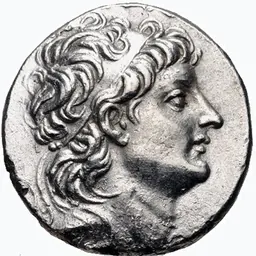
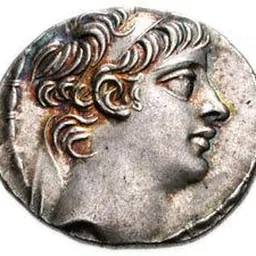


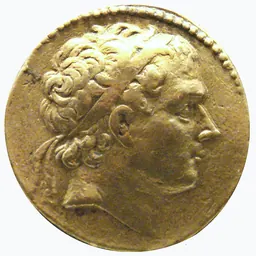
Contemporaries
People whose lives overlapped Ptolemy V Epiphanes's
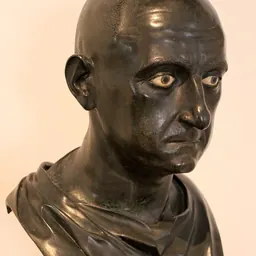
Frequently asked questions
Who was Ptolemy V Epiphanes?
fifth ruler of the Ptolemaic dynasty in Egypt (209–179 B.C.)
When was Ptolemy V Epiphanes born?
Ptolemy V Epiphanes was born in 210 BC.
When did Ptolemy V Epiphanes die?
Ptolemy V Epiphanes died in 180 BC.
What was Ptolemy V Epiphanes's occupation?
Ptolemy V Epiphanes was a sovereign.
What nationality was Ptolemy V Epiphanes?
Ptolemy V Epiphanes was Egyptian.
Sources & further reading
· Wikipedia: Ptolemy V Epiphanes
· DBpedia: Ptolemy V Epiphanes
Cite this page
APA: Biography.guide. (2026). Ptolemy V Epiphanes. https://biography.guide/ptolemy-v-epiphanes/
MLA: "Ptolemy V Epiphanes." Biography.guide, https://biography.guide/ptolemy-v-epiphanes/.
Chicago: "Ptolemy V Epiphanes." Biography.guide. https://biography.guide/ptolemy-v-epiphanes/.
Data last updated: 2026-09-20 · Spot an error? Report a correction.
Page generated 2026-09-27 05:32 UTC