
About Proinsias Mac Aonghusa
Lived 1933 – 2003 (aged 70). Proinsias Mac Aonghusa was an Irish author, known for Arts Council of Ireland, Conradh na Gaeilge and United Nations.
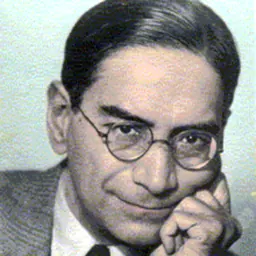
Proinsias Mac Aonghusa (23 June 1933 – 28 September 2003) was an Irish journalist, writer, TV presenter and campaigner. Born into an Irish-speaking household, Mac Aonghusa became one of the most noted Irish language broadcasters and journalists of the 20th century, The eldest of four siblings, Mac Aonghusa grew up speaking Irish as his first language and allegedly did not learn English until the age of eleven. The Mac Aonghusa parents were left-wing Irish republicans who supported Fianna Fáil (his father at one time was a Fianna Fáil councillor)
Member of the Labour party
In the 1960s both Mac Aonghusa and his wife joined the Sean Connolly branch of the Labour Party in Dublin. The branch had established a reputation as a haven for intellectuals who wanted a branch to themselves away from the many other Labour branches dominated by trade unionists. The branch came to advocate for expressly socialist policies (something previously avoided by the Labour party in conservative Ireland) combined with on-the-ground grass-roots campaigning. Through the Sean Connolly Branch, both Mac Aonghusa and his wife began to develop significant influence over the leader of the Labour party Brendan Corish. In the aftermath, Mac Aonghusa portrayed himself a left-wing martyr purged by a right-wing "Star chamber", a tactic that garnered him sympathy. Nevertheless, his expulsion was confirmed at the October 1967 party conference, despite one last appeal. His wife Catherine left the party alongside him.
Upon the onset of the Troubles, Mac Aonghusa was initially supportive of Official Sinn Féin, however by 1972 he came to resent them and, through the Ned Stapleton Cumann, their secret influence over RTÉ. During the Arms Crisis in 1970, Mac Aonghusa supported Charles Haughey and Neil Blaney, who stood accused of arranging to supply weapons to the Provisional IRA, in the pages of the New Statesman and other left‐wing journals. In this time period, Mac Aonghusa warned editors not to reprint his material in the Republic of Ireland as there was a de facto ban on him, and indeed, official attempts were made to block the transmission of his telexed reports. and during which time Mac Aonghusa became involved in setting up a radio station in Namibia, linked to the SWAPO nationalist party.
In the 1980s, Haughey twice appointed Mac Aonghusa to the Arts Council as well as naming him president of Bord na Gaeilge (1989 to 1993). This was an issue as Mac Aonghusa was already president of Conradh na Gaeilge; being head of the main Irish language lobbying body as well as the state body responsible for the Irish language had an obvious conflict of interest. In 1991, following the announcement by Haughey that the government was to fund the creation of an Irish-language television station (launched in 1996 as Teilifís na Gaeilge), an elated Mac Aonghusa suggested that Haughey would be "remembered among the families of the Gael as long as the Gaelic nation shall survive".
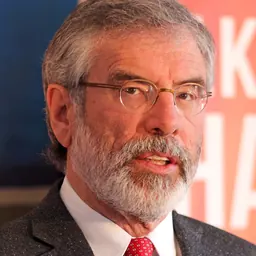
In 1992 there were calls for Mac Aonghusa to step down from Bord na Gaeilge after he pronounced that "every respectable nationalist" in West Belfast should vote for Sinn Féin Gerry Adams over the SDLP candidate Joe Hendron in the 1992 UK general election as Mac Aonghusa considered a defeat for Adams "a victory for British imperialism". Nevertheless, Mac Aonghusa simultaneously advised voters in South Down to vote for the SDLP's Eddie McGrady over Sinn Féin. Mac Aonghusa railed against his detractors at the Conradh na Gaeilge árdfheis that year, declaring that "The mind of the slave, of the slíomadóir, of the hireling and the vagabond is still fairly dominant in Ireland".
As of 1995, Mac Aonghusa continued to label himself a socialist. In the foreword to the book he wrote about James Connolly he released that year, Mac Aonghusa declared that
However, with the recent collapse of the Soviet Union in mind, Mac Aonghusa declared that the Stalinist regimes of Eastern Europe had not been socialist, and argued that the social democracies of Scandinavia (the Nordic model), were what James Connolly had envisioned as the desired socialist society. In the same text, Mac Aonghusa accused the Irish education system as well as Ireland's media of obfuscating Connolly's views on socialism and nationalism.
Mac Aonghusa battled through ill health in his final years but remained able to continue writing a number of books. His last publication, Súil Tharam in 2001, came just two years before his death in 2003.
Personal life In 1955 Mac Aonghusa married Catherine Ellis, a member of the Church of Ireland from Belfast; for her married name, Catherine chose to use "McGuinness", the English language equivalent of Mac Aonghusa. Catherine McGuinness would go on to become a Senator and a Judge of the Circuit Court, High Court and Supreme Court over the course of her legal career. They had three children together.
Don’t just read it —
keep it.
Full-length biographies made to live with: read them, listen on the way to work, watch them tonight.
- E-book
- Audio
- Video
Instant download · yours to keep · every purchase keeps this site free
Important facts
Family & relationships
People in Proinsias Mac Aonghusa's life
Named in this biography and alive at the same time



Related people
Same field, nearest in time


Contemporaries
People whose lives overlapped Proinsias Mac Aonghusa's



Frequently asked questions
Who was Proinsias Mac Aonghusa?
Irish writer and activist (1933-2003)
When was Proinsias Mac Aonghusa born?
Proinsias Mac Aonghusa was born on 23 June 1933 in Galway.
When did Proinsias Mac Aonghusa die?
Proinsias Mac Aonghusa died on 28 September 2003 in Dublin.
What was Proinsias Mac Aonghusa's occupation?
Proinsias Mac Aonghusa was an author.
What was Proinsias Mac Aonghusa known for?
Proinsias Mac Aonghusa was known for Arts Council of Ireland, Conradh na Gaeilge and United Nations.
What nationality was Proinsias Mac Aonghusa?
Proinsias Mac Aonghusa was Irish.
Sources & further reading
· Wikipedia: Proinsias Mac Aonghusa
· DBpedia: Proinsias Mac Aonghusa
Cite this page
APA: Biography.guide. (2026). Proinsias Mac Aonghusa. https://biography.guide/proinsias-mac-aonghusa/
MLA: "Proinsias Mac Aonghusa." Biography.guide, https://biography.guide/proinsias-mac-aonghusa/.
Chicago: "Proinsias Mac Aonghusa." Biography.guide. https://biography.guide/proinsias-mac-aonghusa/.
Data last updated: 2026-09-22 · Spot an error? Report a correction.
Page generated 2026-09-27 05:02 UTC