
About Priscilla K. Coleman
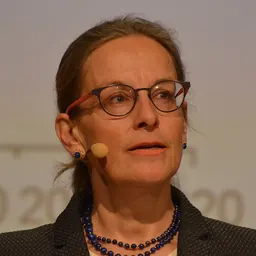
Born 1950. Priscilla K. Coleman is an American psychologist and sociologist, known for Abortion and mental health.
Priscilla K. Coleman is a retired Professor of Human Development and Family Studies in the School of Family and Consumer Sciences at Bowling Green State University, Ohio. She is the author (or co-author) of a number of disputed academic papers, which claim to have found a statistical correlation or causal relationship between abortion and mental health problems.
Her research has mostly met with a poor reception from her professional colleagues, and at least one of her manuscripts (originally published in Frontiers in Psychology) was retracted from the scientific literature due to not meeting the standards of the journal. In a separate case, researchers were unable to reproduce Coleman's results on abortion and mental health despite using the same dataset, and an APA panel charged with reviewing the evidence were similarly critical of the methodology of Coleman's studies. She is the founder and director of the World Expert Consortium for Abortion Research and Education (WECARE), which has been described by a pro-choice educational foundation as an "anti-choice misinformation group".
Coleman's three most cited papers, co-authored with Katherine Hildebrandt Karraker, concern parental self-efficacy and its consequences. She has also published a series of articles reporting a correlation between induced abortion and mental-health problems, findings which have proven controversial.
In 2011, Coleman published a meta-analysis of 22 studies, half of which were her own, in the British Journal of Psychiatry. In this paper, she claimed to have found that women who had undergone an abortion "experienced an 81% increased risk of mental health problems, and nearly 10% of the incidence of mental health problems was shown to be directly attributable to abortion". The Royal College of Obstetricians and Gynaecologists noted that Coleman's results conflict with those of four previous literature reviews, all of which found that women who have abortions did not face an increased risk of mental health problems. The College suggested that Coleman's results were due to her failure to control for pre-existing mental-health problems, which tend to be more prevalent in women having abortions. This meta-analysis was also criticized by Julia Steinberg and a number of other researchers, who wrote in 2012 that it contained seven significant errors, as well as three shortcomings of the included studies. Steinberg et al. concluded that these errors and shortcomings "render the meta-analysis' conclusions invalid."
Reception and reaction The statistical methods Coleman and her co-authors use have been criticized by the American Psychological Association (APA). An APA panel found that studies by Coleman and her co-authors have "inadequate or inappropriate" controls and don't adequately consider "women's mental health prior to the pregnancy and abortion."
Coleman and her coauthors have also been criticized by other researchers in the field over the meaning and reproducibility of their data. Psychologist Brenda Major criticized one of Coleman's studies, saying that it did not distinguish correlation and cause; that the direction of causality could be reversed, with psychiatric problems leading to a greater incidence of abortion; and that the study failed to control for factors such as relationship stability and education. Jillian Henderson, a professor of gynecology, and Katharine Miller wrote to the Journal of Anxiety Disorders, saying, "We believe that Cougle, et al., operate with strong political views regarding abortion, and unfortunately their biases appear to have resulted in serious methodological flaws in the analysis published in your journal. are involved in building a literature to be used in efforts to restrict access to abortion." Nancy Russo, a psychology professor and abortion researcher, examined two of Coleman's articles and found that when the methodological flaws in the studies were corrected, the supposed correlation between abortion and poor mental health disappeared. Coleman and her colleagues, according to one review, failed to control for pre-existing mental health problems and for other risk factors for mental health problems, such as sexual or physical violence. Julia Steinberg, one of the researchers attempting to verify Coleman's findings, said: "We were unable to reproduce the most basic tabulations of Coleman and colleagues... Moreover, their findings were logically inconsistent with other published research—for example, they found higher rates of depression in the last month than other studies found during respondents' entire lifetimes. This suggests that the results were substantially inflated." Subsequently, she and her coauthors issued a correction to their paper, stating that they had made an error in weighting the study variables. After correcting their error, the association between abortion and some mental-health problems weakened or disappeared, but the authors concluded that "fortunately, the overall pattern of the results has not changed very much". Separately, the journal editor and the principal investigator of the NCS (from which Coleman had drawn her data) opined that, in light of the concerns raised, Coleman et al.'s analysis "does not support their assertions that abortions led to psychopathology." Despite the correction, further concerns about the accuracy of Coleman's analysis were raised; Coleman responded to these criticisms and pointed to other work she had published.
Court witness In an August 2022 Michigan court case challenging a 1931 abortion ban, Coleman was hired by abortion opponents to provide testimony.
Don’t just read it —
keep it.
Full-length biographies made to live with: read them, listen on the way to work, watch them tonight.
- E-book
- Audio
- Video
Instant download · yours to keep · every purchase keeps this site free
Important facts
People in Priscilla K. Coleman's life
Named in this biography and alive at the same time

Related people
Same field, nearest in time





Contemporaries
People whose lives overlapped Priscilla K. Coleman's





Frequently asked questions
Who is Priscilla K. Coleman?
American psychologist and researcher
When was Priscilla K. Coleman born?
Priscilla K. Coleman was born in 1950.
What is Priscilla K. Coleman's occupation?
Priscilla K. Coleman is a psychologist and sociologist.
What is Priscilla K. Coleman known for?
Priscilla K. Coleman is known for Abortion and mental health.
What nationality is Priscilla K. Coleman?
Priscilla K. Coleman is American.
Sources & further reading
· Wikipedia: Priscilla K. Coleman
· DBpedia: Priscilla K. Coleman
Cite this page
APA: Biography.guide. (2026). Priscilla K. Coleman. https://biography.guide/priscilla-k-coleman/
MLA: "Priscilla K. Coleman." Biography.guide, https://biography.guide/priscilla-k-coleman/.
Chicago: "Priscilla K. Coleman." Biography.guide. https://biography.guide/priscilla-k-coleman/.
Data last updated: 2026-09-20 · Spot an error? Report a correction.
Page generated 2026-09-27 05:16 UTC