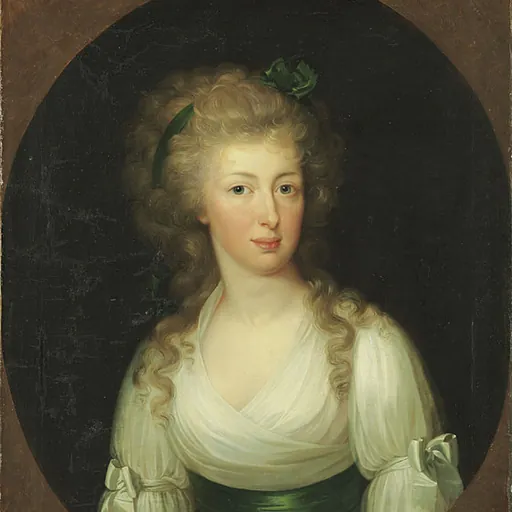
About Princess Karoline Amalie of Hesse-Kassel
Lived 1771 – 1848 (aged 76). Princess Karoline Amalie of Hesse-Kassel was an aristocrat.
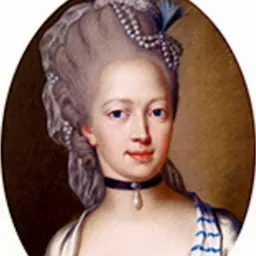
Karoline Amalie of Hesse-Kassel (11 July 1771, in Hanau – 22 February 1848, in Gotha), was a German princess and member of the House of Hesse-Kassel by birth, and Duchess of Saxe-Gotha-Altenburg by marriage.
She was the second daughter of Landgrave (later Prince) William I of Hesse by Princess Wilhelmina Caroline of Denmark and Norway, daughter of King Frederick V.
Life Since early childhood, Karoline Amalie was betrothed to her double first-cousin Prince Frederik of Hesse; however, the engagement was dissolved in 1799 after the apparent affair between her and chamberlain Count Ludwig von Taube, who ended when Landgrave William I dismissed him from his service and expelled from court. In the summer of 1801 Karoline Amalie met Hereditary Prince Augustus of Saxe-Gotha-Altenburg when he visited the Kassel court. In January 1802 Duke Ernest II of Saxe-Gotha-Altenburg, in the name of his son, asked the hand of the princess in marriage. The wedding ceremony took place in her homeland, Kassel, on 24 April of that year.
The union remained childless, but Karoline Amalie was a devoted stepmother for her husband's daughter from his first marriage, Princess Louise. Two years later, in 1804, Karoline Amalie became Duchess consort of Saxe-Gotha-Altenburg after the death of her father-in-law.
The well-known painter Caroline Louise Seidler, who was at the court of Gotha in the winter of 1811 to paint the Ducal family, described Karoline Amalie rather unflattering as "good, benevolent, but not just an excellent lady". About the relation of the Duchess with her husband August, she also quoted: "She loved him enthusiastically, whose spirit astonished her".
However, "since their mutual points of view about life are completely different", the Ducal couple became estranged after a few years of marriage and Karoline Amalie withdrew herself increasingly from court life and the public in general, beginning in 1810. One main reason for this was the enthusiasm of her husband for Napoleon, which the Duchess didn't share, as her parents had been forced to flee into exile after the occupation of Hesse-Kassel by the French army in 1806.
After her husband's death in 1822, Karoline Amalie retired to Gotha Winter Palace (in German: Winterpalais) as her widow's seat. The residence was renamed by the population in her honour as the Widow's Palace (in German: Witwenpalais). The Gotha Winter Palace, by Heinrich Justus Schneider, 1840. Her summer residence, Schloss Friedrichsthal, was where the Dowager Duchess received the Royal British couple (Queen Victoria and Prince Albert) in August 1845 during their visit to Germany. The local Privilegirte Gothaische newspaper wrote on the occasion of this visit: "...everyone in Gotha rejoiced of happiness, when the revered noble princess, the widowed Duchess Carolina Amalia received the sublime wife of her beloved grandson, Prince Albert, in her maternal arms".
Prince Albert (youngest son of Karoline Amalie's stepdaughter Louise) was the favorite step-grandson of the Dowager Duchess. From 1822 to 1835, he and his brother Ernest spent several weeks every year in the care of Karoline Amalie in the Winter Palace. Until her death, Albert maintained with her an active correspondence, where he always called her "Beloved Grandmother" and addressed his letters with the signature "Your faithful grandson Albert".
Albert's brother, Duke Ernest II of Saxe-Coburg and Gotha also remembered his step-grandmother fondly; he quoted: "She had in her long life hardly an enemy and enjoyed until her death [...] a truly rare worship".
Five days later, on 27 February, the last member of the Ducal family of Saxe-Gotha-Altenburg was buried in the Parkinsel in Gotha, next to her husband, and at her specific request, was performed "without pomp". Like all graves located here from the Ducal family there is no gravestone for Karoline Amalie. The simple floral circle, which once made the grave marked, for decades no longer exists, so the exact place of Karoline Amalie's is unknown today.
Karoline Amalie was the last of the Duchess consorts from the line who Ernest I the Pious founded with the Duchy of Saxe-Gotha-Altenburg. The male line of the house had become extinct in 1825 with the death of her brother-in-law, Duke Frederick IV.
Ancestry
Don’t just read it —
keep it.
Full-length biographies made to live with: read them, listen on the way to work, watch them tonight.
- E-book
- Audio
- Video
Instant download · yours to keep · every purchase keeps this site free
Important facts
Family & relationships
People in Princess Karoline Amalie of Hesse-Kassel's life
Named in this biography and alive at the same time

Related people
Same field, nearest in time

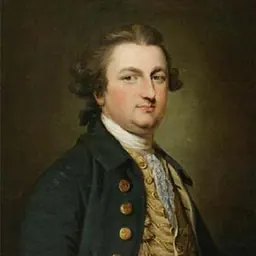
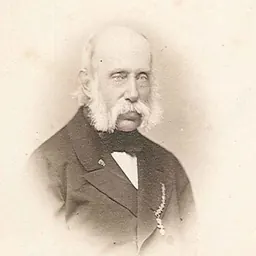
Contemporaries
People whose lives overlapped Princess Karoline Amalie of Hesse-Kassel's

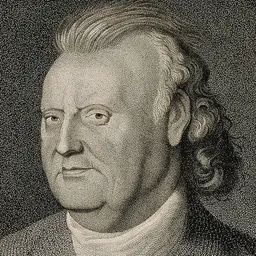
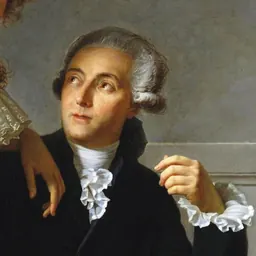


Frequently asked questions
Who was Princess Karoline Amalie of Hesse-Kassel?
German princess
When was Princess Karoline Amalie of Hesse-Kassel born?
Princess Karoline Amalie of Hesse-Kassel was born on 11 July 1771 in Hanau.
When did Princess Karoline Amalie of Hesse-Kassel die?
Princess Karoline Amalie of Hesse-Kassel died on 22 February 1848 in Gotha.
What was Princess Karoline Amalie of Hesse-Kassel's occupation?
Princess Karoline Amalie of Hesse-Kassel was an aristocrat.
What nationality was Princess Karoline Amalie of Hesse-Kassel?
Princess Karoline Amalie of Hesse-Kassel's recorded nationality: Electorate of Hesse.
Sources & further reading
· Wikipedia: Princess Karoline Amalie of Hesse-Kassel
· DBpedia: Princess Karoline Amalie of Hesse-Kassel
Cite this page
APA: Biography.guide. (2026). Princess Karoline Amalie of Hesse-Kassel. https://biography.guide/princess-karoline-amalie-of-hesse-kassel/
MLA: "Princess Karoline Amalie of Hesse-Kassel." Biography.guide, https://biography.guide/princess-karoline-amalie-of-hesse-kassel/.
Chicago: "Princess Karoline Amalie of Hesse-Kassel." Biography.guide. https://biography.guide/princess-karoline-amalie-of-hesse-kassel/.
Data last updated: 2026-10-01 · Spot an error? Report a correction.
Portrait: Wikimedia Commons · author & licence
Page generated 2026-10-04 14:43 UTC