
About Preston Leslie
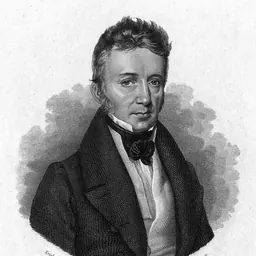
Lived 1819 – 1907 (aged 87). Preston Leslie was an American judge, lawyer and politician.
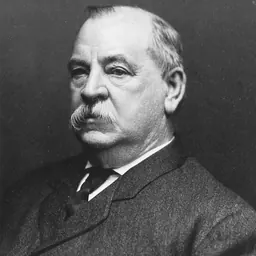
Preston Hopkins Leslie (March 8, 1819 – February 7, 1907) was the 26th governor of Kentucky from 1871 to 1875, and territorial governor of Montana from 1887 to 1889. He ascended to the office of governor by three different means. First, he succeeded Kentucky governor John W. Stevenson upon the latter's resignation to accept a seat in the United States Senate in 1871. Later that year, he was elected to a full term as governor, defeating John Marshall Harlan in the general election. Finally, he was appointed territorial governor by President Grover Cleveland.
Leslie was a Confederate sympathizer during the Civil War, but began to adopt a more progressive position during his gubernatorial campaign against Harlan. Though he opposed ratification of the Fourteenth and Fifteenth Amendments, he used his influence as governor to effect passage of laws admitting the testimony of blacks in court and providing for an educational system for recently freed slaves. He also helped quell violence perpetrated by the Ku Klux Klan in many areas of the state.
As territorial governor of Montana, Leslie quickly drew the ire of the press for his pro-temperance position. The territory's political machinery also turned against him, and he was removed from office by President Benjamin Harrison. When Grover Cleveland succeeded Harrison for a second term in office, he appointed Leslie district attorney for Montana. Leslie continued to practice law well into his eighties, and was being considered for a district court judgeship in Montana when he fell ill with pneumonia and died on February 7, 1907, at the age of 87.
Early life Preston Leslie was born in Clinton County, Kentucky (then a part of Wayne County), on March 8, 1819. He was the second son of Vachel H. and Sarah Hopkins Leslie. He was educated in the public schools, then studied law under Judge Rice Maxey. He worked with his father on the family farm until 1835, and supported himself by doing odd jobs including driving a stagecoach, running a ferry, and being store clerk. Leslie was admitted to the bar on October 10, 1840, and served as the deputy clerk of the Clinton County courts. In 1841, he relocated to Tompkinsville, Kentucky, where he worked as a farmer. He became county attorney of Monroe County in 1842. Mary Leslie died September 3, 1900.
Political career Leslie began his political career by being elected as a Whig to the Kentucky House of Representatives in 1844. He was defeated for a seat in the state Senate in 1846 by a single vote. He continued serving in the House until 1850, when he won election to the Senate representing Monroe and Barren counties. He then served in the Senate until 1855. In the 1850s, the Whig Party gradually faded in Kentucky, and Leslie became a Democrat.
Leslie's feelings were mixed on the issues central to the Civil War. Known as a "strong Union man" prior to the war, his sympathies switched to the southern cause once the war began. Nevertheless, he believed the South should solve its differences with the North through diplomatic means, and did not favor the idea of secession. He kept a low political profile and refused military service for either side. He returned to the state Senate from 1867 to 1871, serving as president of that body from 1869 to 1871.
Governor of Kentucky On February 13, 1871, Governor John W. Stevenson resigned his post to accept a seat in the U.S. Senate. Stevenson had ascended to the governorship on the death of John L. Helm, and had no lieutenant governor. As president of the Senate, Leslie was the ex-officio lieutenant governor, and next in line to succeed Stevenson. Because of Leslie's opposition to the Fourteenth and Fifteenth Amendments, his candidacy was opposed by Henry Watterson, founder of the powerful Louisville Courier-Journal.
During the campaign, Leslie's opponent Republican John Marshall Harlan was blasted as a "political weathercock" for having changed his stance on many issues. In one joint debate, Leslie quoted an antebellum speech wherein Harlan had called the Republican platform "revolutionary, and if carried out, would result in the destruction of our free government." Ultimately, Leslie's supporters deemed him "sober, conservative, and safe", and this perception enabled him to defeat Harlan by a considerable margin in the first election in which blacks were allowed to vote. Leslie was also faced with the issue of post-war violence by the Ku Klux Klan. The legislature had refused to pass a law against mob violence in 1871. This proposal enjoyed favorable public opinion, and was passed during the legislature's next session. With the railroad and violence issues resolved, Governor Leslie urged the legislature to improve the status of blacks in the state, including the creation of an educational system for blacks and the approval of the testimony of blacks in the state's courts. He commissioned a new geological survey, appointing native Kentuckian Nathaniel Southgate Shaler to head the work. An advocate of the temperance movement, he secured additional regulations on the sale of liquor. Also during Leslie's tenure, the penal system was improved.
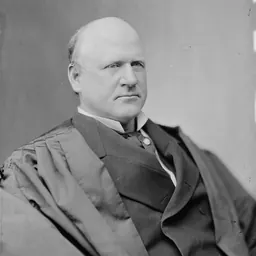
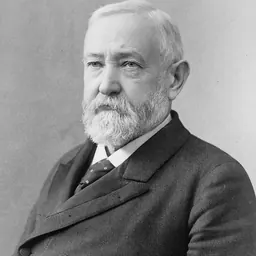
Devout Baptists and teetotalers, Governor and Mrs. Leslie did not serve alcohol in the governor's mansion and were given a silver service set at the expiration of his term by the Good Templars of Kentucky for their charity to the needy. Cleveland made the appointment on the recommendation of John Marshall Harlan, Leslie's opponent in the Kentucky gubernatorial election of 1871, who was now serving as an Associate Justice of the United States Supreme Court. Leslie soon ran afoul of the local press, who labeled him the "Coldwater Governor" for his stands in favor of temperance. The press's opinion of him further dimmed when he pardoned a prostitute convicted of grand larceny because the penitentiary was not equipped to accommodate women. He urged the territorial legislature to enact fiscal reforms and improve facilities for the insane and the incarcerated, but he was no match for the political machinery in Montana Territory. His 1889 pocket veto of an appointment bill supported by the legislature was the final straw; under pressure from Republicans, President Benjamin Harrison replaced Leslie as territorial governor.
Later life and death Following his removal from office, Leslie opened a legal practice in Helena, Montana, partnering with A. J. Craven. He served from 1894 to 1898. He died February 7, 1907, and was buried at Forestvale Cemetery in Helena.
Memorials Leslie County, Kentucky, was formed in 1878 and was named in his honor.
Don’t just read it —
keep it.
Full-length biographies made to live with: read them, listen on the way to work, watch them tonight.
- E-book
- Audio
- Video
Instant download · yours to keep · every purchase keeps this site free
Important facts
People in Preston Leslie's life
Named in this biography and alive at the same time

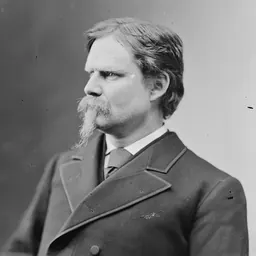
Related people
Same field, nearest in time
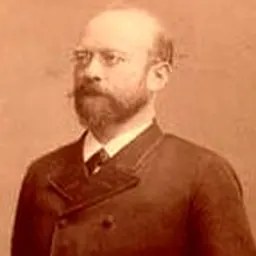
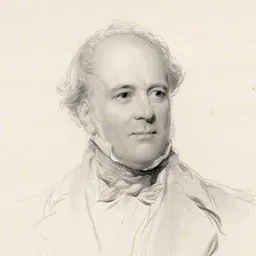
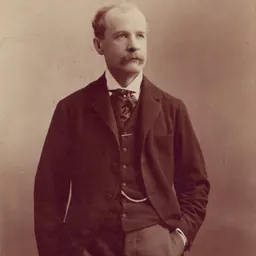



Contemporaries
People whose lives overlapped Preston Leslie's



Frequently asked questions
Who was Preston Leslie?
Governor of Kentucky (1819-1907)
When was Preston Leslie born?
Preston Leslie was born on 8 March 1819 in Clinton County.
When did Preston Leslie die?
Preston Leslie died on 7 February 1907 in Helena.
What was Preston Leslie's occupation?
Preston Leslie was a judge, lawyer and politician.
What nationality was Preston Leslie?
Preston Leslie was American.
Sources & further reading
Cite this page
APA: Biography.guide. (2026). Preston Leslie. https://biography.guide/preston-leslie/
MLA: "Preston Leslie." Biography.guide, https://biography.guide/preston-leslie/.
Chicago: "Preston Leslie." Biography.guide. https://biography.guide/preston-leslie/.
Data last updated: 2026-09-20 · Spot an error? Report a correction.
Page generated 2026-09-27 05:25 UTC