
Preston Cloud
American earth scientist, biogeologist, cosmologist, and paleontologist
About Preston Cloud
Lived 1912 – 1991 (aged 78). Preston Cloud was an American paleontologist, university teacher, geologist and geographer, known for Cambrian explosion, Geologic time scale and Origin of life.
Preston Ercelle Cloud, Jr. (September 26, 1912 – January 16, 1991) was an American earth scientist, biogeologist, cosmologist, and paleontologist. He served in the United States Navy (in which he was a bantamweight boxing champion), and led several field explorations of the U.S. Geological Survey. In academia, he was a member of the faculty of Harvard University, University of Minnesota, University of California, Los Angeles, and lastly University of California, Santa Barbara. He was best known for his work on the geologic time scale and the origin of life on Earth, and as a pioneering ecologist and environmentalist. His works on the significance of Cambrian fossils in the 1940s led to the development of the concept "Cambrian explosion," for which he coined the phrase "eruptive evolution." His work from the 1960's through the 1970's on the significance of certain mineralogical differences between sedimentary rocks laid down before and after about 2.5Ga (2.5 billion years ago), as well as the timing of the worldwide deposits of Banded Iron Formations (BIF) compared with that of continental red beds, led him to propose the now well-accepted concept of a turning point in Earth's history (now known as the Great Oxidation Event or GOE) in the beginning of the Proterozoic eon, during which Earth's oceans and atmosphere first became enriched in O2 (molecular oxygen), allowing the later emergence and radiation of complex multicellular life.
Early life and education
Cloud was born in West Upton, Massachusetts. He was the third of seven children of Preston Ercelle and Pauline L. (née Wiedemann) Cloud. His father was an engineer-draftsman, and his mother, a genealogist. He grew up in Waynesboro, Pennsylvania, where he developed a love for the outdoors. He enjoyed Scouting and was an Eagle Scout. Upon graduating from Waynesboro High School in 1929, Cloud spent three years in the United States Navy (1930–1933) where he excelled at boxing. He was the bantamweight champion of the Pacific Fleet Scouting Force. Due to the Great Depression, he could not join university, and attended night school at George Washington University, so that he could self-support by doing odd jobs during daytime. Ray S. Bassler, his geology professor and Curator of Geology at the U.S. National Museum, helped him to get manual jobs in the museum. Because of his keen interest in paleontology, he was given a job as a preparator in the paleontology laboratory under G. Arthur Cooper. It was Cooper who guided him to have his first technical publication on Devonian brachiopods from Illinois in 1938. In 1937 he earned his BSc degree, and was elected to Phi Beta Kappa. He enrolled for PhD at Yale University graduate school in geology the same year. Working on the major systematic monograph on a group of Paleozoic brachiopods, under the supervision of C. O. Dunbar, he received his doctorate in 1940. His thesis directly earned him the A. Cressey Morrison Prize in Natural History of the New York Academy of Sciences, and was published by the Geological Society of America as Special Paper 38 in 1942.
Professional career In the summer of 1939, Cloud worked as field assistant to A. Lincoln Washburn on Victoria Island in western Arctic Canada. For the rest of the year he taught at the Missouri School of Mines in Rolla. During 1941 to 1942 he returned to Yale University to continue work on brachiopod evolution as a Sterling Research Fellow. At the height of World War II, he was recruited to the United States Geological Survey to work on the wartime Strategic Minerals Program. He embarked on a field party to investigate manganese deposits in Maine during the summer of 1941. In 1943, he joined Virgil Barnes of the Texas Bureau of Economic Geology in the Ellenburger Project, studying the stratigraphy and sedimentology of this important early Paleozoic carbonate complex. He became chief of party for bauxite investigations in Alabama. He spent the rest of his life at UCSB.
Cambrian Explosion
Preston Cloud was the first scientist to systematically recognise the importance of the rich fossils of the Cambrian rocks in evolutionary terms. In order to explain the somewhat sudden appearance of diverse animals during the Cambrian Period, he invented the term "eruptive radiation" in his 1948 paper.
Cloud was an ardent humanist.
Awards 1941, awarded the A. Cressey Morrison Award in Natural History, New York Academy of Science 1956, awarded the Rockefeller Public Service Award 1956, elected an honorary fellow of the Paleontological Society of India 1959, awarded the Department of Interior Distinguished Service Award 1961, elected to the National Academy of Sciences 1969, elected to the American Academy of Arts and Sciences 1971, awarded the Paleontological Society Medal 1973, awarded the Lucius Wilbur Cross Medal of the American Philosophical Society 1973, elected to the American Philosophical Society 1976, awarded the Penrose Medal by the Geological Society of America 1977, awarded the Charles Doolittle Walcott Medal by the National Academy of Sciences 1980, elected a Foreign Member, Polish Academy of Sciences 1982, elected Fellow of Guggenheim Foundation
Books
Don’t just read it —
keep it.
Full-length biographies made to live with: read them, listen on the way to work, watch them tonight.
- E-book
- Audio
- Video
Instant download · yours to keep · every purchase keeps this site free
Important facts
People in Preston Cloud's life
Named in this biography and alive at the same time
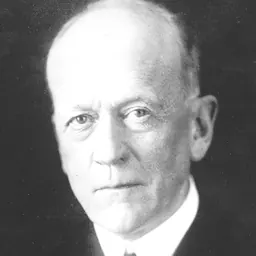
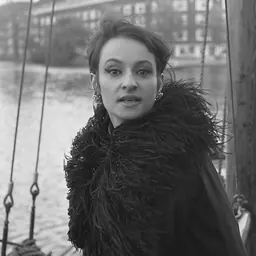




Related people
Same field, nearest in time


Contemporaries
People whose lives overlapped Preston Cloud's





Frequently asked questions
Who was Preston Cloud?
American earth scientist, biogeologist, cosmologist, and paleontologist (1912–1991)
When was Preston Cloud born?
Preston Cloud was born on 26 September 1912 in Upton.
When did Preston Cloud die?
Preston Cloud died on 16 January 1991 in Santa Barbara.
What was Preston Cloud's occupation?
Preston Cloud was a paleontologist, university teacher, geologist and geographer.
What was Preston Cloud known for?
Preston Cloud was known for Cambrian explosion, Geologic time scale and Origin of life.
What nationality was Preston Cloud?
Preston Cloud was American.
Sources & further reading
Cite this page
APA: Biography.guide. (2026). Preston Cloud. https://biography.guide/preston-cloud/
MLA: "Preston Cloud." Biography.guide, https://biography.guide/preston-cloud/.
Chicago: "Preston Cloud." Biography.guide. https://biography.guide/preston-cloud/.
Data last updated: 2026-09-20 · Spot an error? Report a correction.
Page generated 2026-09-27 05:27 UTC