
About Prem Kumar
Lived 1929 – 2007 (aged 78). Prem Kumar was an actor.
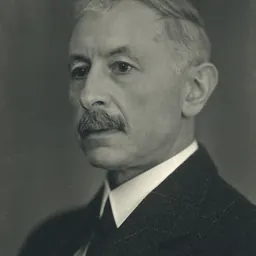
Pedro Xavier D'Costa (né da Costa; 8 September 1929 – 12 October 2007), known professionally as Prem Kumar, was an Indian actor, playwright, theatre director, lyricist and composer known for his work in Hindi, Konkani films, and tiatr productions. Known as a transformative figure in the tiatr stage, he elevated the quality of Konkani tiatr to a level comparable to dramas in other regional languages. In addition to his writing and staging of 55 tiatrs, he also showcased his talent by performing in over 500 tiatrs.
Early life Pedro Xavier D'Costa, born as Pedro Xavier da Costa on 8 September 1929, in Chandor, Goa. which was a part of Portuguese India under the Portuguese Empire (now in India). His parents were Xavier da Costa and Damiana Josefa Fichardo. D'Costa received his primary education in Bombay. From a young age, he demonstrated his passion for tiatr, a form of musical theater unique to the Goan community. His journey in tiatr began during his teenage years Following his debut, D'Costa took on various minor roles in Hindi movies such as Mera Salam (1957), Bandish (1955), Shaukeen, Hum Bhi Insan Hai, Sakhi, Bahadur (1953), and Hamara Hak before eventually returning to the Konkani theatrical tradition known as tiatr. His performances caught the attention of K. N. Singh, a character actor in Hindi films, who praised him for his acting skills. D'Costa's portrayal of a Muslim molvi (priest) in the film Hamara Hak garnered acclaim for his authentic delivery of Arabic dialogues, defying expectations as a Goan Catholic. Despite a promise from veteran director S. M. Esmael for a significant role in an upcoming Hindi film, fate intervened when Esmael died, leaving the promise unfulfilled.
However, D'Costa's true passion lay in the Konkani stage. Proficient in the Konkani language and finding greater expressiveness in his native tongue, D'Costa abandoned Hindi films and dedicated himself to the development and growth of tiatr. D'Costa wrote and produced a total of 55 plays. Despite their elaborate sets, several of his popular productions, such as Dukh (Pain), Kakut (Mercy), Peleache Vostuchi Axea Korum Naie, and Ordhi Bakri (Half Bakri), surpassed 100 performances. Dukh was performed a total of 126 times, Kakut had over 100 showings, and Peleachi Vostuchi Axea Korum Naie achieved 135 performances. One of D'Costa's acclaimed productions is Jivit Ek Sopon (Life is a dream), featuring the talent of Betty Ferns. In this play, Ferns portrayed a character disguised as a male, delivering a memorable performance.
D'Costa set a record by organizing 25 performances of Jivit Ek Sopon, within a span of 12 days in Goa. D'Costa's plays often tackled important social issues. Works like Abdul Narayan D'Souza and Fulam Ani Kantte (Flowers and Thorns) addressed the theme of communal harmony, while Vavraddi (Labourer), in which D'Costa himself took part, provided an authentic depiction of rural life. Notably, D'Costa's tiatr Piso (Madman) stands out as the sole monologue performance in the tiatr genre to date. In Maria Magdalena (Mary Magdalene), D'Costa received praise from Valerian Cardinal Gracias for his portrayal of a religious narrative. The play featured a scene in which water miraculously sprang from a rock upon Jesus' instruction, garnering applause from the audience. D'Costa's popular tiatrs include Vauraddi, Rinn (Debt), Dukh, Kakut, Jivit ek Sopon, Konnank Mhunnon Maim (Whom should I call mother?), Abdul Narayan D'Souza, Jawan (Soldier), Peleache Vostuchi Axea Korum Naie, Fulam ani Kantte, Upkar Naslolo, Ordhi Bhakri, Govai (Witness), Kaido (Rule), Koidi, Rogtac Tanello (Blood Thirsty), Khoto Poiso (Fake Money), Rekad (Regards), Tufan (Storm), Angounn (Solemn vow), Fottkiro (Liar), No Vacancy, Ghatki Voni (Traitor Sister-in-law), Ixttaghot (Friendship), Vantte (Division), Maria Magdalena, Gorib (Poor), Mortikar (Killer), Vadiu, Amchi Bhas (Our Language), Ugddas (Remembrance), Dhorji (Tailor), Noxib (Luck), Abru (Respect), among others. Y. B. Chavan, the Chief Minister of Maharashtra at the time, was impressed to realize that he was presenting an award to the actor D'Costa, who had delivered a memorable performance as a disabled character in Angounn.
D'Costa's notable work included Rinn, a production that involved an innovative use of a sliding stage. In this tiatr, he depicted a courtroom drama by transitioning the stage between the courtroom setting and flashbacks of the events. His tiatr Jawan expressed a patriotism for one's country. Whereas the theatrical production Mortikar depicted the escape of a killer using a visual display of a road scene, portraying the criminal running away. D'Costa's directing style emphasized the significance of costumes and voice modulation to enhance each character's performance. He performed not only in Goa and Bombay but also in various cities across India, including Poona, Ahmedabad, Delhi, Calcutta, and Mangalore. Additionally, he staged tiatrs in Gulf countries. D'Costa produced his own audio cassette titled Lojen Baulolem Ful and aired many of his plays on All India Radio and television. He also made contributions to the Konkani film industry, producing and writing lyrics for the film Boglantt, in which he played the lead role alongside actress Rita Rose. D'Costa has provided commentary and dialogues on numerous cassette recordings. Beyond his theatrical pursuits, D'Costa was a composer of songs. He crafted numerous compositions for tiatrs, as well as standalone pieces for sideshows. Writer André Raphael Fernandes writes, while D'Costa's focus primarily lay in acting, his musical contributions showcased his mastery of the Konkani language.
Historian Wilson Mazarello writes, D'Costa not only took on the main roles but also excelled in portraying character roles. He meticulously prepared for his roles, paying close attention to details such as costumes and makeup to enhance the portrayal of the characters. Additionally, D'Costa was known to produce his own tiatrs at regular intervals, typically every two years. Throughout his career, D'Costa displayed his versatility as an actor, portraying a diverse range of characters, including fathers, landlords, farmers, lunatics, and beggars. His plays often conveyed important messages, underscoring the intrinsic connection between farmers and the land in works like Vauraddi. D'Costa emphasized the dignity of manual labor and encouraged the educated to consider agriculture as a meaningful occupation. Mazarello further writes, D'Costa's impact on the tiatr community is extensive, with over 500 tiatr performances to his credit, encompassing both his own productions and collaborations with fellow artists.
Awards D'Costa's contributions to the realms of writing, acting, and stagecraft have earned him numerous awards. During the commemoration of the Konkani tiatrs centenary, the Kala Academy of Goa bestowed a special honor upon him. Among his accolades are the Konkani Sahitya Samiti Award, the Maharashtra Prohibition Award, and the Cine Times Awards. Furthermore, the then Chief Minister of Goa, Daman and Diu, Dayanand Bandodkar, presented D'Costa with an award for his tiatr production titled Vauraddi (Labourer). D'Costa's has amassed over sixty trophies. This includes the trophy presented to him by Bandodkar, as well as a gold medal recognizing his talents in acting, directing, and presenting tiatrs. Among his other honors are the IGP Arun Bhagat Shield, The Goan Review'''s Best Director Award in 1997, and the Sonskruti Puroskar from the Dalgado Konknni Akademi.
Legacy Following D'Costa's death, the Tiatr Academy of Goa (TAG) posthumously published three of his popular tiatrs, namely Mortikar (Killer), Abdul Naryan D'Souza, and Jivit Ek Sopon (Life is a dream). Moreover, the Goa Konkani Akademi published two of his tiatrs, Jawan (Soldier) and Fulam Ani Kantte'' (Flowers and Thorns), in book format, ensuring their preservation for future generations.
Don’t just read it —
keep it.
Full-length biographies made to live with: read them, listen on the way to work, watch them tonight.
- E-book
- Audio
- Video
Instant download · yours to keep · every purchase keeps this site free
Important facts
People in Prem Kumar's life
Named in this biography and alive at the same time




Related people
Same field, nearest in time


Contemporaries
People whose lives overlapped Prem Kumar's



Frequently asked questions
Who was Prem Kumar?
Indian actor and director (1929–2007)
When was Prem Kumar born?
Prem Kumar was born on 8 September 1929.
When did Prem Kumar die?
Prem Kumar died on 12 October 2007.
What was Prem Kumar's occupation?
Prem Kumar was an actor.
Sources & further reading
· DBpedia: Prem Kumar (Konkani actor)
Cite this page
APA: Biography.guide. (2026). Prem Kumar. https://biography.guide/prem-kumar-actor-1929/
MLA: "Prem Kumar." Biography.guide, https://biography.guide/prem-kumar-actor-1929/.
Chicago: "Prem Kumar." Biography.guide. https://biography.guide/prem-kumar-actor-1929/.
Data last updated: 2026-09-20 · Spot an error? Report a correction.
Page generated 2026-09-27 05:27 UTC