
About Porter Moss
Lived 1910 – 1944 (aged 34). Porter Moss was an American baseball player.
Porter Moss (June 10, 1910 – July 16, 1944) was an American Negro league baseball submarine style pitcher who played primarily for the Cincinnati Tigers and the Memphis Red Sox and was a three-time participant in the Negro league All-Star game. While returning to Memphis after a game in 1944, Moss was murdered at the age of 34.
Early years Porter Moss was born June 10, 1910, in Cincinnati, Ohio. Moss began to distinguish himself when on April 30, 1933, he struck out 15 batters in a game, but still lost the game. A July 10 article in The Cincinnati Enquirer recounts that the current Class A League champions, the White Sox, played the Goodyear Shoe Repair team. According to the Enquirer the White Sox pitcher Rogers and Moss “...engaged in a thrilling pitchers’ duel.” Moss struck out nine batters and Rogers retired thirteen.
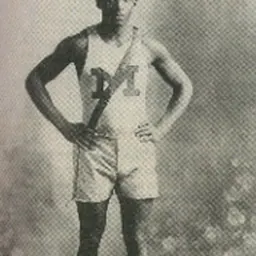
Cincinnati Tigers In 1934, Porter Moss joined the newly formed Cincinnati Tigers. The Tigers were the creation William DeHart Hubbard, a Cincinnati native and Olympic gold medalist. The Tigers began the season as a member of the Negro Southern League but it is unclear if they remained in the league since they were not mentioned in the league's second half standings. The team also joined the Indiana-Ohio League in June and played in the league through the elimination playoffs in August.
Moss had mixed results pitching for the Tigers in 1934. On June 3, Moss struck out 13 batters in a 5–2 victory over the Louisville Black Caps of the Negro Southern League; He pitched in at least two of the four games the Tigers played during the Indiana-Ohio League elimination series and was the losing pitcher for each match. The first game of the series Moss held the Richmond Lincos to five hits and one run but the Tigers lost 1–0. The Tigers played teams from the Negro Southern League, Negro National League, and the Indiana-Ohio League as an independent ball club. Moss pitched in relief in the Tigers' win against the Japanese All-Star Tokyo Giants. He also toured Canada with the Tigers in late August and early September. The Cincinnati Enquirer reported that in 1935 Moss won 35 of the 39 games he started.
Moss was elected to the East Team for the East-West All-Star game and was selected to play in the North-South Game in 1936. He did not play in the East-West game though as only three of the five pitchers were used in the game: Leroy Matlock, Bill Byrd, and Satchel Paige. Moss had a mixed record against professional teams that year. He won against the Memphis Red Sox, but lost games against the Homestead Greys and the Chicago American Giants.
The Cincinnati Tigers joined the Negro American League in 1937. Moss, who continued to pitch for the club, recorded 59 strikeouts over 86.1 innings for the year. The numbers equate to six strikeouts for every nine innings pitched. Moss was again elected to the East Team for the East-West All-Star game. This time, he pitched six innings, giving up four runs, but only one was earned, as the East lost 7–2.
Memphis Red Sox Over the winter of 1937, the Cincinnati Tigers were sold to the owners of the Memphis Red Sox. The team was dissolved and several of the Tigers' players, including Moss, were retained by the Red Sox. Moss started eight games for the Red Sox against professional Negro League teams, going 4–3. He maintained a rate of six strikeouts per nine innings and was credited with the earning the save in two games. Moss was once more selected to the East-West Game and also to the North-South Games. He pitched all nine innings of the second game of the Negro American League Championship against the Atlanta Black Crackers.
Moss continued to play baseball after the Negro American League's season ended. In both the winter of 1937 and the winter of 1938 he was active in the California Winter League. Playing for the Philadelphia Royal Giants in 1938, Moss went 3–0 and had the best record in the league. The Red Sox finished the 1939 season in last place.
It is unclear what Porter Moss was doing during the 1940 season since there is no Negro League records of him pitching that year. All three of these players were known to have played overseas during this period.
The 1941 and 1942 seasons saw Moss improve upon a bad 1939 season. In 1941 he started seven games against professional negro league teams, winning three and losing two. In 1942 Moss continued to post wins against teams such as the Cincinnati Clowns and the Kansas City Monarchs. He also returned to the East West All-Star game. Moss entered the game for the West in the third inning and relieved the starting pitcher Hilton Smith. He pitched two innings allowing the East batters to score one run off of two hits. Moss left the game with the West trailing 2–1 and the West eventual lost 5–2.
Moss was again sent to the East West All-Star game in 1943. This year he was an alternate for Hilton Smith who was ill. Early in the year he had thrown two complete games shutouts against both the Chicago American Giants and the Cincinnati Clowns. At the East-West game Moss was brought in to relieve Theolic Smith in the ninth inning. The West was leading 2–1, but with two outs the East was threatening with runners on first and second. Moss faced Victor Harris. Harris, the manager of the East team, On the second pitch from Moss, Harris hit a fly ball to the center fielder ending the game. Still the highlight of Moss's 1943 season did not come till September 27 when he allowed no runs and no hits in nine innings pitched against the Cincinnati Clowns.
1944 was another resurgent year for the veteran Moss. In the half season that he pitched against professional Negro League teams Moss won three of the four games he started. His strikeout rate was back to over six strikeouts per nine innings pitched and his earned run average was only 2.63. not for the first time, but the driver and mechanic, Sam Thomas, could not fix the aging vehicle. With a double header scheduled the next day the team booked passage on a train at McEwen Tennessee to complete their trip to Memphis. He was sentenced to ten years in prison for the murder of Moss. He was buried in Cincinnati, Ohio where he was born and his mother resided.
Don’t just read it —
keep it.
Full-length biographies made to live with: read them, listen on the way to work, watch them tonight.
- E-book
- Audio
- Video
Instant download · yours to keep · every purchase keeps this site free
Important facts
People in Porter Moss's life
Named in this biography and alive at the same time




Related people
Same field, nearest in time

Contemporaries
People whose lives overlapped Porter Moss's






Frequently asked questions
Who was Porter Moss?
American baseball player
When was Porter Moss born?
Porter Moss was born on 10 June 1910 in Cincinnati.
When did Porter Moss die?
Porter Moss died on 16 July 1944 in Jackson, Tennessee.
What was Porter Moss's occupation?
Porter Moss was a baseball player.
What nationality was Porter Moss?
Porter Moss was American.
Sources & further reading
Cite this page
APA: Biography.guide. (2026). Porter Moss. https://biography.guide/porter-moss/
MLA: "Porter Moss." Biography.guide, https://biography.guide/porter-moss/.
Chicago: "Porter Moss." Biography.guide. https://biography.guide/porter-moss/.
Data last updated: 2026-09-20 · Spot an error? Report a correction.
Page generated 2026-09-27 05:10 UTC