
About Pop Maynard
Lived 1872 – 1962 (aged 90). Pop Maynard was a British singer.
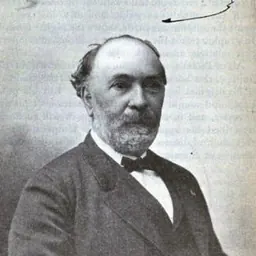
George "Pop" Maynard (6 January 187229 November 1962) was an English folk singer and marbles champion. The folk singer Shirley Collins considers Maynard to have been the "finest traditional English singer, matched only by Harry Cox".
Life and family George Maynard was born on 6 January 1872 or, as he put it, on Old Christmas Day in Smallfield, Burstow, Surrey, about north of the village of Copthorne, West Sussex, where he lived for his entire life. He was the eleventh of twelve children of James Maynard and his wife Elizabeth (née Skinner), four of whom died in infancy. Maynard was baptised on 3 February 1872 at the Church of St Bartholomew in Burstow, when his father's profession was given as "labourer".
Maynard attended school on-and-off until the age of 12. He worked with his father and brothers, in the winter as a woodman cutting wood for the hoop trade, in the summer harvesting, hedging and ditching. He and his family also supplemented their income by poaching rabbits and pheasants. He did not regret his poaching, saying "I should go out again if I had my time over again, before I should let my family go short of anything." During one of these annual trips, Maynard met his wife Mary Ann (Polly) Wiles, at a hop farm called Salmans Farm, Chiddingstone, Kent. They married in September 1895 in Chiddingstone.
The couple had seven children, of whom two daughters and four sons survived to adulthood. They lived at first in a tiny house in Borer's Yard, Copthorne, Polly died in 1920, and Maynard remained a widower for more than 40 years. He died on 29 November 1962.
Music
In Maynard's youth there was no recorded music, and singing was part of the family and the community. The idea that a singer was someone exclusive was not there then. Everybody sang. Some sung well, some didn't, but singing was as normal as breathing. We sang up the woods, we sang anywhere. You sang when you felt in the mood - you'd be in the pub and someone would start a song and all of a sudden the whole place lit up. It was never, "Well, let's have a sing" - it either happened or it didn't. Maynard learned songs from his father and other family members. He augmented his repertoire by learning songs from ballad sheets (broadsides) that were hawked round the villages.
Influence Maynard's repertoire and style were influential on the emerging folk singers of the second folk revival. His songs were recorded by Bert Lloyd, Cyril Tawney, Peter Bellamy, Martin Carthy, and many others. He was noted for his ear for pitch, strong sense of rhythm, and smooth phrasing.
When Collins recorded "Polly on the Shore" on her 1970 album Love, Death and the Lady with her sister Dolly, she wrote: From George Maynard, of Copthorne, Sussex. It was one of the great good fortunes in my life to hear George sing in the flesh, back in 50's. Even though he was then in his eighties, he was still able to sing tunefully and gracefully, and had a remarkable stock of songs. He was a complete countryman, and well-known as a marbles and shove ha'penny player. ... This song epitomes George to me, with its sweetness and dignity.
Maynard remains significant to the next generation of traditional singers. Folk supergroup The Furrow Collective, winner of Best Group in the 2017 BBC Folk Awards, included "Our Captain Calls" from Maynard's repertoire on their 2014 album At Our Next Meeting. Singer Emily Portman wrote: Martin Carthy introduced me to George "Pop" Maynard's singing when I was 17. It was the first time I'd heard anything quite like it: an old man with a crackling voice, banging his stick to keep time and gripping me with his storytelling. It was the first song I performed unaccompanied and it brought about a sea-change in my whole approach to singing.
The second British folk revival The Cherry Tree in 2011. This pub was the location of many of the field recordings of Maynard made in the 1950s and 60s. From the early 1950s, the second British folk revival brought for the first time an interest in Maynard's music from outside his immediate circle. He was "collected" over this period by many folklorists, including Peter Kennedy, Mervyn Plunkett, Reg Hall, Ken Stubbs and Frank Purslow, and all known recordings of him date from this period, the last ten years of his life. and was organising music sessions in local Sussex pubs. Kennedy was one of the presenters of the BBC folk music radio programme As I Roved Out, which was broadcast during the 1950s, and he brought a team to one of these sessions, at the Cherry Tree pub in Copthorne, in February 1956. The session included traditional musicians and singers, including Maynard, and also step dancers.
The programme was broadcast on the BBC Light Programme on 24 June 1956, and brought with it increasing fame for Maynard. At the same time Kennedy recorded 14 of the 15 tracks that would comprise Maynard's Topic Records album Ye Subjects of England, though this would not be released until 1976. The only commercial recording that was released during Maynard's lifetime was his track "Polly on the Shore" recorded by Plunkett in 1956 for the EP 4 Sussex Singers, though this was only released in 1961.
Marbles In his lifetime, Maynard acquired celebrity for his marbles-playing well before he was known outside his locality for his singing. His nickname "Pop" was a tribute to his skill at marble-popping.
The British and World Marbles Championship is said to date back to 1588. The modern competition takes place every Good Friday at the Greyhound pub in Tinsley Green, West Sussex, and has run continuously since 1932, with exceptions for World War II and the 2020 COVID-19 pandemic.
Maynard was first a member of a world champion team when Copthorne defeated the London Passenger Transport Board in 1941. In subsequent world championships, Maynard was filmed regularly and appeared on British Pathé News.
When the Copthorne Spitfires won the world championship in 1948, Maynard was team captain, and he was seen on national television. In 1949 the Copthorne Spitfires lost in the semi-finals, when the commentator noted: Marbles skill is handed down from father to sons, as from Pop Maynard, 73, to sons Arthur, Perce and George. The Copthorne Spitfires, an all-Maynard family team play Tinsley Green in the semi-final.
Maynard continued to compete through the 1950s. In July 1954, his reputation brought Maynard the opportunity to fly to Le Touquet at the invitation of its mayor to play exhibition matches. His final world championship was Easter 1962, in the year of his death at the age of 90. Recorded by Mervyn Plunkett. There is one track from each of George Spicer, Pop Maynard, Jean Hopkins and Jim Wilson. Maynard sings Polly on the Shore (Roud 811), recorded in West Hoathly in October 1956. Recorded by Peter Kennedy in The Cherry Tree public house in Copthorne, February 1956. Some of this material was used for Kennedy's radio programme As I Roved Out. Features Maynard with a chorus of friends, including George Holman, Jean Hopkins, Mervyn Plunkett and Ken Stubbs. Recorded by Peter Kennedy in Maynard's home, Copthorne, Sussex, 3 December 1955. Songs and interviews recorded by Peter Kennedy at Maynard's cottage December 1955. All the songs and fragments Brian Matthews recorded from Pop Maynard in 1959-60, at three of his local pubs.
Audio-visual collections
Sussex Traditions The Sussex Traditions database of Sussex Folklife and Lore has drawn together material about Maynard from several sources. They include Clippings about Maynard from local newspaper the East Grinstead Courier. Audio recording of a thirty-minute interview with Maynard conducted by Ken Stubbs. Field recordings of Maynard, made by Ken Stubbs, Brian Matthews, Tony Wales and Jim Ward. Transcriptions from the Plunkett Collection of lyrics of field recordings. Transcriptions made by Ken Stubbs from his field recordings of Maynard's singing, published in Stubbs' book of folk songs The Life of a Man.
Vaughan Williams Memorial Library The library holds field recordings of Maynard by Ken Stubbs and Brian Matthews, and song transcriptions by Mervyn Plunkett and Frank Purslow in its digital archive.
British Library Sounds Reg Hall English, Irish & Scottish Folk Music & Customs Collection Includes field recordings of Maynard made by Mervyn Plunkett, Frank Purslow, Ken Stubbs, and Reg Hall himself. Peter Kennedy Collection None of Kennedy's field recordings of Maynard were provided to the British Library as part of this collection, but it includes a few photographs of Maynard.
Don’t just read it —
keep it.
Full-length biographies made to live with: read them, listen on the way to work, watch them tonight.
- E-book
- Audio
- Video
Instant download · yours to keep · every purchase keeps this site free
Important facts
People in Pop Maynard's life
Named in this biography and alive at the same time





Related people
Same field, nearest in time



Contemporaries
People whose lives overlapped Pop Maynard's

Frequently asked questions
Who was Pop Maynard?
Sussex folk singer
When was Pop Maynard born?
Pop Maynard was born on 6 January 1872 in Burstow.
When did Pop Maynard die?
Pop Maynard died on 29 November 1962 in Copthorne, West Sussex.
What was Pop Maynard's occupation?
Pop Maynard was a singer.
What nationality was Pop Maynard?
Pop Maynard was British.
Sources & further reading
Cite this page
APA: Biography.guide. (2026). Pop Maynard. https://biography.guide/pop-maynard/
MLA: "Pop Maynard." Biography.guide, https://biography.guide/pop-maynard/.
Chicago: "Pop Maynard." Biography.guide. https://biography.guide/pop-maynard/.
Data last updated: 2026-09-20 · Spot an error? Report a correction.
Page generated 2026-09-27 05:10 UTC