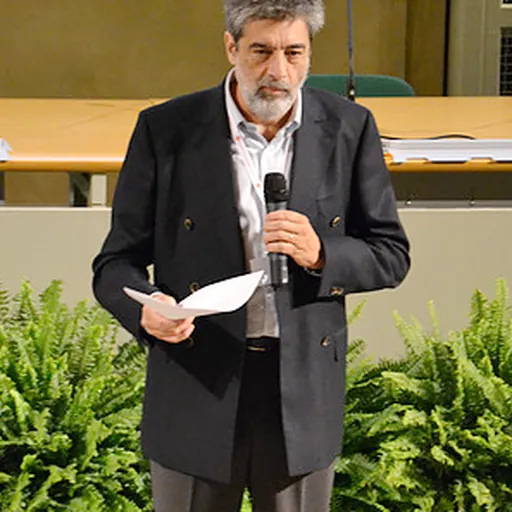
About Plácido Navas Lloret
Born 1952. Plácido Navas Lloret is a Spanish researcher.
Plácido Navas Lloret (born 5 October 1952) is a Spanish Professor of Cell Biology in the Andalusian Center for Developmental Biology at the Pablo de Olavide University in Sevilla, Spain. From 2002 to 2012, Professor Navas served as a board member of the International Coenzyme Q10 Association; since 2013, he has been the chairman of the association.
Professor Navas' primary research interests include Coenzyme Q biosynthesis and biological functions, Coenzyme Q10 deficiency, plasma membrane structure and function, oxidative stress, lipophilic antioxidants, aging processes, and the mitochondria.
Early education and career Professor Navas earned his Master of Science degree in biology in 1976 and his Ph.D. in cell biology in 1978, both at the University of Sevilla.
Academic positions In the period from 1987 to 1997, Professor Navas served at the University of Córdoba alternately as Head of the Cell Biology Department and as Vice-Chancellor for Research.
From 1997 to 2001, he served as Vice-president for Research at the Pablo de Olavide University in Sevilla.
The bioavailability study results showed statistically significant differences in the bioavailability of the various formulations. The ubiquinone formulation with the best bioavailability had a Cmax and an area under the curve nearly double that of the ubiquinol formulation. The ubiquinol formulation outperformed other less well-formulated ubiquinone formulations. These study results indicated that the formulation of the Coenzyme Q10 supplement is more important for absorption and bioavailability than the form (ubiquinone vs ubiquinol) of the supplement is.
In their review article, Professors Navas and López-Lluch summarized the outcomes of the Q-Symbio Study and the KiSel-10 Study.
The KiSel-10 Study was a randomized controlled trial of the effects of long-term treatment with Coenzyme Q10 as ubiquinone (2 times 100 mg/day) plus selenium (200 microg as selenized yeast) in a healthy elderly population (average age: 78 years). The study results revealed a significant reduction in cardiovascular mortality not only during the 4-year treatment period but also 12 years later, compared to those taking a placebo.
Coenzyme Q10 and Physical Activity
In 2014, Professor Navas and colleagues published two papers on Coenzyme Q10 and physical activity. In the one paper, they reported that they had measured the levels of Coenzyme Q10 and cholesterol in the plasma of young and old individuals with differing degrees of physical activity. Their results indicated that plasma Coenzyme Q10 levels in old people are higher than the levels found in young people. However, they found differing relationships between Coenzyme Q10 levels and physical activity depending on the age of individuals.
In young people, higher physical activity correlated with lower Coenzyme Q10 levels in plasma; in older adults, higher activity was associated with higher plasma Q10 levels and higher Coenzyme Q10/Cholesterol ratios.
The study results showed that higher levels of functional capacity were associated with higher levels of Coenzyme Q10 and with lower levels of a bio-marker for oxidative stress (malondialdehyde) in the blood of community-living elderly people. The study results suggested that both aerobic and strength exercise are necessary for senior citizens.
Coenzyme Q10 Deficiency
Coenzyme Q10 deficiency disorders are classified as primary Coenzyme Q10 deficiency – caused by mutations in the genes that code for Coenzyme Q10 bio-synthesis – and secondary Coenzyme Q10 deficiency – caused by mutations in genes not related to Coenzyme Q10 bio-synthesis of by other non-genetic factors. Primary Coenzyme Q10 deficiency disorders are rare. Secondary Coenzyme Q10 deficiencies, both those related to genetic causes and those related to environmental conditions, are the main causes of biochemical Coenzyme Q10 deficiency. It has not been possible to link most of the cases of Coenzyme Q10 deficiency to a specific genetic diagnosis. Moreover, the pathogenesis of Coenzyme Q10 deficiency cannot be attributed solely to defects in the process of cellular bio-energetics. Early recognition of Coenzyme Q10 deficiency is necessary to avoid irreversible tissue damage by instituting timely and appropriate treatment.
In addition, many studies have shown reduced levels of Coenzyme Q10 in aging individuals and in individuals with other non-hereditary diseases.
The mean total Coenzyme Q10 level in blood increased 489% from the baseline level to the 3-month post-supplementation level. The researchers observed a significant improvement in the symptoms of autism after 3 months of ubiquinol supplementation in the children who maintained a total Coenzyme Q10 plasma concentration at or over 2.5 micromol/L (= 2.16 micrograms/mL).
Don’t just read it —
keep it.
Full-length biographies made to live with: read them, listen on the way to work, watch them tonight.
- E-book
- Audio
- Video
Instant download · yours to keep · every purchase keeps this site free
Important facts
Related people
Same field, nearest in time





Contemporaries
People whose lives overlapped Plácido Navas Lloret's



Frequently asked questions
Who is Plácido Navas Lloret?
Spanish Professor of Cell Biology
When was Plácido Navas Lloret born?
Plácido Navas Lloret was born on 5 October 1952.
What is Plácido Navas Lloret's occupation?
Plácido Navas Lloret is a researcher.
What nationality is Plácido Navas Lloret?
Plácido Navas Lloret is Spanish.
Sources & further reading
· Wikipedia: Plácido Navas Lloret
· DBpedia: Plácido Navas Lloret
Cite this page
APA: Biography.guide. (2026). Plácido Navas Lloret. https://biography.guide/placido-navas-lloret/
MLA: "Plácido Navas Lloret." Biography.guide, https://biography.guide/placido-navas-lloret/.
Chicago: "Plácido Navas Lloret." Biography.guide. https://biography.guide/placido-navas-lloret/.
Data last updated: 2026-09-24 · Spot an error? Report a correction.
Portrait: Wikimedia Commons · author & licence
Page generated 2026-09-27 05:08 UTC