
About Pina Pellicer
Lived 1934 – 1964 (aged 30). Pina Pellicer was a Mexican actor, television actor and film actor.
Josefina Yolanda Pellicer López de Llergo (3 April 1934 – 6 December 1964), known professionally as Pina Pellicer, was a Mexican actress. In Mexico, she is best remembered for portraying the female lead in Macario and Luisa in Días de Otoño (1963), and in the United States for her role as Louisa alongside Marlon Brando in the Brando-directed movie One-Eyed Jacks (1961).
Other of her notable works include the Spanish drama Rogelia (1962), and episodes in TV shows such as The Fugitive and The Alfred Hitchcock Hour.
Early life Josefina Yolanda Pellicer López de Llergo was born on 3 April 1934 in Mexico City, the daughter of César Pellicer Sánchez, a lawyer, and Pilar López de Llergo. Her uncle, Carlos Pellicer, was a modernist poet. Of her seven siblings, her younger sister Pilar Pellicer also became an actress best known for her roles in numerous telenovelas. Another younger sister, Ana, was a sculptor and the co-author of Pina Pellicer's 2006 biography.
Career
Pellicer's first acting role, albeit only her second movie to be released, was the Paramount Pictures production One-Eyed Jacks. In the movie, Pellicer played Louisa, the stepdaughter of Karl Malden and the lover of Marlon Brando. Mexican actress Katy Jurado appeared as Louisa's mother. The production of the movie was much delayed, and the original director, Stanley Kubrick left, along with screenwriter Sam Peckinpah, leaving Brando to finish the movie – the only time Brando was credited with directing a movie.
Production started in 1958; the movie was released in 1961. European response was positive, and in July 1961, the movie received the Golden Shell (Concha de Oro) at the San Sebastián International Film Festival. Pellicer was awarded the prize for best female performer. Reviews compared her to Audrey Hepburn. In the United States, the response was more mixed and the movie received only one Academy Award nomination, for Charles Lang's cinematography.
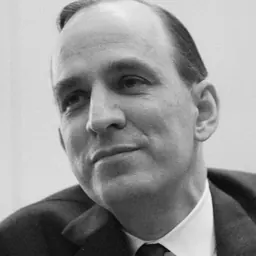
The first movie with Pellicer to reach theaters was the Mexican production Macario, released in 1960. Pellicer played the wife of the title character opposite Ignacio López Tarso. Macario was the first Mexican production to be nominated for the Academy Award for Best Foreign Language Film, but lost out to Ingmar Bergman's The Virgin Spring. After Macario, Pellicer appeared in two more Mexican films, Días de Otoño, from 1963, and El pecador, released posthumously in 1965.
During her appearance at the San Sebastián Film Festival, Pellicer met Spanish director Rafael Gil, who cast the actress in the title role in Rogelia, filmed in Asturias and released in 1962. In addition to her film work, Pellicer appeared in episodes of the television shows The Fugitive ("Smoke Screen", 1963) and The Alfred Hitchcock Hour ("The Life Work of Juan Diaz", 1964, written by Ray Bradbury), as well as on Mexican television.
Personal life Following her death, the newspaper La Prensa visited the funeral home where her wake was to be held. There, they learned, and later reported, that Pellicer had been secretly married to businessman and hotelier Ramón Naves. Their marriage lasted only a few months in 1963, as it was said that the artist was unable to adapt to married life, being a woman mostly accustomed to being alone. Without giving him any explanation, she divorced, and at the time, only her friend, actor Salomón Laiter, and her sisters, Ana, Taide and Pilar Pellicer, knew about this union.
According to the book Me and Marlon written by Alice Marchak, Marlon Brando's personal secretary, Pina told the actor that she was a lesbian; the excerpt states:
Pellicer never openly clarified the issue of her orientation, but it is considered one of the reasons why she ended her life, as it was a possible constant with which she used to live in duality due to the closed ideas that Mexico had at the time regarding sexual diversity.
Death
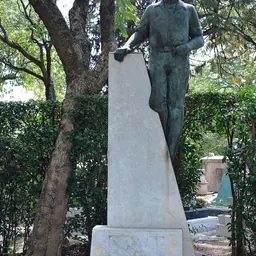
Pellicer died by suicide on 6 December 1964, aged 30, from an overdose of sleeping pills. Her body was buried at Panteón Jardín in Mexico City.
Filmography
Film Year Title Role Notes 1950 La liga de las muchachas Dancer Extra / Uncredited 1960 Macario Macario's wife 1961 One-Eyed Jacks Louisa Silver Shell for Best Actress American production 1962 Rogelia Rogelia Spanish production 1962 Días de Otoño Luisa 1965 El pecador Irma Posthumous release
Television Year Title Role Notes 1963 The Fugitive María Álvarez Episode: "Smoke Screen" 1964 The Alfred Hitchcock Hour María Díaz Episode: "The Life Work of Juan Díaz" Gran teatro Electra - episode: "Electra" Lost media Pacto de Medianoche Elsa La dama de corazones Unknown role
Don’t just read it —
keep it.
Full-length biographies made to live with: read them, listen on the way to work, watch them tonight.
- E-book
- Audio
- Video
Instant download · yours to keep · every purchase keeps this site free
Important facts
People in Pina Pellicer's life
Named in this biography and alive at the same time






Related people
Same field, nearest in time





Contemporaries
People whose lives overlapped Pina Pellicer's






Frequently asked questions
Who was Pina Pellicer?
Mexican actress (1934–1964)
When was Pina Pellicer born?
Pina Pellicer was born on 3 April 1934 in Mexico City.
When did Pina Pellicer die?
Pina Pellicer died on 6 December 1964 in Mexico City.
What was Pina Pellicer's occupation?
Pina Pellicer was an actor, television actor and film actor.
What nationality was Pina Pellicer?
Pina Pellicer was Mexican.
Sources & further reading
Cite this page
APA: Biography.guide. (2026). Pina Pellicer. https://biography.guide/pina-pellicer/
MLA: "Pina Pellicer." Biography.guide, https://biography.guide/pina-pellicer/.
Chicago: "Pina Pellicer." Biography.guide. https://biography.guide/pina-pellicer/.
Data last updated: 2026-09-20 · Spot an error? Report a correction.
Page generated 2026-09-27 05:19 UTC