
About Pietro Usimbardi
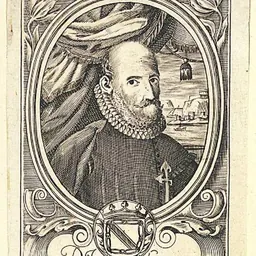
Lived 1539 – 1611 (aged 71–72). Pietro Usimbardi was a catholic priest, catholic bishop and bishop.
Pietro Usimbardi (9 January 1539, Colle di Val d'Elsa – 28 May 1611, Arezzo) was an Italian Catholic bishop who also served as a secretary for Grand Duchy of Tuscany.
Background Pietro was born in Colle di Val d'Elsa to Francesco di Pietro Usimbardi and Lucrezia Viviani. Hailing from a family of notaries in Colle, Vinta's father held various local positions, including notary for the municipality of San Miniato and legal prosecutor. Pietro was the eldest of five sons: Lorenzo (1547–1636) followed his brother's path into politics; Usimbardo (1552–1612) became the first bishop of the diocese of Colle; Claudio (1556–1638) and Fulvio (1559–1627) also pursued successful careers. All the brothers received a strong education in law and theology, which prepared them for their future roles in public service.
Career While a secular career was common for his family, Pietro was steered towards an ecclesiastical path, possibly due to personal interest or the family's financial struggles. His career was shaped under the guidance of Monsignor Salvatore Pacini and Abbot Bernardo Giusti, a fellow townsman. Giusti, connected to the Usimbardi family, served as secretary to Giovanni de' Medici and later to the young Cardinal Ferdinando de' Medici after Giovanni's death in 1562. He played a pivotal role in Pietro's career, introducing him to the Medici circle in 1556 and employing him in his secretariat. When Giusti retired or perhaps died in 1565, Pietro stepped into his shoes.
As bishop On January 9, 1589, Pietro was appointed Bishop of Arezzo, led him to continue advising Ferdinando on various matters, including encouraging him to pursue the reclamation of the Val di Chiana.
After Lorenzo took over as First Secretary from Pietro, a sort of dynamic tension developed between the two brothers. Pietro, in his role as a prelate, and Lorenzo, as Grand Ducal Secretary, represented contrasting viewpoints and interests. The rise of the Usimbardi brothers also brought benefits to their hometown of Colle, which was elevated to a bishopric. Their younger brother, Usimbardo, was elected its first bishop in 1592.
Although he obtained the episcopal office through the recommendation of the Grand Duke to Pope Sixtus V, Pietro's work in Arezzo was regarded as one of the most significant in the diocese's history. He promoted the reorganization of the diocesan archive, a project initiated by his predecessor, Bishop Stefano Bonucci. In 1592, he began construction of the Capuchin convent church in Lucignano, completed the following year and consecrated in 1604. In the meantime, in 1595, he consecrated the Cathedral of Arezzo, whose long-delayed construction was finally completed. The cathedral was dedicated to Saints Peter, Stephen, and Donato (today, only Saint Donato). He also built the Oratory of Saint Stephen on the hill where the previous cathedral had stood.
In 1602, the Usimbardi family acquired a private chapel within the Church of Santa Trinita. Its decoration was a prestigious project, entrusted to renowned artists like Ludovico Cigoli, Matteo Rosselli, Cristofano Allori, and Iacopo da Empoli. Further solidifying their position in Florence (even with Pietro mainly residing in Arezzo), the Usimbardi brothers purchased the Palazzo Acciaiuoli in 1603.
Works During his administration of the Diocese of Arezzo, Pietro faced challenges in his interactions with the canons. However, he demonstrated dedication in getting to know the territory and consistently carried out pastoral visits, the reports of which have been made public. In 1597, Pietro presided over a synod that embraced the principles and decrees of the Council of Trent, later published in his principal work: Constitutiones et decreta published in the Synodo diocoesana Arretina, quam Petrus Usimbardius episcopus Arretij habuit anno Domini MDXCVII, printed in Florence by B. Sermartelli in 1598. His work aimed to disseminate and implement the council's principles. The guidelines contained in his work would become an indispensable reference point for many of his successors.
In 1603, he published Costitutioni et ordini per i monasteri femminili (Constitutions and Orders for female monasteries), strictly enforcing the rule of enclosure. Additionally, in 1605, he published Constitutiones fori (Constitutions of the Ecclesiastical Court), a concise guide aimed at streamlining the ecclesiastical court's structure, defining timelines for various stages of the process, and setting response times for the vicar.
He also focused on improving ecclesiastical buildings. In 1595, he initiated the renovation of the episcopal palace, transforming it into a more luxurious and aristocratic residence. He also modernized the Villa Godio and the Pescaiola estate, and supported the construction of the Capuchin and Franciscan convents in Lucignano and the Church of Madonna della Consolazione in Foiano della Chiana. In 1610, he oversaw the renovation of the Church of Santo Stefano in Arezzo.
Pietro was a member of the Florentine Academy and wrote a biography of Ferdinando I, a highly laudatory work edited by Enrico Saltini in 1880 named Istoria del granduca Ferdinando dei Medici (History of Grand Duke Ferdinando dei Medici). In the early 17th century, Pietro oversaw the construction of the Church and Convent of San Pietro in his hometown of Colle di Val d'Elsa, entrusting the project to Giorgio Vasari the Younger and endowing it with an annual income of 25,000 scudi.
Death Pietro Usimbardi died on May 28, 1611, and his body was preserved through embalming. Following a temporary interment in the cathedral, his remains were relocated to the Chapel of the Crucifix in Santa Trinita, Florence, as per his wishes. He was laid to rest beside his brother, Usimbardo.
Don’t just read it —
keep it.
Full-length biographies made to live with: read them, listen on the way to work, watch them tonight.
- E-book
- Audio
- Video
Instant download · yours to keep · every purchase keeps this site free
Important facts
People in Pietro Usimbardi's life
Named in this biography and alive at the same time


Related people
Same field, nearest in time



Contemporaries
People whose lives overlapped Pietro Usimbardi's


Frequently asked questions
Who was Pietro Usimbardi?
Bishop of Arezzo (1589-1611)
When was Pietro Usimbardi born?
Pietro Usimbardi was born in 1539 in Colle di Val d'Elsa.
When did Pietro Usimbardi die?
Pietro Usimbardi died in 1611 in Arezzo.
What was Pietro Usimbardi's occupation?
Pietro Usimbardi was a catholic priest, catholic bishop and bishop.
Sources & further reading
Cite this page
APA: Biography.guide. (2026). Pietro Usimbardi. https://biography.guide/pietro-usimbardi/
MLA: "Pietro Usimbardi." Biography.guide, https://biography.guide/pietro-usimbardi/.
Chicago: "Pietro Usimbardi." Biography.guide. https://biography.guide/pietro-usimbardi/.
Data last updated: 2026-09-20 · Spot an error? Report a correction.
Page generated 2026-09-27 05:32 UTC