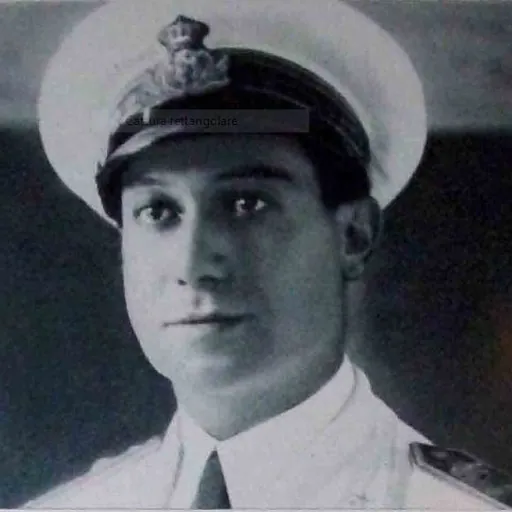
About Pietro Pinna Parpaglia
Lived 1891 – 1966 (aged 75). Pietro Pinna Parpaglia was an Italian politician.
Pietro Pinna Parpaglia (Pozzomaggiore, 12 January 1891 – 9 October 1966) was a general in the Royal Italian Air Force during World War II, Deputy Chief of Staff of the Regia Aeronautica from 1933 to 1939 and commander-in-chief of the Air Force in Italian East Africa from 1939 to 1941.
Biography Early life and World War I
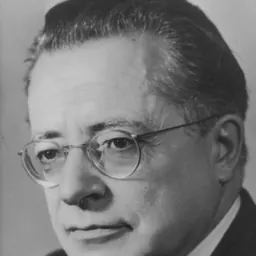
He was born in Pozzomaggiore on January 12, 1891, to a family of landowners. He studied law and graduate in 1913; among his classmates were Palmiro Togliatti and Mario Berlinguer, future leaders of the Italian Communist Party. Shortly after graduation, he began his career in the Italian judiciary, but after the Kingdom of Italy entered World War I on 24 May 1915, he volunteered in the Royal Italian Army with the rank of second lieutenant, assigned to the 46th Field Artillery Regiment. In 1916 he was promoted to lieutenant for war merit, and applied to join the Air Force as a navigator. From the beginning of 1917 he was assigned to the 43rd Squadron, supporting the artillery of the 5th Group of the Third Army, equipped with Caudron G.3 aircraft; on 12 and 18 March 1917 he carried out two risky reconnaissance missions over Gorjansko and Kobjeglava.
After promotion to captain, on 1 August 1917 he was assigned to the 72nd Fighter Squadron based in Ghedi and on 12 October 1917 he was transferred to the 120th Squadron of Castenedolo, flying SAML S.1 aircraft. On 3 December he assumed command of the 39th Squadron, based in Cà Tessera. On May 14, 1918, his unit, equipped with Savoia-Pomilio SP.3 and SAML aircraft, was transferred to the new Malcontenta airfield, with the task of assisting the firing of the artillery of the XXVIII Army Corps. The squadron also carried out bombing and reconnaissance missions, and launched propaganda leaflets on occupied Italian territories, until the end of hostilities, on November 4, 1918. By the end of the war Pinna Parpaglia commanded Fifth Air Group and had been awarded a Silver Medal of Military Valour and a Bronze Medal of Military Valour. In 1919, after obtaining a pilot license, he was given command of the 27th Squadron.
Interwar years
In 1923 he was transferred to the newly established Regia Aeronautica, rapidly climbing its hierarchy; he held the posts of Director of the Air Observation School, Chief of the Aeronautical Technical Consultant Office at the General Staff, and Technical Aeronautical Consultant at the Italian Delegation in Geneva.
From October 1928 to September 1929 he was commander of the 2nd Wing, and after promotion to colonel in 1930, from 1 November 1931 to 31 October 1932 he commanded the 13th Wing. In 1933 he was promoted to Air Brigade General (equivalent to air commodore), and on 15 October of the same year he replaced General Francesco Pricolo in the position of Deputy Chief of Staff of the Regia Aeronautica. He held this position until December 1, 1939, when he was replaced by General Giuseppe Santoro, having meanwhile been promoted to Air Division General (equivalent to air vice marshal) in 1934. On 14 August 1936 he replaced General Mario Ajmone Cat as commander of the Italian East African Air Force Command, personally carrying out reconnaissance, bombing and strafing missions against Ethiopian guerrillas; for his ideation, planning and execution of an air assault that resulted in the occupation of Dembidolo on 11 November 1936, he was awarded another silver medal for military valor and promoted to Air Fleet General (equivalent to air marshal). On 4 December of the same year he was replaced by General Aurelio Liotta as commander-in-chief of the Regia Aeronautica in East Africa, and repatriated, returning to his office as deputy chief of staff.
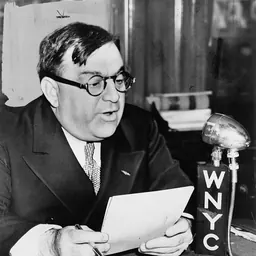
After the fall of Fascism (25 July 1943) and the Armistice of Cassibile (8 September 1943), he wrote a letter to the president of the United States Franklin Delano Roosevelt, inviting him to encourage the creation of combat units composed of former Italian prisoners of war, to be used against the now common German enemy. This initiative obtained the support of the mayor of New York Fiorello La Guardia, who had flown with Pinna during World War I. Due to his pro-Allied position, the Allies released Pinna and allowed him to return to Italy. On 27 January 1944 the Allied military government appointed him High Commissioner for Sardinia. He supervised the process of economic, political and social reconstruction of the island, and his initiatives included the establishment of the Cagliari trade fair and the construction of the Alghero airport. He was confirmed in the post during the Parri government and the first five De Gasperi governments, remaining in office until May 28, 1949, when the first elections of the Regional Council were held. The appointment as High Commissioner automatically made him a member of the National Council. During 1949 he was recalled to military service as Director General of Civil Aviation and Air Traffic and, in 1953, he became Councilor of State until 1961, when he retired with the rank of President of jurisdictional section.
He retired to his hometown of Pozzomaggiore, where he spent the last six years of his life, dying on 9 October 1966.
Don’t just read it —
keep it.
Full-length biographies made to live with: read them, listen on the way to work, watch them tonight.
- E-book
- Audio
- Video
Instant download · yours to keep · every purchase keeps this site free
Important facts
People in Pietro Pinna Parpaglia's life
Named in this biography and alive at the same time



Related people
Same field, nearest in time





Contemporaries
People whose lives overlapped Pietro Pinna Parpaglia's


Frequently asked questions
Who was Pietro Pinna Parpaglia?
Italian politician (1891-1966)
When was Pietro Pinna Parpaglia born?
Pietro Pinna Parpaglia was born on 12 January 1891 in Pozzomaggiore.
When did Pietro Pinna Parpaglia die?
Pietro Pinna Parpaglia died on 9 October 1966 in Pozzomaggiore.
What was Pietro Pinna Parpaglia's occupation?
Pietro Pinna Parpaglia was a politician.
What nationality was Pietro Pinna Parpaglia?
Pietro Pinna Parpaglia was Italian.
Sources & further reading
· Wikipedia: Pietro Pinna Parpaglia
· DBpedia: Pietro Pinna Parpaglia
Cite this page
APA: Biography.guide. (2026). Pietro Pinna Parpaglia. https://biography.guide/pietro-pinna-parpaglia/
MLA: "Pietro Pinna Parpaglia." Biography.guide, https://biography.guide/pietro-pinna-parpaglia/.
Chicago: "Pietro Pinna Parpaglia." Biography.guide. https://biography.guide/pietro-pinna-parpaglia/.
Data last updated: 2026-09-22 · Spot an error? Report a correction.
Portrait: Wikimedia Commons · author & licence
Page generated 2026-09-27 05:02 UTC