
About Pietro IV Candiano
Lived 901 – 976 (aged 74–75). Pietro IV Candiano was an Italian politician.
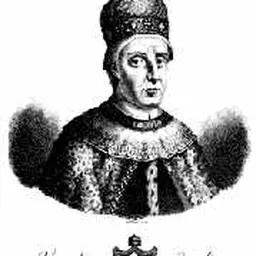
Pietro IV Candiano (925–976) was the twenty-second (traditional) or twentieth (historical) doge of Venice from 959 to his death. He was the eldest son of Pietro III Candiano, with whom he co-reigned and whom he was elected to succeed.
Rise Pietro was appointed co-doge by his father. However, towards the end of his father's dogeship, Pietro IV revolted against him, but failed thanks to popular support for the doge. Pietro III pleaded for his son's life and managed to prevent his execution, but could not stop his exile.
The rebellion of Pietro IV was probably related to the situation in Italy at the time. Pietro IV had supported Berengar II, the Frankish king of Italy, while his father pursued a neutral policy. Berengar II's Kingdom of Italy was taken over by Otto I (who would later become Holy Roman Emperor) in 952. Berengar swore loyalty to Otto I, who gave him back the title of king of Italy as vassal king. Berengar later revolted against Otto, attacking the March of Verona and invading the Papal States.
The exiled Pietro IV went to Ivrea, where the margrave, Guy of Ivrea took him to his father, Berengar II. He then joined the military campaigns which Adalbert, the son of Berengar II, and Hubert, were conducting against Theobald II, Duke of Spoleto and Camerino. Berengar II allowed Pietro to conduct military operations in Ravenna. With six ships from Ravenna, he captured seven Venetian ships. He returned to Venice when his father died, two and a half months after he had been exiled.
Pietro destroyed Oderzo, which controlled the routes towards northern Europe. He subdued Ferrara, which was emerging as the main trade centre in the area of the River Po and competed with Venice over trade in this area.
For political reasons, Pietro repudiated his first wife, Giovanniccia, forcing her into the monastery of San Zaccaria. He had a son with her, Vitale. In 966, Pietro remarried to Waldrada, the daughter of Hubert, the marquis of Tuscany, and a cousin of the wife of the emperor Otto I. As the most powerful woman in Italy, Waldrada brought Pietro a large dowry both in money and properties in Friuli, the March of Treviso, Andria and the Ferrara area. The location of these properties is unclear.
To Mor other measures Otto took also indicate his hostility towards Pietro. When Otto crushed the anti-Otto faction, he gave privileges to the bishop of Belluno, whose seat was in Oderzo, and allowed the bishop of Padua, whose territory bordered that of Venice, to build a castle. Mor sees Pietro's mentioned military actions against Oderzo and Ferrara as being part of his opposition to Otto. When Otto secured his control over Italy, Pietro was forced to change stance and to seek a rapprochement with Otto and his own opponents in Venice because he lost his anti-Otto supporters on the mainland and the Byzantines, who had supported resistance to Otto, were routed in Sicily in 965. Betrolini notes that it is difficult to ascertain which of the two interpretations is more likely due to uncertainties regarding the chronology of the main events (Pietro's attacks on the two towns, his marriage to Waldrada and Otto's pardon of Waldrada's father) and the identification of Vitale Candiano. However, this take does not take into account the fact that Pietro married Giovanniccia.
During his third expedition to Italy (965-66), Otto I decided to define his relationship with the duchy Venice in the context of settling the situation in Italy. In 967 Otto I renewed the old Pactum Lotharii between the duchy of Venice and the Kingdom of Italy, which defined the boundaries of the duchy and its economic relations with the kingdom. The treaty dated back to 840 and thus it was 127 years old. This constituted a marked restriction compared to the further concessions the Venetians had gained later. There was a reduction of the territory of the duchy. It lost Brondolo and Fossone, to the south of the Lagoon of Venice. Both were important for their saltworks and were on the inland trade waterways of the rivers Brenta and Adige. The border north of Cittanova, from where the routes to northern Europe started, was no longer defined, which led to disputes and to a long fight that doge Pietro II Orseolo (991-1009) undertook in 995–96 against the belligerent bishop of Belluno. A new tax which increased the tax burden on goods was introduced.
In 971 the Byzantine emperor John I Tzimisces imposed a ban on the sale military material (wood and weapons) to the Arabs. Ships that breached this and the men and goods they carried would be burned. This was aimed against the Fatimid Caliphate, as a war between the empire and the califate broke out again in that year. Pietro complied, but this undermined Venice's economic interests as trade with the Arab coast of North Africa, which was short of wood, was an important part of Venetian trade. Wood for furnishing was excluded from the ban, but this was of little relief.
The ban was not instituted by a decree of the doge, but by an oath (carta promissiones) by the popular assembly to abstain from the banned acts with a penal clause regarding breaches chosen freely by the assembly. The fact that the ban was adopted by the will of the popular assembly, rather than by a ducal decree crystallised the gulf that had developed between the doge and the people and the isolation of the former from the latter. Cessi sees this as a legislative overturning. It was a precursor to the shift in the balance of power between the doge and the people which was to lead to the formation of the Venetian Republic in the 12th century and the custom of the doge giving a ducal promissio (promissio domini ducis), an oath, on assuming power to be loyal to the Republic and to recognise the limitations to his powers created by the Republic.
In 976 the people of Venice rebelled against Pietro. Betrolini argues that there was discontent with Pietro's foreign policy. The relations with Otto I led to economic sacrifices. The economic repercussions of the Byzantine ban increased animosity. His favouritism for his relatives was disliked.
Staley Edgcumbe wrote that the rebellion was due to the fact that both the doge and his wife were disliked and too powerful. They were seen as being haughty and living in “proud and contentious isolation.” Waldrada was seen as being petulant and the fact that she was accompanied by Florentine guards was disliked. Pietro was seen as being vainglorious and treated the nobles and officials with “coldness and disdain”. He had a retinue of Tuscans and Greeks and Germans. He also formed a clique of members of the branches of his family form Padua and Vicenza whose power was a threat to the established order.
Death In 976 the Doge's Palace was attacked. Since the palace was like a fortress, it was set alight. The doge was forced to come out and he was killed, together with his young son Pietro by Waldrada, by some notables (among whom there were some of his relatives). Their bodies were thrown in the slaughterhouse, but were later recovered and buried in the monastery of Sant'Ilario, in Fusina, on the mainland coast of the Lagoon of Venice, perhaps because Pietro owned large estates in the area. Two previous doges, Agnello e Giustiniano Partecipazio, who founded the monastery, were also buried there.
As the fire spread, some 300 buildings were destroyed, including the churches of St Mark's, the old San Teodoro, and the newly completed Santa Maria Zobenigo.
Waldrada managed to escape the attack, taking her young daughter Marina with her. She fled to the empress Adelaide, the mother of the new emperor, Otto II, in Verona. She appealed to Otto II to set fire to Venice and imprison its people. She demanded the reconstitution of her dowry. The new doge, Pietro I Orseolo, sent an envoy to Piacenza to discuss her claim with Otto II. These were amended in a way that satisfied both parties (Pietro IV had introduced the Mundio, a custom which was new in Venice, in which the doge conferred one fourth of his personal assets to his wife; Venice had confiscated Pietro's freehold estates). Waldrada issued a receipt (carta securitatis) to the new doge and the Venetian people.
Don’t just read it —
keep it.
Full-length biographies made to live with: read them, listen on the way to work, watch them tonight.
- E-book
- Audio
- Video
Instant download · yours to keep · every purchase keeps this site free
Important facts
Family & relationships
People in Pietro IV Candiano's life
Named in this biography and alive at the same time

Related people
Same field, nearest in time


Contemporaries
People whose lives overlapped Pietro IV Candiano's


Frequently asked questions
Who was Pietro IV Candiano?
doge of Venice
When was Pietro IV Candiano born?
Pietro IV Candiano was born in 901 in Venice.
When did Pietro IV Candiano die?
Pietro IV Candiano died on 11 August 976 in Venice.
What was Pietro IV Candiano's occupation?
Pietro IV Candiano was a politician.
What nationality was Pietro IV Candiano?
Pietro IV Candiano was Italian.
Sources & further reading
· Wikipedia: Pietro IV Candiano
Cite this page
APA: Biography.guide. (2026). Pietro IV Candiano. https://biography.guide/pietro-iv-candiano/
MLA: "Pietro IV Candiano." Biography.guide, https://biography.guide/pietro-iv-candiano/.
Chicago: "Pietro IV Candiano." Biography.guide. https://biography.guide/pietro-iv-candiano/.
Data last updated: 2026-09-26 · Spot an error? Report a correction.
Page generated 2026-09-27 05:14 UTC