
About Piero Remor
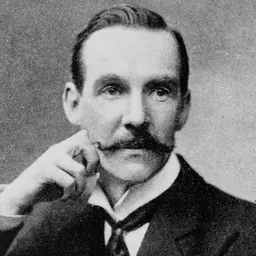
Lived 1896 – 1964 (aged 67–68). Piero Remor was an Italian engineer, known for Gilera, MV Agusta 125 Bialbero and MV Agusta 500 racers.
Piero Remor (Porto Venere, Italy, 1896 - Rome, 1964) was an Italian engineer and motorcycle constructor, best known for his work for the Gilera and MV Agusta brands.
MAS boot Piero Remor studied at the Sapienza University of Rome, with, among others professor Ugo Bordoni. After graduating, he worked with Bordoni in 1919 on the development of the Motoscafo Armato Silurante, a MAS-boot (torpedo boat).
GRB-OPRA In 1923, together with Carlo Gianini, Remor built a transverse inline four-cylinder engine for a motorcycle. This project caught the attention of Count Luigi Bonmartini who owned the Officine di Precisione Romane Automobilistiche (OPRA) company in Rome. Bonmartini decided to provide financial support by establishing a new company together with Remor and Gianini. This company was initially named "GRB" (Gianini, Remor, Bonmartini). To earn money, however, work also had to be carried out for the aviation industry and it took five years for a prototype of a motorcycle to be built. This was an air cooled four-cylinder with probably a water-cooled cylinder head that was built in a very simple frame. In 1929 the prototype was now called "OPRA" and Piero Taruffi. made a name for himself with Nortons as a motorcycle racer, was hired as a test driver. However, when the OPRA entered its first race, the Grand Prix of Rome, it was driven by a then more famous driver, Umberto Faraglia. The OPRA led the race for a short time, but the engine blew up. Taruffi, disappointed because he had been passed for the ride, won th race with his Norton. Piero Remor left the OPRA company in 1930 after a dispute with Count Bonmartini.
Development of the racing engine Meanwhile, Piero Taruffi and Carlo Gianini continued to develop the motorcycle, which in the meantime was called "CNA Rondine", after another company from Bonmartini, Compagnia Nazionale Aeronautica, and the Rondine aeroplane that flew over the 1922 March on Rome. The developments there were again particularly slow, but it was not until 1934 that the motorcycle came back onto the track under the name "Rondine" (swallow). The engine, which was completely revised only by Gianini, was now completely water-cooled and a Roots supercharger. Six copies of the Rondine were built. Taruffi and Amilcare Rossetti rode the machines in the prestigious Grand Prix of Tripoli, where they came first and second. Taruffi drove a fully streamlined version to a record 244.6 km/h. In 1934 Bonmartini sold CNA to the aircraft manufacturer Caproni in Milan. That company had no interest in the Rondine and Piero Taruffi feared that his project, in which he had been involved for eight years, would be lost. That is why he approached Giuseppe Gilera, who was convinced of the advertising aspect of road races for his Gilera brand. Gilera bought the six machines, drawings, rights, spare parts and hired Taruffi as rider, team leader and chief engineer. However, Gilera also saw the weaknesses of the machine and the need to have it developed further before it was used in races. Due to the outbreak of the Second World War, all developments for racing came to a halt. In 1946, the FIM prohibited the use of superchargers, Remor was not happy with that, but the fact is that the machine couldn't break points that year. Even winning the Italian championship was not achievable. Masserini led the Assen TT, but fell in the heavy rain. Only the last race of the year, the Grand Prix of Italy, was won by Masserini, mainly because Norton and AJS did not enter. Although it was clear to everyone that the steering behaviour was below par, Remor refused to improve the machine. The fight with Pagani was intense that Remor forbade him to ride on the four-cylinder machine forcing him to use the Saturno. In the 1949 World Championship it became clear that the handling of the Gilera was not good. The first world title went to Les Graham with the AJS Porcupine, a machine that weighed around 140 kg and delivered only 45 bhp, while the Gilera weighed 124 kg and had over 50 hp. After two races, Giuseppe Gilera intervened and Pagani got the four-cylinder for the Assen TT, with which he easily won. With a win at the Grand Prix of Italy, Gilera had only won two races in the first world championship year with a motorcycle that was the best on paper. In 1950 Augusta hired Pietro Remor to build two GP machines: a four-cylinder 500 cc and a DOHC 125 cc. MV Agusta was still racing in the 125 cc class with a two-stroke engine, which was not competitive with the four-strokes of Mondial and Morini. For MV Agusta, the 125cc Bialbero became the first racing engine that was not derived from a production model. On his departure from Gilera, Remor took the blueprints of the 500/4 engine with him.
Motom After leaving MV Agusta at the end of 1953, Piero Remor worked at Motom, which manufactured mopeds and light motorcycles, from 1954 to 1957. Whilst at Motom, he developed the small Motom 98T. He later became a consultant and died in Rome in 1964.
Don’t just read it —
keep it.
Full-length biographies made to live with: read them, listen on the way to work, watch them tonight.
- E-book
- Audio
- Video
Instant download · yours to keep · every purchase keeps this site free
Important facts
People in Piero Remor's life
Named in this biography and alive at the same time

Related people
Same field, nearest in time



Contemporaries
People whose lives overlapped Piero Remor's




Frequently asked questions
Who was Piero Remor?
Italian motorcycle engineer
When was Piero Remor born?
Piero Remor was born in 1896 in Porto Venere.
When did Piero Remor die?
Piero Remor died in 1964 in Italy, Rome.
What was Piero Remor's occupation?
Piero Remor was an engineer.
What was Piero Remor known for?
Piero Remor was known for Gilera, MV Agusta 125 Bialbero and MV Agusta 500 racers.
What nationality was Piero Remor?
Piero Remor was Italian.
Sources & further reading
Cite this page
APA: Biography.guide. (2026). Piero Remor. https://biography.guide/piero-remor/
MLA: "Piero Remor." Biography.guide, https://biography.guide/piero-remor/.
Chicago: "Piero Remor." Biography.guide. https://biography.guide/piero-remor/.
Data last updated: 2026-09-22 · Spot an error? Report a correction.
Page generated 2026-09-27 05:11 UTC