
Piero Piccioni
Italian lawyer and film composer
About Piero Piccioni
Lived 1921 – 2004 (aged 82). Piero Piccioni was an Italian pianist, film score composer, jazz musician, jurist, actor and composer.
Early life Piero Piccioni was born in Turin, Piedmont. His mother's maiden name was Marengo, hence his pseudonym Piero Morgan, which he adopted until 1957.
When he was growing up, his father Attilio Piccioni (a prominent member of the Italian Christian Democratic Party with the post-war Italian government), would frequently take him to hear concerts at the EIAR Radio Studios in Florence. Having listened to jazz throughout his childhood (he loved the music of Art Tatum and Charlie Parker) and attending studies at the Conservatorio Luigi Cherubini, Piero Piccioni became a musician.
Career Piccioni made his radio debut at 17 with his 013 Big Band in 1938, but only returned on air after the liberation of Italy in 1944. His 013 was the first Italian jazz band to be broadcast in Italy after the fall of Fascism.
He began writing songs of his own and was soon able to get some of his works published by Carisch editions.
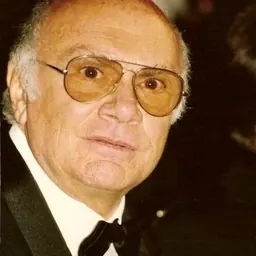
Piero Piccioni came into contact with the movie world in Rome during the fifties, when he was a practicing lawyer securing movie rights for Italian producers such as Titanus and De Laurentiis. During that time, Michelangelo Antonioni had called Piccioni to score a documentary film directed by Luigi Polidoro, one of his apprentices. Piccioni's first score for a feature film was Gianni Franciolini's Il mondo le condanna (1952). He consequently changed his lawyer's "toga" for a conductor's baton. He developed close-knit working relationships with directors Francesco Rosi and Alberto Sordi, and established strong personal and professional bonds with them.
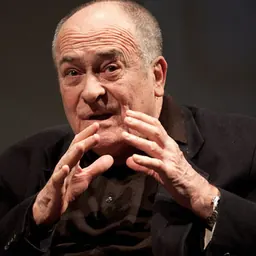
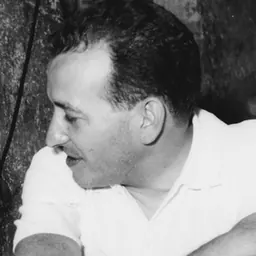
Many directors sought Piero Piccioni to score the soundtracks for their films: Francesco Rosi, Mario Monicelli, Alberto Lattuada, Luigi Comencini, Luchino Visconti, Antonio Pietrangeli, Bernardo Bertolucci, Roberto Rossellini, Vittorio De Sica, Lina Wertmuller, Tinto Brass, Dino Risi, and others.
His film scores include Il bell'Antonio, Contempt, The 10th Victim, More Than a Miracle, The Deserter, The Light at the Edge of the World, Puppet on a Chain, Lucky Luciano, Camille 2000, The Nun and the Devil, Swept Away, Christ Stopped at Eboli, Fighting Back, and many Alberto Sordi movies. He is credited with over 300 soundtracks and compositions for radio, television, ballets and orchestra. Among his favorite vocalists were female soul singer Shawn Robinson and Edinburgh-born Lydia MacDonald.
Awards and legacy Piccioni won many prestigious prizes including the David di Donatello Award for the movie Swept Away (1975), Nastro d'argento Award for the movie Salvatore Giuliano by Francesco Rosi (1963), Prix International Lumière 1991, Anna Magnani Award 1975 and Vittorio De Sica Award 1979.
His song "Traffic Boom" was featured as the song for the fictional Logjammin''' movie-within-a-movie in The Big Lebowski.
The song "It's Possible" from "Il Dio Sotto la Pelle" was sampled by Hollywood JB for DJ Khaled's "Jermaine's Interlude" on his Major Key album featuring J Cole, as well as on Isaiah Rashad's Headshots (4r da Locals), and Lucki's "Waiting On".
The Montesi affair In 1953 Piccioni was falsely implicated in the Montesi scandal, after a conspiracy designed to force the resignation of his father Attilio from the highest positions in the government (he was Foreign Minister at the time). On dubious information, journalists spun fabrications that he had been present, close to a villa near a beach where a girl was found drowned, allegedly after a party (which never took place).
Piccioni was acquitted in Venice in 1957 together with others after lengthy trials and tribulations, and his accusers were eventually sentenced for slander and calumny. To this day this case is known in Italy as one of the first events in post-war history where la macchina del fango'' or the "mud machine" was used as a means for political régime change.
Death Piccioni died in Rome on July 23, 2004 from unknown causes.
Selected filmography
Don’t just read it —
keep it.
Full-length biographies made to live with: read them, listen on the way to work, watch them tonight.
- E-book
- Audio
- Video
Instant download · yours to keep · every purchase keeps this site free
Important facts
People in Piero Piccioni's life
Named in this biography and alive at the same time



Related people
Same field, nearest in time

Contemporaries
People whose lives overlapped Piero Piccioni's




Frequently asked questions
Who was Piero Piccioni?
Italian lawyer and film composer (1921–2004)
When was Piero Piccioni born?
Piero Piccioni was born on 6 December 1921 in Turin.
When did Piero Piccioni die?
Piero Piccioni died on 23 July 2004 in Rome.
What was Piero Piccioni's occupation?
Piero Piccioni was a pianist, film score composer, jazz musician, jurist, actor and composer.
What nationality was Piero Piccioni?
Piero Piccioni was Italian.
Sources & further reading
Cite this page
APA: Biography.guide. (2026). Piero Piccioni. https://biography.guide/piero-piccioni/
MLA: "Piero Piccioni." Biography.guide, https://biography.guide/piero-piccioni/.
Chicago: "Piero Piccioni." Biography.guide. https://biography.guide/piero-piccioni/.
Data last updated: 2026-09-25 · Spot an error? Report a correction.
Page generated 2026-09-27 05:11 UTC