
About Pier Leone Ghezzi
Lived 1674 – 1755 (aged 80). Pier Leone Ghezzi was a caricaturist, painter, graphic artist, musician, writer and manufacturer.
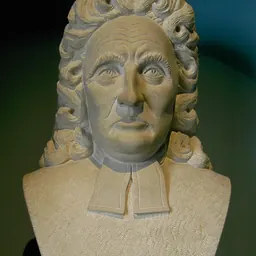
Pier Leone Ghezzi (28 June 1674 – 6 March 1755) was an Italian Rococo painter, draughtsman, printmaker and caricaturist who was mainly active in Rome. While he painted decorative frescoes and created a new type of anecdotal and realistic history painting, he is now mainly known for his caricatures of famous people of his time. He has been described as the first professional caricaturist. In his countless portrait drawings, he was able to capture the essence of the sitter with only a few strokes. He regularly portrayed a single figure with exaggerated anatomy and various eccentricities of clothing and posture. In group portraits he created a humoristic effect by repeating a strange stance or expression.
Biography
Early life and education Ghezzi was born in Rome on 28 June 1674 as the son of Giuseppe and Lucia Laraschi. He was baptized on 9 July in the church of San Giovanni dei Fiorentini with Carlo Maratta acting as his godfather. He came from a prominent family of artists: his grandfather Sebastiano Ghezzi was a painter and architect for Pope Urban VIII and his father was a Baroque painter contributing altarpieces in many churches in Rome. He was trained by his father in a cultural environment dominated by the Roman classical tradition, as represented most notably in the art of Carlo Maratta, Giovanni Battista Gaulli and Pietro da Cortona. His father was secretary of the Accademia di San Luca, the academy of artists in Rome.
Religious works, history paintings and decorative frescoes Pier Leone Ghezzi's first documented work is the signed and dated Landscape with Saint Francis (1698; Montefortino, Pinacoteca Civica). Very close to this date he collaborated with Antonio Amorosi, a student of his father, on the Virgin of Loreto for the church of Santa Caterina at Comunanza. In 1705 Ghezzi was elected Accademico di Merito at the Accademia di San Luca. His essay painting, the Allegory of Gratitude, was donated to the institution for his admission, as was customary.
In 1708, he was appointed painter to the Camera Apostolica by Pope Clement XI. This position involved him acting as curator of the papal collections, superintending the decorations for ceremonial occasions and the manufacture of tapestries and mosaics, and overseeing architectural sites and the decoration of buildings. In 1710 Francesco Farnese, Duke of Parma awarded him the cross of a knight. He was also a member of the Academy of Arcadia.
Ghezzi's most important official commissions date from between 1712 and 1721. Six large canvases of scenes from the Life of Clement XI (1712–15; Urbino, Ducal Palace), painted for the salone of the papal palace at Castel Gandolfo brought to history painting a new informality and documentary realism. They are characterized by a naturalistic description of setting and figures, and by a lively interest in anecdote. In contrast, the Election of Saint Fabian (c. 1712) for the Albani Chapel in San Sebastiano fuori le Mura, Rome, and the frescoed Martyrdom of Saint Ignatius of Antioch (c. 1716) over the nave arcade in San Clemente, Rome, remain within the academic tradition, with an emphasis on dramatic gesture and a theatrically Baroque treatment of space.
The most important artistic enterprise of Clement XI's reign was the rebuilding and redecoration of the archbasilica of Saint John Lateran, Rome, to which Ghezzi contributed a highly academic oval canvas of the Prophet Micah (1718) as one of a series of 12 paintings for the nave.
After the death of Pope Clement XI in 1721, the Falconieri family, especially Alessandro (made cardinal in 1724), became Ghezzi's chief patrons. In these years he also developed contacts with French culture, through the French Academy in Rome, and through Cardinal Melchior de Polignac, French ambassador to the Holy See, who became his patron and friend. He collaborated with Giovanni Paolo Panini, who encouraged a new interest in the picturesque; together they designed the theatrical displays mounted by the French Academy in Rome to celebrate the birth of the Dauphin of France in 1729. He was possibly the first professional caricaturist and produced thousands of drawings throughout his lifetime. His pen and gouache caricatures are much freer in emotion than his state portraiture, and were much admired. They often depict named individuals or professions in satirical fashion. The earliest caricatures date from 1693 and were collected by the artist himself, after 1730, in several volumes, entitled Mondo nuovo (Rome, Vatican, Vatican Library, MSS Ott. 3112–19). The intention of these caricatures was not sarcastic or subversive and entailed no moral judgement. He depicted the aristocrats, artists and churchmen who protected him and were his patrons, and who formed the society in which he gained such success. His talent lay in his ability to capture the essential features of a sitter with a few rapid strokes of the pen and watercolour and, without malice, to create comic characters.
Also in the Vatican Library, from the Guglielmi collection, are other caricatures from Ghezzi's early career, dating from c. 1702. These comprise portraits of members of Roman society, scenes from the Commedia dell'arte and popular scenes, such as the Capuchin Friar and the Charming Lady (c. 1702). Ghezzi, rooted in a cultivated and aristocratic milieu, showed little interest in the world of the poor. The series entitled Pulcinella is particularly beautiful. His caricatures from after 1721 were executed in series with a documentary, rather than a comic, purpose, and are less successful than the lively and spontaneous creations of his youth. Some of these later caricatures (1749–52) are bound into a volume (Rome, Gabinetto Nazionale delle Stampe, Cod. 2606).
From 1720 Ghezzi also made many drawings after the Antique—cameos, coins and vases—bearing witness to the contemporary interest in archaeology, restoration and collecting. The most famous volumes of such drawings are: one in the British Museum, London, with drawings made for Passionei and Stosch between 1740 and 1750; the volumes in the Ottoboniano Foundation (Rome, Vatican Library, MSS 3100–10); and the Manoscritto Lanciani (Rome, Biblioteca di archeologia e storia dell'arte). He was also commissioned by Cardinal Annibale Albani in 1726 to make drawings for the Roman Pontifical and for the Vita del Papa Clement XI. These are now known only through engravings executed in a highly finished, clear style, which emphasizes their didactic purpose. In addition to his drawings, Ghezzi also left a diary (Rome, Biblioteca Casanatense, MS. 3765), which survives only in part, and contains interesting notes on the life and society of Rome between 1731 and 1734.
Gallery Paintings
Caricatures
Don’t just read it —
keep it.
Full-length biographies made to live with: read them, listen on the way to work, watch them tonight.
- E-book
- Audio
- Video
Instant download · yours to keep · every purchase keeps this site free
Important facts
more
L. Ghezzi, pierleone ghezzi, Cav.e Ghezzi, Cav. Getzi, Cavalier Ghezzi, Pietro Ghezzi, P. Ghezzi, Cav.r Ghezzi, Ghizzi, Cavalier Leoni, Cav. Ghezzi, Cave. Ghezzi, p. l. Ghezzi, Cavaliere Ghezzi, Eques Petrus Leonus Ghezzi, GhezziPeople in Pier Leone Ghezzi's life
Named in this biography and alive at the same time





Related people
Same field, nearest in time

Contemporaries
People whose lives overlapped Pier Leone Ghezzi's



Frequently asked questions
Who was Pier Leone Ghezzi?
Italian painter (1674-1755)
When was Pier Leone Ghezzi born?
Pier Leone Ghezzi was born on 28 June 1674 in Rome.
When did Pier Leone Ghezzi die?
Pier Leone Ghezzi died on 6 March 1755 in Rome.
What was Pier Leone Ghezzi's occupation?
Pier Leone Ghezzi was a caricaturist, painter, graphic artist, musician, writer and manufacturer.
Sources & further reading
· Wikipedia: Pier Leone Ghezzi
Cite this page
APA: Biography.guide. (2026). Pier Leone Ghezzi. https://biography.guide/pier-leone-ghezzi/
MLA: "Pier Leone Ghezzi." Biography.guide, https://biography.guide/pier-leone-ghezzi/.
Chicago: "Pier Leone Ghezzi." Biography.guide. https://biography.guide/pier-leone-ghezzi/.
Data last updated: 2026-09-26 · Spot an error? Report a correction.
Page generated 2026-09-27 05:13 UTC