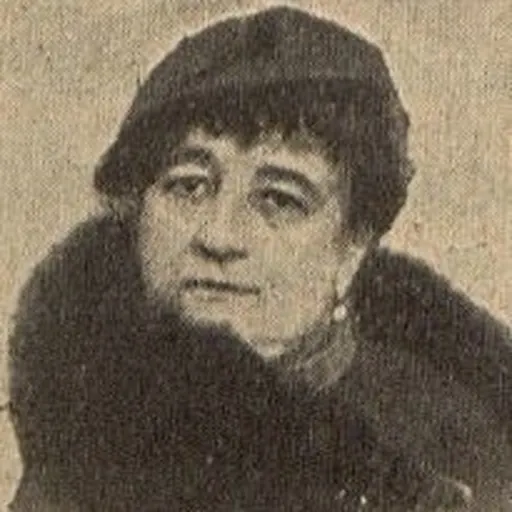
About Pia Górska
Lived 1878 – 1974 (aged 96). Pia Górska was a Polish painter, poet and social activist.
Pia Maria Górska (1878–1974) was a Polish painter, poet, writer, teacher, and social and religious activist.
Early life and education Górska was born on 15 April 1878 in Wola Pękoszewska in the Warsaw Governorate of Congress Poland. She was the daughter of Maria, Countess Łubieńska and Jan Górski, a wealthy landowner and well-known agronomist, and granddaughter of General Franciszek Górski. She was apparently named in honour of Pope Pius IX, who died just before her birth. The Górski family was very religious and her eldest brother, Ludwik, was an unofficial liaison between the Catholic Church of the Kingdom of Poland and the Holy See (with the family palace in Warsaw often being referred to as "the Polish Vatican"). She was educated by private tutors in her family home, which served as a centre of cultural life that influenced both the immediate and wider area, attracting many artists, scientists, and writers from around Poland. The youngest of her four brothers, Konstanty Maria Górski, was an art historian, writer and literary scholar, who had a significant impact on her intellectual and artistic development.
At the age of 13, Górska began studying painting. Her first teacher was the Polish artist, Eligiusz Niewiadomski, who spent his summer vacation in Wola Pękoszewska in 1891. In 1892, she received lessons from Józef Rapacki and painted her first landscapes, and in 1893 she was taught by Sylwester Saski. The following year she took painting lessons from Józef Mehoffer, who placed great emphasis on composition. From that year Józef Chełmoński became her main advisor, having a profound influence on her work. Living nearby, he spent much more time with her than her previous teachers, and was the teacher she respected the most. During that period she also worked in a village orphanage.
Adult Life Around 1900, Górska stopped painting. While still living in Wola, she frequently travelled to Kraków, where she met many artists and thinkers of the era. During this time, she also regularly travelled abroad with her mother, mainly for medical reasons, to Berlin, Austria, Davos in Switzerland, and Italy. In 1907, she moved to Warsaw, where she lived with her mother in the Górski family home. After completing relevant training, she co-organized the Society for the Protection of Children's Misery Shelters, where she also worked. From 1908, together with , she gave religious lectures in all the nurseries run by the Warsaw Tram Authority.
During the 1920s and 1930s she was very active with religious painting. However, many of these works appear not to have survived. Her most outstanding religious pieces include two images painted in 1938–1939: Holy Virgin of Loreto (Patron Saint of Aviators) at the Church of St Francis of Assisi in Okęcie, close to the Warsaw Chopin Airport, and St Jude Thaddaeus in the Holy Cross Church, Warsaw. The paintings are characterized by their original treatment of iconography, combining the dictates of tradition with the artist's lyrical realism.
World War II and the post-war period During the Siege of Warsaw (1939), her apartment in the family home burned down. Along with the apartment, her library, several of her own manuscripts, paintings, and a large collection of works by various painters, including Chełmoński, were destroyed. She spent the war years in Wola Pękoszewska, leaving Wola in 1945 to live with the family of her nephew, Andrzej Górski, in Skierniewice and then in Milanówek. In 1947, she moved to Kraków, to live with the family of another nephew. During the war period she supported herself by doing artistic embroidery.
From 1939 she painted rarely, but in the postwar period, she wrote relatively prolifically. In 1948, she published a historical novel for young people, set in the 13th century, titled Shield and Hood. A few years later, she published another historical novel, this time retracing the events of the birth of Jesus Christ in The City of David. Górska's memoirs, titled Paleta i Pióro (Palette and Pen), were published in 1956. Unfortunately, this book was severely affected by political censorship, as the author explained in her correspondence with another relative. These memoirs contained many profiles of the painters and writers she had met. The book was very popular, and a second edition appeared a few years after the first.
Death and legacy Górska died in Krakow on 13 June 1974. She was buried in the Rakowicki Cemetery in the city. Many of her paintings were destroyed during the war but some were purchased for public collections. Others remain with the family.
Don’t just read it —
keep it.
Full-length biographies made to live with: read them, listen on the way to work, watch them tonight.
- E-book
- Audio
- Video
Instant download · yours to keep · every purchase keeps this site free
Important facts
People in Pia Górska's life
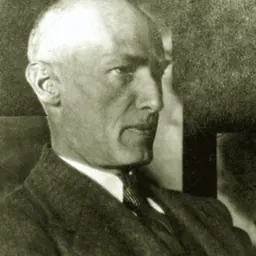
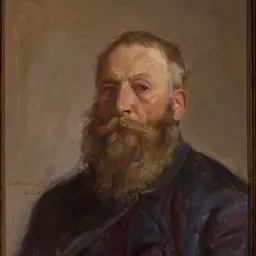
Named in this biography and alive at the same time

Related people
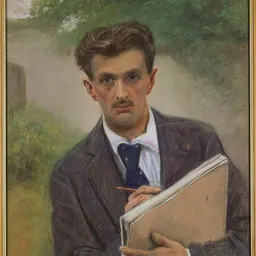
Same field, nearest in time

Contemporaries
People whose lives overlapped Pia Górska's



Frequently asked questions
Who was Pia Górska?
Polish painter (1878-1974)
When was Pia Górska born?
Pia Górska was born on 15 April 1878 in Wola Pękoszewska.
When did Pia Górska die?
Pia Górska died on 13 June 1974 in Kraków.
What was Pia Górska's occupation?
Pia Górska was a painter, poet and social activist.
What nationality was Pia Górska?
Pia Górska was Polish.
Sources & further reading
Cite this page
APA: Biography.guide. (2026). Pia Górska. https://biography.guide/pia-gorska/
MLA: "Pia Górska." Biography.guide, https://biography.guide/pia-gorska/.
Chicago: "Pia Górska." Biography.guide. https://biography.guide/pia-gorska/.
Data last updated: 2026-09-23 · Spot an error? Report a correction.
Portrait: Wikimedia Commons · author & licence
Page generated 2026-09-27 05:05 UTC