
About Phoolan Devi
Lived 1963 – 2001 (aged 37). Phoolan Devi was an Indian politician, brigand, dacoit and human rights activist.
Phoolan Devi (; 10 August 1963 25 July 2001), popularly known as the Bandit Queen, was an Indian dacoit (bandit) who became a politician, serving as a member of parliament until her assassination. She was a woman of the Mallah subcaste who grew up in poverty in a village in the state of Uttar Pradesh, where her family was on the losing side of a land dispute which caused them many problems. After being married off at the age of eleven and being sexually abused by various people, she joined a gang of dacoits. Her gang robbed higher-caste villages and held up trains and vehicles. When she punished her rapists and evaded capture by the authorities, she became a heroine to the Other Backward Classes who saw her as a Robin Hood figure. Phoolan Devi was charged in absentia for the 1981 Behmai massacre, in which twenty Thakur men were killed, allegedly on her command. After this event, the Chief Minister of Uttar Pradesh resigned, and calls to apprehend her were amplified. She surrendered two years later in a carefully negotiated settlement and spent eleven years in Gwalior prison, awaiting trial.
Phoolan Devi was released in 1994 after her charges were set aside. She subsequently became a politician and was elected as a member of parliament for the Samajwadi Party in 1996. She lost her seat in 1998, but regained it the following year. She was the incumbent at the time of her death in 2001. She was assassinated outside her house by Sher Singh Rana, who was convicted for the murder in 2014. At the time of her death, she was still fighting against the reinstituted criminal charges, having lost a 1996 appeal to the Supreme Court to have the charges dropped. Phoolan Devi's worldwide fame grew after the release of the controversial 1994 film Bandit Queen, which told her life story in a way she did not approve of. Her life has also inspired several biographies and her dictated autobiography was entitled I, Phoolan Devi. There are varying accounts of her life because she offered differing versions to suit her changing circumstances.
Early life
Phoolan Devi was born on 10 August 1963 (though news sources oft gave ages which could have pushed it as early as 1955 -- for example, TIME gave an age of 27 shortly before her surrender to Rajendra Chaturvedi, SP Morena Police), in the village of Gorha Ka Purwa in Jalaun district, Uttar Pradesh, India.efn-ua|Names vary between texts, such as: Gorha Ka Purwa and Gorhapurwa; Vikram and Vickram; Putti Lal and Puttilal. The land is crossed by the Yamuna and Chambal rivers and is filled with gorges and ravines, making it suitable terrain for dacoits (bandits). Her family was poor and from the Mallah subcaste, which lies towards the bottom of the Hindu caste system in India, with Mallahs being Shudras who traditionally work as fishermen.
Following these events, Phoolan Devi's parents decided to arrange a marriage for her. She was married to a man called Puttilal, who offered 100 Indian rupees (equivalent to ₹400 or £4.20 in 2023), a cow and a bicycle to her parents. According to the version related by her to her biographer Mala Sen, it was agreed that Phoolan Devi would start living with him after three years, but Puttilal came back within three months and took her away. For a wife to leave her husband was scandalous; preying on Phoolan Devi's parents' fears of disgrace, Maiyadin offered to ensure that Puttilal took her back if they signed a document. The family was illiterate and the parents were warned that it contained a clause giving Maiyadin legal rights to their land, so they refused to sign. Phoolan Devi was sent to stay with a distant relative in the village of Teoga, where she met her recently married cousin Kailash, who ran errands for dacoits (also known locally as bahghis). They became close and had an affair, which resulted in Phoolan Devi being ordered by Kailash's wife to go back to her own village.
Once Phoolan Devi was back in Gorha Ka Purwa, the second son of the village leader became infatuated with her and when she did not reciprocate his affections, he attacked her. Sen notes that it is common for victims of sexual assault to avoid or repress talking about what happened to them. Sen also observes that from the mid-1970s onwards, Indian feminist groups recorded many instances of women being attacked and murdered by men.
Banditry Bandit Queen In July 1979, a gang of bandits led by Babu Gujjar kidnapped Phoolan Devi from her family's home, for reasons she explained in multiple ways.efn-ua|According to Weaver, "What followed remains obscured, for Phoolan's own accounts have varied significantly"; Over the following year, the group robbed vehicles and looted higher caste villages, sometimes disguising themselves using stolen police uniforms. The gang lived in the ravines, constantly moving between places such as Devariya, Kanpur and Orai.
A former leader of the gang, Sri Ram Singh, was released from prison together with his brother Lalla Ram Singh in 1980; they were Thakur men (Thakurs being a subcaste of the Kshatriya caste) and thus a higher caste than the other members. After they rejoined the bandits, a power struggle ensued and Sri Ram murdered Vikram Mallah. Without the latter's protection, Phoolan Devi was a prisoner of Sri Ram; he took her to the remote village of Behmai where she was repeatedly raped by other Thakurs. In a final indignity, she was forced to collect water for him from the well whilst naked, in front of the villagers. The killings prompted the resignation of V. P. Singh, the Chief Minister of Uttar Pradesh. It was later clarified that the dead men were seventeen Thakurs, one Muslim, one Dalit and one member of Other Backward Classes. Phoolan Devi was charged in absentia with 48 crimes, which included kidnapping, looting and murder.
Surrender
After the massacre, Phoolan Devi remained on the run and was nearly caught by the police on 31 March 1981. and the gang was incarcerated at Gwalior, in Madhya Pradesh. Despite the prior agreement that she would not spend more than eight years in prison, she spent over ten years on remand. During this time, she had tuberculosis and was diagnosed with two stomach tumours. Whilst receiving hospital treatment, she received a hysterectomy without her consent. After her release from prison, she joined the Samajwadi Party and in the 1996 general election took a seat in the Indian lower legislative body, the Lok Sabha, as the Member of Parliament (MP) for Mirzapur in Uttar Pradesh.
The Kanpur District Court set aside Yadav's pronouncement, which reinstated the charges against her in connection with the Behmai massacre. This decision was upheld by the Allahabad High Court. In 1996, Phoolan Devi lost a Supreme Court appeal to have the charges against her dropped. The following year, the court approved a request from Uttar Pradesh to arraign her on charges related to the Behmai massacre and she did not attend the court hearing in Kanpur. After several months of legal machinations, the Supreme Court ruled that Phoolan Devi did not need to be jailed before trial. She lost her seat to Virendra Singh, the Bharatiya Janata Party (BJP) candidate in the 1998 elections, then regained it the following year.
Phoolan Devi married Umed Singh in 1994; they appeared together in a film, called Sholay Aur Chingari (Blazing Fires and Sparks).
Bandit Queen film
The 1994 film Bandit Queen was loosely based on Mala Sen's biography; it was directed by Shekhar Kapur and starred Seema Biswas as Phoolan Devi. When Phoolan Devi discovered this, the couple became estranged, before later reconciling.
Assassination
At 13:30 (IST) on 25 July 2001, Phoolan Devi was shot dead by three unknown assailants outside her house at 44 Ashoka Road in New Delhi. She was shot nine times and her bodyguard was hit twice; he returned fire as the attackers escaped by car. She was rushed to Lohia Hospital and was pronounced dead on arrival. Umed Singh commented "No one likes it when someone, especially a woman, from the lower classes rises and makes a name for herself" and her lawyer Kamini Jaiswal stated "This murder is the result of caste conflict." The criminal case against her was still open at the time of her death. He escaped from Tihar Jail in 2004 and was recaptured two years later. In August 2014, Rana received a life sentence for murder, with ten co-defendants being acquitted. Two years later, he appealed his sentence to the Delhi High Court and was set free by Justice Gita Mittal on a personal bond of ₹50,000 (equivalent to ₹72,000 or £750 in 2023) and two sureties, each of the same amount. He was required to not interact with Phoolan Devi's family and to report to the police every six months, whilst also informing them where he stayed and what mobile telephone number he was using.
In August 2001, Umed Singh announced prior to Phoolan Devi's terahvin that he was setting up a trust to administer the properties she owned; he was immediately denounced by her sisters and mother, who claimed he was trying to steal her investments worth ₹25 million (equivalent to ₹100 million or £1 million in 2023). Munni Devi alleged that Umed Singh knew the murderers and challenged his alibi. She said that Umed Singh was abusive towards Phoolan Devi and that her sister had tried at least twice to divorce him. Phoolan Devi's first husband Puttilal also made a demand for her properties since they had never officially divorced.
Legacy
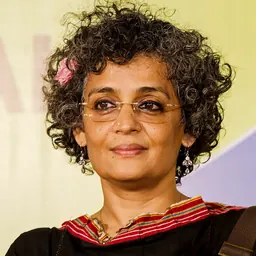
Phoolan Devi's fame throughout India continued to grow after her death and the controversy surrounding the Bandit Queen film had already ensured that she was globally famous. She has become a legendary figure, alongside other outlaws such as Ned Kelly, Sándor Rózsa and Pancho Villa. Her life has inspired biographies by Roy Moxham, Mala Sen and Richard Shears and Isobelle Gidley, as well as novels by Irène Frain and Dimitri Friedman. A graphic novel entitled Phoolan Devi, Rebel Queen by was published in 2020. The scholar Tatiana Szurlej notes that the facts presented in these biographies often contradict each other despite coming from interviews with Phoolan Devi herself and questions whether she forgot elements or adapted her account to suit her changing circumstances. In 1994, Arundhati Roy commented that Phoolan Devi "is suffering from a case of Legenditis. She's only a version of herself. There are other versions of her that are jostling for attention." Media theorist Sandra Ponzanesi states Phoolan Devi is an example of a Third World postcolonial subject who is aware of the racist and patronising Orientalist attitudes that First World analysts have of her. Bandit Queen came out in 1994 and in 2019 Hossein Martin Fazeli was developing a documentary entitled Phoolan. In 2022, Farrukh Dhondy announced that he was making a web series about her life told from the perspective of Rajendra Chaturvedi, the person who arranged her surrender. Phoolan Devi has been represented in fine art by painters such as Rekha Rodwittiya. Her life has also been commemorated by folk singers, making her into a mythical outlaw figure. Shirish Korde and Lynn Kremer wrote an opera called Phoolan Devi: The Bandit Queen which premiered in 2010 at the College of the Holy Cross in Worcester, Massachusetts, US.
The verdict in the court case concerning the Behmai massacre was delayed in 2020 because important case documents had been lost. The last witness died the following year and since the presiding judge had been transferred, the case began again in 2022. In 2023, another suspect died, leaving only two people on trial.
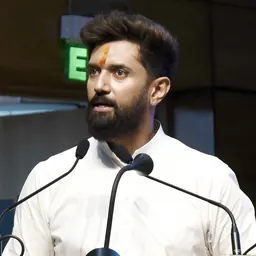
The Mallah subcaste forms part of the Nishad caste and two Nishad political parties laid claim to Phoolan Devi's legacy. In 2018, the NISHAD Party reported it would build a statue of her in Gorakhpur. Mukesh Sahani, the leader of the VIP, was prevented from leaving Varanasi airport by the Government of Uttar Pradesh when he wanted to install a statue. He reacted by setting up a foundation in Phoolan Devi's name and promising to deliver up to 50,000 small idols of Phoolan Devi, to any local person who requested one. Also in 2021, tributes marking the anniversary of her death were made by Chirag Paswan of the Lok Janshakti Party (Ram Vilas) and Tejashwi Yadav of Rashtriya Janata Dal.
Selected works
Don’t just read it —
keep it.
Full-length biographies made to live with: read them, listen on the way to work, watch them tonight.
- E-book
- Audio
- Video
Instant download · yours to keep · every purchase keeps this site free
Important facts
People in Phoolan Devi's life
Named in this biography and alive at the same time



Related people
Same field, nearest in time




Contemporaries
People whose lives overlapped Phoolan Devi's



Frequently asked questions
Who was Phoolan Devi?
Indian bandit, politician (1963-2001)
When was Phoolan Devi born?
Phoolan Devi was born on 10 August 1963 in Jalaun district.
When did Phoolan Devi die?
Phoolan Devi died on 25 July 2001 in New Delhi.
What was Phoolan Devi's occupation?
Phoolan Devi was a politician, brigand, dacoit and human rights activist.
What nationality was Phoolan Devi?
Phoolan Devi was Indian.
Sources & further reading
Cite this page
APA: Biography.guide. (2026). Phoolan Devi. https://biography.guide/phoolan-devi/
MLA: "Phoolan Devi." Biography.guide, https://biography.guide/phoolan-devi/.
Chicago: "Phoolan Devi." Biography.guide. https://biography.guide/phoolan-devi/.
Data last updated: 2026-09-20 · Spot an error? Report a correction.
Page generated 2026-09-27 05:24 UTC