
Phillip Leonian
American photographer
About Phillip Leonian
Lived 1927 – 2016 (aged 89). Phillip Leonian was an American.
Phillip Marshall Leonian (January 13, 1927 – September 15, 2016) was an American commercial photographer known for his images of people and objects in motion. Active from the 1950s through the 1980s, he used stroboscopic effects and motion blur to capture movement within a single frame. His multi-image photography has been compared to the works of Eadweard Muybridge and Étienne-Jules Marey.
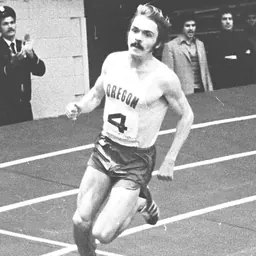
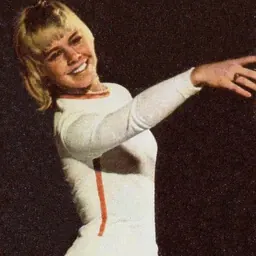
Leonian specialized in advertising and editorial photography, and his work appeared in numerous ads and magazines, including Sports Illustrated, Newsweek, and Time. and basketball player Earl “the Pearl” Monroe. Leonian's subjects also included figure skater Janet Lynn, long-distance runner Steve Prefontaine, and Olympic gymnast Cathy Rigby.
His 1971 photo of Rigby's balance beam routine was one of the 116 images encoded on the Voyager Golden Record. Astronomer Carl Sagan, who led the NASA committee in charge of curating the Golden Record, explained that his team had selected Leonian's multi-image photo for the interstellar time capsule because it managed to depict the full range of human motion. “It probably gives a better sense of how we move than anything else could have”, Sagan wrote.
Later in life, Leonian lectured and wrote extensively on copyright, advising fellow photographers on how to retain the rights to their work. He was also an inventor who held two patents for photographic equipment.
Early life Leonian was born and raised in Morgantown, West Virginia. Phil's mother, Nell, taught in the university's English department.
He first took up photography while he was a student at Morgantown High School. (According to Popular Photography, Leonian was "always rethinking his methods and his hardware.")
After leaving WVU, he studied at the Brooks Institute of Photography in Santa Barbara, California.
In 1968, Leonian worked on a series of ads for AT&T. The company wanted consumers to place more extension phones in their homes, and the resulting ads used Leonian's trademark “motion/time visualizations” to illustrate the inconvenience of owning only one phone. In one photo, a walking woman turns around when she hears her telephone ring. In another, a woman descends a flight of stairs, then halts and doubles back upstairs. “It was a matter of slicing time, a fourth dimension of space, and effectively recreating it on two dimensions of paper,” wrote the creative team at N.W. Ayer, the ad agency behind the campaign.
By the 1970s, Leonian could command fees as high as $2,000 a day. “He makes top bucks because he is the best there is at showing people and objects in motion", proclaimed The Village Voice.
Editorial photography Leonian's photos were published in more than a dozen magazines, including Time, Newsweek, Essence, Look, Sports Illustrated, and World Tennis. His work also appeared in a number of vintage photography magazines, including Popular Photography, Camera 35, Travel & Camera, and U.S. Camera and Travel (which eventually became Travel + Leisure).
Sports photography Leonian began working with Sports Illustrated in 1968. His first assignment—shooting an Olympic pentathlon—allowed him to play around with new tools and techniques, including the multiple-image effects that would become his Sports Illustrated trademark.
In 1972, the New York Times photography critic Gene Thornton called Leonian's photos of athletes and dancers “truly strange and haunting” in his review of an exhibition called Sports in Time/Space.
Writing in the 1977 edition of U.S. Camera Annual, Leonian reflected on his early fascination with walking figures: "Walking is one of the basic human postures, the others being standing, sitting, and lying down. The last three are standard subjects throughout art history. Why not walking?" He went on to connect his multi-image photos of people walking to some of the earliest artwork made by humans:One day, leafing through a book, I came across reproductions of paintings of cave walls in France. An artist wanting to represent an animal in motion drew it with many legs. My ‘original’ image had been invented by a Neanderthal. My elation was profound…I had tapped a primal way of seeing.
His experimentation wasn't limited to motion photography, though. He was one of many 1970s photographers who played around with Polaroids, resulting in a series of portraits called Waterworks. Using SX-70 film, he snapped pictures of his friends from the New York photography community, capturing a different body part (an arm, a leg, a face, etc.) with each instant photo. He then used a chemical solution to separate the emulsions from their backings, placed the emulsions on photo paper, and carefully arranged them to create full-figured portraits. The New York Times called the resulting caricatures "fascinating", noting that "the curious effect of each is that of a person floating in his own body baggie filled with water."
Writing From 1957 through 1963, Leonian wrote a regular column for Camera 35, a vintage magazine devoted to 35mm photography. The column ("Comments on Color") drew upon his experiences developing photos in a color lab. He remained a contributing editor until 1977.
Over the years, he continued to share his expertise by writing for various other photography publications. For example, he wrote a primer on how to use fish-eye lenses, which ran in U.S. Camera and Travel, as well as an article about his experiments with underwater photography, which was published in Travel & Camera.
Teaching In the mid-’70s, Leonian taught photography classes at the newly formed International Center of Photography, where he was reportedly one of the more popular instructors. A few years later, Leonian set out to design a compact lighting kit that would fit inside a 30-inch tripod bag. When he realized that his designs would require custom parts, he purchased $30,000 worth of metalworking machinery—all to manufacture a few small connectors.
Personal life Phillip Leonian was married to Edith Leonian (née Rosenbaum), the daughter of Paul and Gabriella Rosenbaum of Chicago. Edith worked alongside Phil as his representative and business partner,
Exhibitions
1972: Sports in Time/Space, Nikon House, New York 1978: About Walking, Franklin Furnace, New York 1978: The Walking Show, Neikrug Gallery, New York 1978: The Male Nude: A Survey in Photography, Marcuse Pfeifer Gallery, New York Cleveland Museum of Art, Cleveland, Ohio Brooklyn Museum, Brooklyn, New York Milwaukee Art Museum, Milwaukee, Wisconsin Amon Carter Museum of American Art, Fort Worth, Texas Cooper Hewitt, Smithsonian Design Museum, New York, New York Museum Ludwig, Cologne, Germany
Don’t just read it —
keep it.
Full-length biographies made to live with: read them, listen on the way to work, watch them tonight.
- E-book
- Audio
- Video
Instant download · yours to keep · every purchase keeps this site free
Important facts
People in Phillip Leonian's life
Named in this biography and alive at the same time



Contemporaries
People whose lives overlapped Phillip Leonian's


Frequently asked questions
Who was Phillip Leonian?
American photographer
When was Phillip Leonian born?
Phillip Leonian was born on 13 January 1927.
When did Phillip Leonian die?
Phillip Leonian died on 15 September 2016.
What nationality was Phillip Leonian?
Phillip Leonian was American.
Sources & further reading
Cite this page
APA: Biography.guide. (2026). Phillip Leonian. https://biography.guide/phillip-leonian/
MLA: "Phillip Leonian." Biography.guide, https://biography.guide/phillip-leonian/.
Chicago: "Phillip Leonian." Biography.guide. https://biography.guide/phillip-leonian/.
Data last updated: 2026-09-20 · Spot an error? Report a correction.
Page generated 2026-09-27 05:26 UTC