
About Phillip L. Merritt
Lived 1906 – 1981 (aged 75). Phillip L. Merritt was an American geologist.
Phillip Leonidas Merritt (February 8, 1906 – November 14, 1981) was an Amerixan geologist who located uranium reserves for the Manhattan District and the United States Atomic Energy Commission.
A graduate of the University of Minnesota, where he earned a degree in geology in 1928, and Columbia University, where he was awarded his PhD in 1942, Merritt joined the Manhattan District in 1942, and headed the Raw Materials Section of its Madison Square Area from 1943 to 1946. After the war he joined the United States Atomic Energy Commission, and directed its search for new sources of uranium. He became a consultant at the E.J. Longyear Company in 1954 and vice president of exploration at the Hidden Splendor Mining Company (later Atlas Minerals) in 1961. In 1966, he became a consultant to electric utilities.
Early life Phillip Leonidas Merritt was born on February 8, 1906, in Duluth, Minnesota, to Alva and Ruth Merritt. His father was the son of Lucien F. Merritt, one of the Seven Iron Men who founded the iron mining industry in the Mesabi Range. His mother was the daughter of Leonidas Merritt, another of the seven. He entered the University of Minnesota, from which he graduated with a degree in geology in 1928.
After graduation, he went to Africa, where he search for copper on behalf of the Rhodesian Selection Trust as part of a team of geologists headed by Minnesota geologist Anton Gray. He returned to the United States in 1929, and enrolled at Columbia University, where he wrote his PhD thesis on the "Seine-Coutchiching Problem" under the supervision of Charles Peter Berkey. He was awarded his master's degree in 1930, and a James Furman Kemp Fellowship in 1932. He was awarded his PhD in 1934.
Jobs for geologists were hard to come by during the Great Depression, but Merritt secured a position with the Columbian Department of Mines at an annual salary of US$200 . He was engaged in mineral and oil explorations, and published several papers. He returned to the United States in 1936, and took a position with American Cyanamid in New York City as a geologist and mineralogist. Merritt became the head of its Raw Materials Section, a position he held until the Manhattan Project wound up at the end of 1946.
Over the next five years, he traveled widely, usually in civilian clothes, to sites like the Eldorado Mine on the shore of Great Bear Lake in Canada, the Shinkolobwe mine in the Belgian Congo, and the vanadium mines of the Colorado Plateau. For his service, Merritt was awarded the Legion of Merit in 1946. He married Beatrice Wolff on 2 November, and left the Army at the end of the year with the rank of major. Merritt transferred to the new agency as a civilian, becoming the assistant director of the raw materials section. He continued the global search for uranium, developing new sources in the Blind River area in Canada and in South Africa. He initiated research at the Massachusetts Institute of Technology under Antoine Marc Gaudin into methods for recovering uranium from South African gold-bearing ores. In the 1950s, he directed and funded searches by the United States Geological Survey and the United States Bureau of Mines aimed at finding sources in the United States, which ultimately discovered uranium in Utah, New Mexico and Wyoming.
In 1961, he moved to Salt Lake City, Utah, where he became vice president of exploration at the Hidden Splendor Mining Company, which subsequently became Atlas Minerals. Atlas failed in its attempt to diversify from uranium mining, which remained its core business. When Atlas moved to Denver, Colorado, in 1966, he elected to stay in Salt Lake City. He became a consultant to electric companies that needed uranium for their nuclear reactors.
Don’t just read it —
keep it.
Full-length biographies made to live with: read them, listen on the way to work, watch them tonight.
- E-book
- Audio
- Video
Instant download · yours to keep · every purchase keeps this site free
Important facts
People in Phillip L. Merritt's life
Named in this biography and alive at the same time

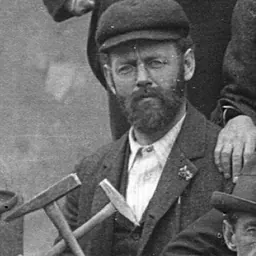


Related people
Same field, nearest in time

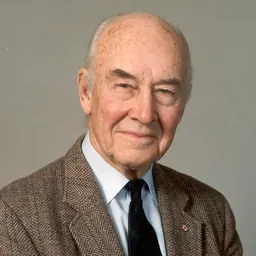

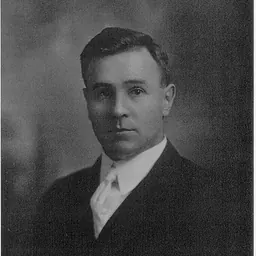
Contemporaries
People whose lives overlapped Phillip L. Merritt's

Frequently asked questions
Who was Phillip L. Merritt?
American geologist (1906–1981)
When was Phillip L. Merritt born?
Phillip L. Merritt was born on 8 February 1906.
When did Phillip L. Merritt die?
Phillip L. Merritt died on 14 November 1981.
What was Phillip L. Merritt's occupation?
Phillip L. Merritt was a geologist.
What nationality was Phillip L. Merritt?
Phillip L. Merritt was American.
Sources & further reading
· Wikipedia: Phillip L. Merritt
Cite this page
APA: Biography.guide. (2026). Phillip L. Merritt. https://biography.guide/phillip-l-merritt/
MLA: "Phillip L. Merritt." Biography.guide, https://biography.guide/phillip-l-merritt/.
Chicago: "Phillip L. Merritt." Biography.guide. https://biography.guide/phillip-l-merritt/.
Data last updated: 2026-09-20 · Spot an error? Report a correction.
Page generated 2026-09-27 05:04 UTC