
About Philippe Barbier
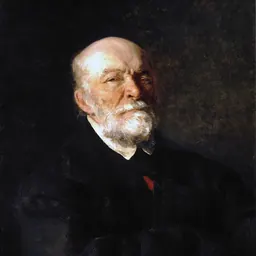
Lived 1848 – 1922 (aged 74). Philippe Barbier was a French chemist.
Philippe Antoine Francoise Barbier (2 March 1848 – 18 September 1922) was a French organic chemist. He is best known for his two named reactions in organic synthesis, the Barbier reaction and the Barbier-Wieland degradation, as well as for his role in the creation of organomagnesium reagents with his student, Victor Grignard.
Although Grignard was awarded the Nobel prize in 1912 (along with Sabatier) for his discovery, Barbier and Sabatier's collaborator, Senderens, were snubbed. Grignard himself decried this as an injustice, writing to a friend just days after returning from his Nobel acceptance: “…to tell the truth, and between us, I would even have preferred to wait a little longer, to see the prize shared between Sabatier and Senderens, and then share it myself with Barbier at a later time”. Nevertheless, Barbier's contributions to the scientific community were plentiful and varied, including work in mineralogy, natural products isolation, and polycyclic aromatic hydrocarbons.
Early life and education Not much is known of Barbier's early life, largely due to his own destruction of nearly every record of his life shortly after the awarding of the 1912 Nobel prize (there is evidence that these events were linked, but this is largely speculative). There is very little information to be found about his early years until he began secondary education at the College de France. His doctoral studies were performed under Berthelot, where he studied the chemistry of fluorene, coumarin, and derivatives thereof. He also discovered novel reactivity of aromatic hydrocarbons such as stilbene and phenanthrene, providing valuable knowledge about the constitution of coal tar and the useful components therein. In addition, he observed the conversion of pineol into cymene during distillation. The École Supérieure de Pharmacy, with Berthelot at the head of his committee, awarded him the degree of Pharmacist, First Class.
After graduation, Barbier worked at the Ecole de Pharmacy de Paris as a preparateur, or laboratory assistant, from 1876 to 1878. He then served as a lecturer at the Faculte des Sciences de Lyon for a year, and in 1879, he obtained his first professorship at the Faculte des Sciences des Besançon. Finally, he was rehired at the Faculte des Sciences de Lyon as professor of chemistry, where he would remain for the remainder of his career. center|frame|Selected graduate work completed by Barbier under Berthelot.
Relationship with Grignard and the Nobel Prize In 1899, Barbier published what would become his most famous paper in the chemical community: the first known study of organomagnesium nucleophiles with carbonyl compounds. Whereas organozinc nucleophiles had been noted previously to undergo similar reactions (such as the Zaytsev reaction), organomagnesiums were significantly more reactive towards carbonyl nucleophiles. Barbier noted, though, that the reaction often suffered from low yields and reproducibility problems. He was well known to have more ideas than time, so he tasked his new graduate student, Victor Grignard, with improving his developed conditions. Grignard took to the task with great vigor, and just one year later, in 1900, Grignard published on an alternative procedure which consisted of preformation of the organomagnesium compound followed by addition of the carbonyl substrate. Despite paying homage to Zaytsev and Barbier in the acknowledgements of this first publication, and despite citing Barbier's 1899 communication as the inciting action for his 1900 publication, Grignard would go on to publish on this chemistry and its applications until 1928 as his own intellectual property. Considering that both Grignard and Barbier reported their individual findings as being novel (and that they published separately on the topic), it is difficult to assign credit to one person or the other for the original idea.
Though many have speculated on what became of the relationship between teacher and pupil, Additionally, in line with Grignard's statements about the unfairness of the Nobel award he received, he continued to defend Barbier's contribution to the state of the art (though he claims his input was equally valuable), even taking care to speak with utmost fondness about his “revered master” in a biography written by his son, Robert Grignard.
It is difficult to discern the logic behind the Nobel committee's disregard for Barbier and Senderens. According to colleagues of Grignard's at Lyon, “…with the exception of Grignard and two other students who knew how to get along with Barbier, the latter would have nothing to do with the world around him”. citral, linalool (also known as licareol), and puleone.
Barbier was also interested in the conversion of fragrance compounds into other fragrance compounds. Examples of this include the conversion of citronellol into rhodinol, geraniol (then known as licarhodol) into linalool (then known as licareol), and geranial into menthone.
Contributions to mineralogy
Barbier's contributions to mineralogy largely concern various feldspars, likely because they were plentiful and yet little was known about their atomic structure. He paid special attention to the establishment of clear designations between the class known as "k-feldspars" (so called because they are rich in potassium), and soda feldspars (rich in sodium). All k-feldspars have the same chemical makeup, but are different in crystal structure, making them polymorphs of one another. The same is true for all soda feldspars. This meant that before the establishment of atomic theory, it was very difficult to distinguish between these polymorphs. Barbier was in fact the first to publish on the noticeable differences between two of these polymorphs, known as orthoclase and microcline, which eventually led to an understanding that each class of feldspar possessed unique orthoclase and microcline minerals, one of which he discovered for the very first time in Rhone, France. When the US Department of the Interior published their geological survey in 1912, they recommended that this new form of monoclinic soda feldspar should henceforth be called "barbierite".
Don’t just read it —
keep it.
Full-length biographies made to live with: read them, listen on the way to work, watch them tonight.
- E-book
- Audio
- Video
Instant download · yours to keep · every purchase keeps this site free
Important facts
People in Philippe Barbier's life
Named in this biography and alive at the same time
Related people
Same field, nearest in time



Contemporaries
People whose lives overlapped Philippe Barbier's



Frequently asked questions
Who was Philippe Barbier?
French chemist (1848-1922)
When was Philippe Barbier born?
Philippe Barbier was born on 2 March 1848 in Luzy.
When did Philippe Barbier die?
Philippe Barbier died on 18 September 1922 in Bandol.
What was Philippe Barbier's occupation?
Philippe Barbier was a chemist.
What nationality was Philippe Barbier?
Philippe Barbier was French.
Sources & further reading
Cite this page
APA: Biography.guide. (2026). Philippe Barbier. https://biography.guide/philippe-barbier/
MLA: "Philippe Barbier." Biography.guide, https://biography.guide/philippe-barbier/.
Chicago: "Philippe Barbier." Biography.guide. https://biography.guide/philippe-barbier/.
Data last updated: 2026-09-20 · Spot an error? Report a correction.
Page generated 2026-09-27 05:18 UTC