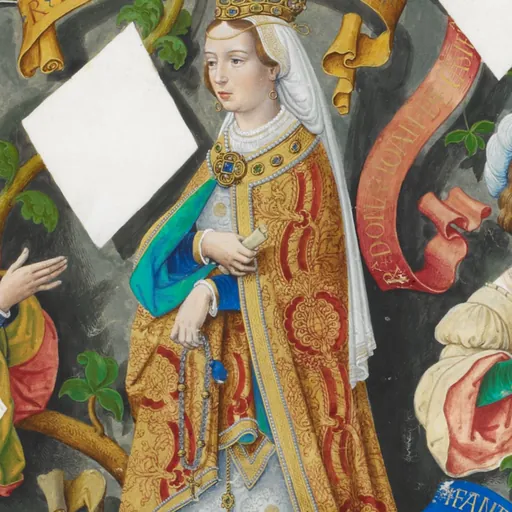
Philippa of Lancaster
English noblewoman and Portuguese queen consort
About Philippa of Lancaster
Lived 1360 – 1415 (aged 55). Philippa of Lancaster was an English queen consort.
Philippa of Lancaster ( ; 31 March 1360 – 19 July 1415) was Queen of Portugal from 1387 until 1415 as the wife of King John I. Born into the royal family of England, she was the daughter of John of Gaunt and granddaughter of Edward III of England. Her marriage secured the Treaty of Windsor and produced several children who became known as the "Illustrious Generation" in Portugal. She was the only Portuguese queen of English origin.
Early life and education
Born on 31 March 1360, Philippa was the eldest child of John of Gaunt, 1st Duke of Lancaster, and Blanche of Lancaster. Philippa spent her infancy moving around the various properties owned by her family with her mother and her wet-nurse, Maud. Here, she was raised and educated alongside her two younger siblings, Elizabeth, who was three years younger, and Henry, seven years younger, who would later become King Henry IV. Philippa's mother, Blanche, died in 1368. Her father remarried in 1371 to Infanta Constance of Castile, daughter of King Peter of Castile and on Constance's death in 1394, he married his former mistress, Katherine Swynford, who had been Philippa's governess. The affair and eventual marriage was considered scandalous, and in the future Philippa would protect herself against such embarrassment.
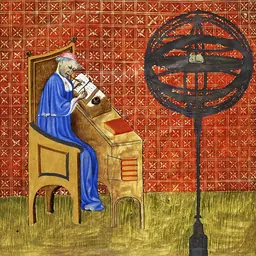
Katherine seems to have been well liked by Philippa and her Lancastrian siblings and played an important role in Philippa's education. Katherine had close ties with Geoffrey Chaucer, since her sister, Philippa Roet, was Chaucer's wife. John of Gaunt became Chaucer's patron, and Chaucer spent much time with the family as one of Philippa's many mentors and teachers. She was remarkably well educated, especially for a woman at the time, and studied science under Friar John, poetry under Jean Froissart, and philosophy and theology under John Wycliffe. Philippa married King John I by proxy, and in keeping with a unique Portuguese tradition, the stand-in bridegroom pretended to bed the bride. The stand-in for King John I was João Rodrigues de Sá.
The marriage itself, as was usually the case for the nobility in the Middle Ages, was a matter of state and political alliance, and the couple did not meet until twelve days after they were legally married. Philippa was considered to be rather plain, and King João I (John I) already had a mistress, Inês Peres Esteves, by whom he had three children. Their son Afonso was ten when Philippa and John married. Philippa allowed Afonso and his sister Beatrice to be raised in the Portuguese court (the third child, Branca, died in infancy). Their mother left the court at Philippa's command to live in a convent, and under Philippa's patronage, she became the Prioress.
Philippa, at the age of 27, was thought to be too old to become a bride for the first time, and the court questioned her ability to bear the King's children; however, Philippa bore nine children, six of whom survived into adulthood.
Influence at court
Though Philippa was seen to present a demeanour of queenly piety, commenting that "it would be regarded as an indecent thing for a wife to interfere in her husband's affairs",
Though he had been reluctant to marry her, the king had grown quite fond of his wife, and it is said that he was "so grieved by [her] mortal illness… that he could neither eat nor sleep". At her death she prayed with several priests and, "without any toil or suffering, gave her soul into the hands of Him who created her, a smile appearing on her mouth as though she disdained the life of this world".
Blanche She introduced reforms to the royal court, including to religious practices.
Philippa is remembered as the mother of "The Illustrious Generation" (Portuguese: Ínclita Geração). Her surviving children went on to make historically significant contributions in their own right.
Philippa's influence was documented in literary works. The medieval French poet Eustache Deschamps dedicated one of his ballads to "Phelippe en Lancastre," as a partisan of the Order of the Flower. It has also been speculated that English writer Geoffrey Chaucer may have alluded to Philippa in his poem, "The Legend of Good Women," through the character Alceste.
Ancestry
Don’t just read it —
keep it.
Full-length biographies made to live with: read them, listen on the way to work, watch them tonight.
- E-book
- Audio
- Video
Instant download · yours to keep · every purchase keeps this site free
Important facts
Family & relationships
People in Philippa of Lancaster's life
Named in this biography and alive at the same time


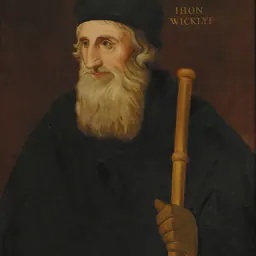



Related people
Same field, nearest in time



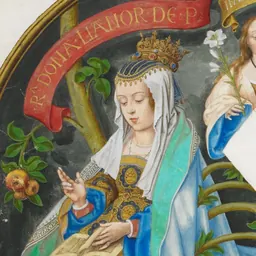
Contemporaries
People whose lives overlapped Philippa of Lancaster's


Frequently asked questions
Who was Philippa of Lancaster?
English noblewoman and Portuguese queen consort
When was Philippa of Lancaster born?
Philippa of Lancaster was born on 31 March 1360 in Leicester Castle.
When did Philippa of Lancaster die?
Philippa of Lancaster died on 19 July 1415 in Monastery of São Dinis de Odivelas.
What was Philippa of Lancaster's occupation?
Philippa of Lancaster was a queen consort.
What nationality was Philippa of Lancaster?
Philippa of Lancaster was English.
Sources & further reading
· Wikipedia: Philippa of Lancaster
· DBpedia: Philippa of Lancaster
Cite this page
APA: Biography.guide. (2026). Philippa of Lancaster. https://biography.guide/philippa-of-lancaster/
MLA: "Philippa of Lancaster." Biography.guide, https://biography.guide/philippa-of-lancaster/.
Chicago: "Philippa of Lancaster." Biography.guide. https://biography.guide/philippa-of-lancaster/.
Data last updated: 2026-09-22 · Spot an error? Report a correction.
Portrait: Wikimedia Commons · author & licence
Page generated 2026-09-27 05:01 UTC